

In his book The Ritual of Writing, Andrew Anderson considers writing as a spiritual practice – an unusual and intriguing concept.
The more I read however, the more it makes sense to connect your writing with seasonal celebrations, with nature and your sense of place within it. For many – even in today’s hurried and worrisome world – or maybe because of it – ritual is an important part of life. You could say that setting the clocks back in the autumn then forward again in the spring has become modern ritual, such actions inviting particular emotions within us. Clocks go back, we all grunt and groan about the winter; clocks go forward, and the simple ritual of changing the time can make us feel brighter, more optimistic, because we have been gifted more daylight. We haven’t of course, but it just feels like it. Such is the power of ritual: ‘It’s the summer!’says Anderson, ‘Time for heat waves and holidays…I find summer is the season for focusing on the here and now, for writing in the present tense.’ I fully get that – as sunlight and warmth breathe new life into the new season we feel the directness of it, and Anderson encourages us to embrace it.
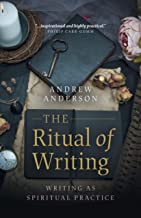 However, Andrew Anderson’s book delves far deeper than how we feel when changing the clocks. He is exploring the fascinating relationship between writing and ritual within Pagan spirituality. In essence, Anderson suggests we take more account of the natural world around us, listen to the seasons, the weather, and the bird, insect, amphibian life we cannot see – ever more important
for a planet threatened as it is by over-heating, deforestation and destruction.
As a creative writing tutor Anderson offers writing tasks throughout the book – short writing exercises to help the reader approach a subject or idea from a different, more spiritual aspect. But don’t worry, if you’re not sure what that means Anderson’s clear and concise instructions will soon get you on your way and it becomes easy. This is practical and informative workbook for lay or experienced writer. It is accessible, easy to read but at the same time giving plenty of time for the reader to pause and reconsider, and perhaps take a different path. Anderson encourages you to develop your writing, go out of your comfort zone and give it a go. There are no losers, only winners, and you may find your writing improves because of it.
Each chapter is clear, informative, unusual, and Anderson is very keen to encourage the reader to read their work out loud. Much can be learned from hearing your words set free – hearing them as others would – and that is a great tool for editing. Speechwriters the world over will read and re-read their speeches out loud to ensure that their message reaches their audience in the best condition, with correct inflection, with pauses in the right places, everything mixing together to create the best prose they can. Think of the famous speeches from history – you can bet they weren’t scribbled on the back of a matchbox or quickly noted on a phone before they were set free. No, they were considered, written, read out, re-written. Anderson cannot rate this approach highly enough as a way to improve your work. And he’s right.
I wasn’t sure what I was going to make of this book when it arrived through the post, but it has been an interesting and honest way of approaching writing. Critics say never mention the weather, well…I may have to disagree. From snow (James Joyce’s The Dead) to wind (Wuthering Heights) there’s a lot to be said for embracing the rush of nature and its affect on our writing. As Anderson says,
‘I want to finish this book with a reminder to keep working on your writing while out and about in wild spaces. As a follower of an earth-base religion, there is no better way of honouring nature than writing whilst amongst her beauty.’
Here here, Mr. Anderson.
Published by Moon Books
£8.99

 Jacci Gooding, Author
You must be logged in to post a comment.