What’s In a Name? Everything.

As TS Eliot correctly acknowledged, the naming of cats is a serious matter. As is your main character, or indeed a home, the place where all the action happens. Manderley for example. Serious action going on there. The House at Pooh Corner – not quite the same but still notable literary history, plus the added bonus of imparting a geographical location sans gps – just as long as you know where Pooh Corner actually is I guess.
Don’t bite the apple Snow White…

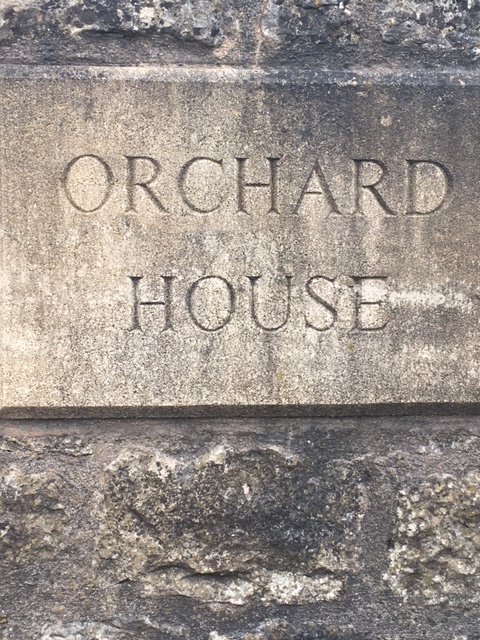
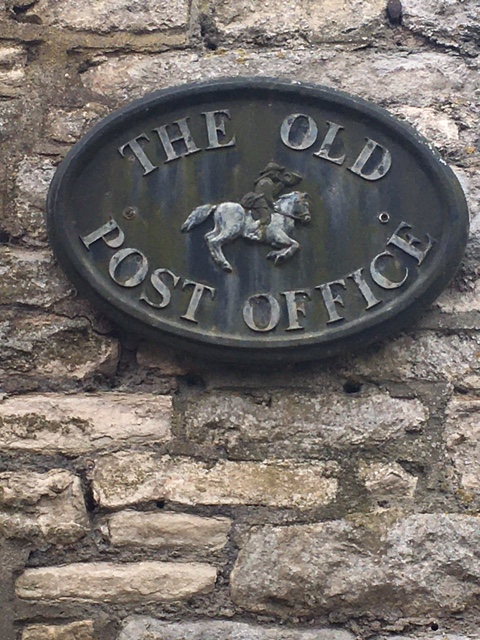
         On my Covid roamings my ever-observant eyes have paid more attention to local house names – apple anybody? – and the history-loving part of me mourns the death of Orchard Cottage (not an apple in sight), The Oaks (treeless), The Old Post Office, The Old School, Rose/Jasmine/Lavender/Yew Cottage. Scattered across the country are countless Blacksmith’s Cottages, Station Houses, and Old Mills, all a wonderful nod to the past and how lives were lived. But that was then and this of course is now. Where are the new names? Couldn’t we do with an I.T. Terrace perhaps, or a Broadband Bungalow? Or maybe Seeseeteevee Lodge, or simply just Renewables for a new housing estate on a windy site? As if someone had been thinking along the same lines as me, I did see one modern terraced house recently with a quaint 21stcentury millennial ring to it: it was named Tiny Box. True. The new owner was clearly being sardonic/humourous/notworriedaboutsellingit and it made me smile. Surely, as we stride ever forward, our achievements, as the industrious creative humans we are should be recognised in the naming of our homes? Holme Delivery? Still At Home With Mum & Dad House? (bit long for any on-line form, that one) or (and I promise this is the last one) Can’t Really Afford It Cottage. Where house names once reflected our jobs or the natural world perhaps in the future they’ll reflect the socio-politics of the time. Perhaps they should. Anyway, just a thought. A thought that brings me on to the importance of other names; our characters. Yes, like many a writer my path always returns to the plot, the people, and that pesky protagonist.
         A question for you dear reader. What do Harry Potter (pick an installment) Hamlet, Rebecca, Matilda (know where this is going?) have in common? Exactly. Each novel is the title of the main character. Yes yes I know that in the case of Rebecca ***SPOILER ALERT!!*** she’s not exactly there, being dead an’ all, but you know what I mean. It ensures that we’re not likely to forget them in a hurry doesn’t it? Leap forward some decades and ask yourself if you can remember the name of the protagonist in a book you read three months ago. Or the book before last. But seriously – what better way to get your work into the psyche of your readers? Nail the name and the rest should come, surely?

         Hunton Gurney. Top lawyer. Privately educated. 21stCentury Guy. London apartment, cottage in Cornwall (Fisherman’s, probs), expensive car, almost married to another high-flier. Or Hunton Gurney, 18thcentury labourer – no – let’s make him a blacksmith (and we all know where he lives), back already damaged from hard work, four living children, two others already dead from consumption, married to the exhausted but determined Rose. Or…Hunton Gurney, a small, mysterious village off the A436 somewhere between the Oxfordshire and Gloucestershire border. 

         You decide.

Research the Market

Excellent advice from author Sue Cook. And I’d advise you to follow it! Thanks for your words of wisdom Sue..

Sue Cook's avatarSue Cook's Writing Blog

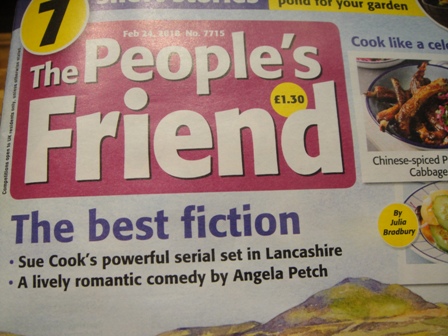
This post was triggered by a People’s Friend blog by Abbie, one of the editors. It states the obvious, really, that before you submit a story to a magazine such as The People’s Friend, check that it’s suitable for them.

I’ve lost count of the times I’ve seen posts on social media along the lines of ‘I’ve written a short story, I might send it to People’s Friend as they take women’s stories, don’t they?”

Yes, they do. But if you are unfamiliar with the type of story they publish, I would bet good money that your story will be sent straight back with a ‘thanks but no thanks’.

Abbie suggests checking the market after you’ve written your story. I would go a step further and say you should do this before you put finger to keyboard. Write the sort of story the market wants, not vice versa, at least…

View original post 387 more words

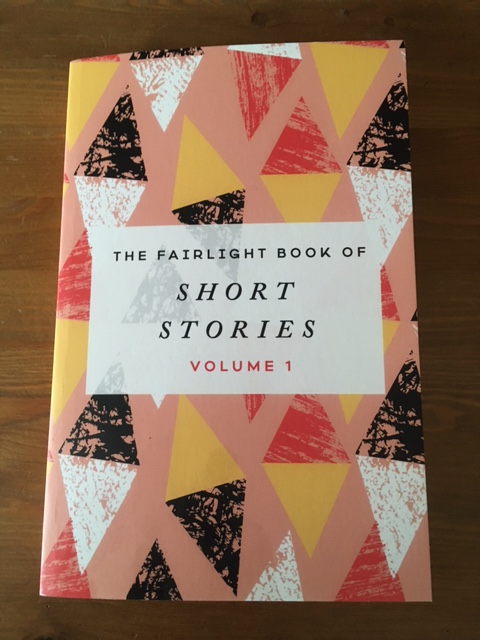
Fairlight Book of Short Stories available now

Reading reading reading! Like many writers out there, the urge to write as been less than the urge to eat my least favourite food, although for some others the need and will to write has never been greater – Carpe Diem and all that. However, having spent many hours staring at a blank screen with a keyboard that seems to have lost all its letters and is holding the space bar to ransom, I have been reading instead. I found a great second-hand book site Awesome Booksand bought enough books at remarkably low prices to get me through to the Spring equinox. Meanwhile, I have this superb collection of short stories from Fairlight Books to review for @TSS – long or short reading, I love it all and there is so much to learn from other authors. This week I was engrossed in Stacey Hall’s The Familiars (@stacey_halls) and prior to that The Lost Book of Salem by Katherine Howe and prior to that the brilliant The Vanishing Witch by Karen Maitland. Seems January brought about a incursion into witchiness. Mind you, I did make the long-list for Fantastic Books Publishing’s fantasy horror competition, which was quite a surprise!

So, if like me you’re in the Can’t Write A THING RIGHT NOW camp, or the OMG I just HAVE TO WRITE THIS NOW camp, February is a good time to be upping your skills, giving yourself a break and entering some competitions. And with that in mind…

WRITERS’ AND ARTISTS’ SHORT STORY COMPETITION

The Writers’ and Artists’Short Story Competition is open to both published and unpublished writers.Submit short stories of up to 2,000 words. This year’s judge is Alysoun Owen who is the Editor of the Writers’ & Artists’ Yearbook and the Children’s Writers’ & Artists’ Yearbook and has worked in publishing for more than 25 years Deadline – 12th February, Free entry

REFLEX FICTION FLASH FICTION COMPETITION

The latest round of the Reflex Fiction Flash Fiction Competition is open to stories of between 180 and 360 words. The judge is author, Sophie van Llewyn.

Prize – First prize: £1,200 / Second Prize: £600 / Third prize: £300 / Fourth prize: £150 / All long-listed stories will also be published online. 

Deadline – 28th February, Entry fee – Choose your own entry fee (suggested fee is £7).

Full details – Visit the Reflex Fiction website

MARGERY ALLINGHAM SHORT STORY COMPETITION 

The judges of the international, Crime Writers’ Association Margery Allingham Short Story Competition are seeking entries of up to 3,500 words that fit the legendary crime writer’s definition of what makes a great story: “The mystery remains box-shaped, at once a prison and a refuge. Its four walls are, roughly, a crime, a mystery, an enquiry and a conclusion with an element of satisfaction in it.” 

Prize – £500 and two passed for CrimeFest 2022, Deadline– 26th February, Entry fee – £12.

Full details – Visit the Crime Writers’ Association website.

Reading Writing Reading Some More

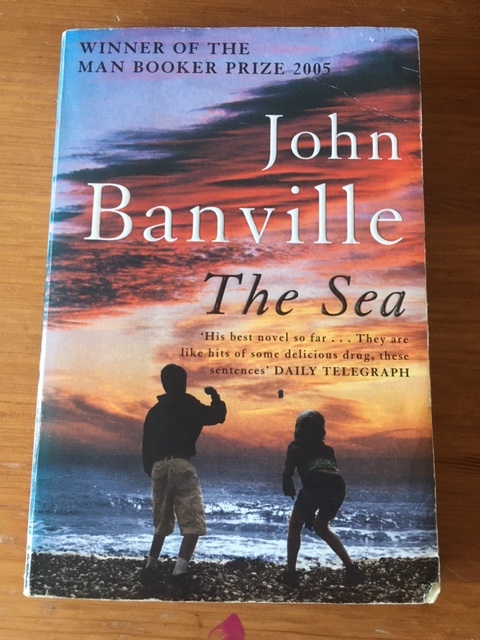
A little late to the party with this one, (15 years), I picked up John Banville’s The Sea recently because I wanted to know what made a Man Booker prize winner. And I wasn’t disappointed. A phenomenal read, it is so easy to relate to, to understand, to actually read, with language that is both lyrical and straightforward at the same time. I have to confess, this is the only book that actually took my breath away as I read the last page.

             Mourning the recent loss of his wife, protagonist Max Morden returns to the seaside village where he and his parents would stay during the summer holidays – in the cheaper holiday accommodation on offer – and where he met wealthier brother and sister Chloe and Miles. As we journey with Max in real time on his road of grief, we are also given retrospective insights into his growing pains as a boy, of lessons learned but not understood until many years later, of the slow yet steady crossing of the threshold from boyhood to early manhood. In The Sea Banville gives us intelligent observation, humour, grief, understanding. Oh, I realised as I finished the book, that’s what makes a Mann Booker prizewinner. Breathtaking. So if you get the chance, give it a read.

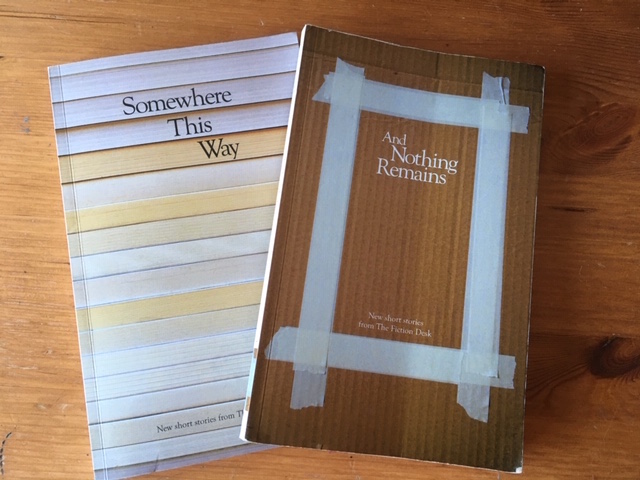
            Another couple of books that have kept my sanity levels from dropping off the scale have been And Nothing Remains and Somewhere This Way, both short story collections from The Fiction Desk.  Both books have a lively mix of stories, each author’s voice coming through loud and clear, but IMHO, Thirteen Wedding Dresses in And Nothing Remains is by far the quirkiest, sweetest, most unusual story, written by Scots author Douglas Bruton. As it’s a short, I won’t give too much away, other than to say a wedding dress has gone astray before the big day… 

            All this reading has perhaps returned to me the urge to write again. Who else out there found themselves floundering at the keyboard as every go-get ‘em idea withered and died before the end of the sentence? Who else has taken the opportunity to look through all those WIPs and bin the Doesn’t Stand A Chance & I Have NO Idea Why I Thought It Would files? Although.. maybe… they were just ideas…prompts if you will… perhaps I should retrieve them after all… 

            But for now, I shall take pot luck and browse the hundreds of books on the shelves of charity shops and see what else I can find. I know. A Man Booker winner ending up on a charity shop bookshelf. Kinda puts everything into perspective doesn’t it.

Finding a Gem Amongst Junk

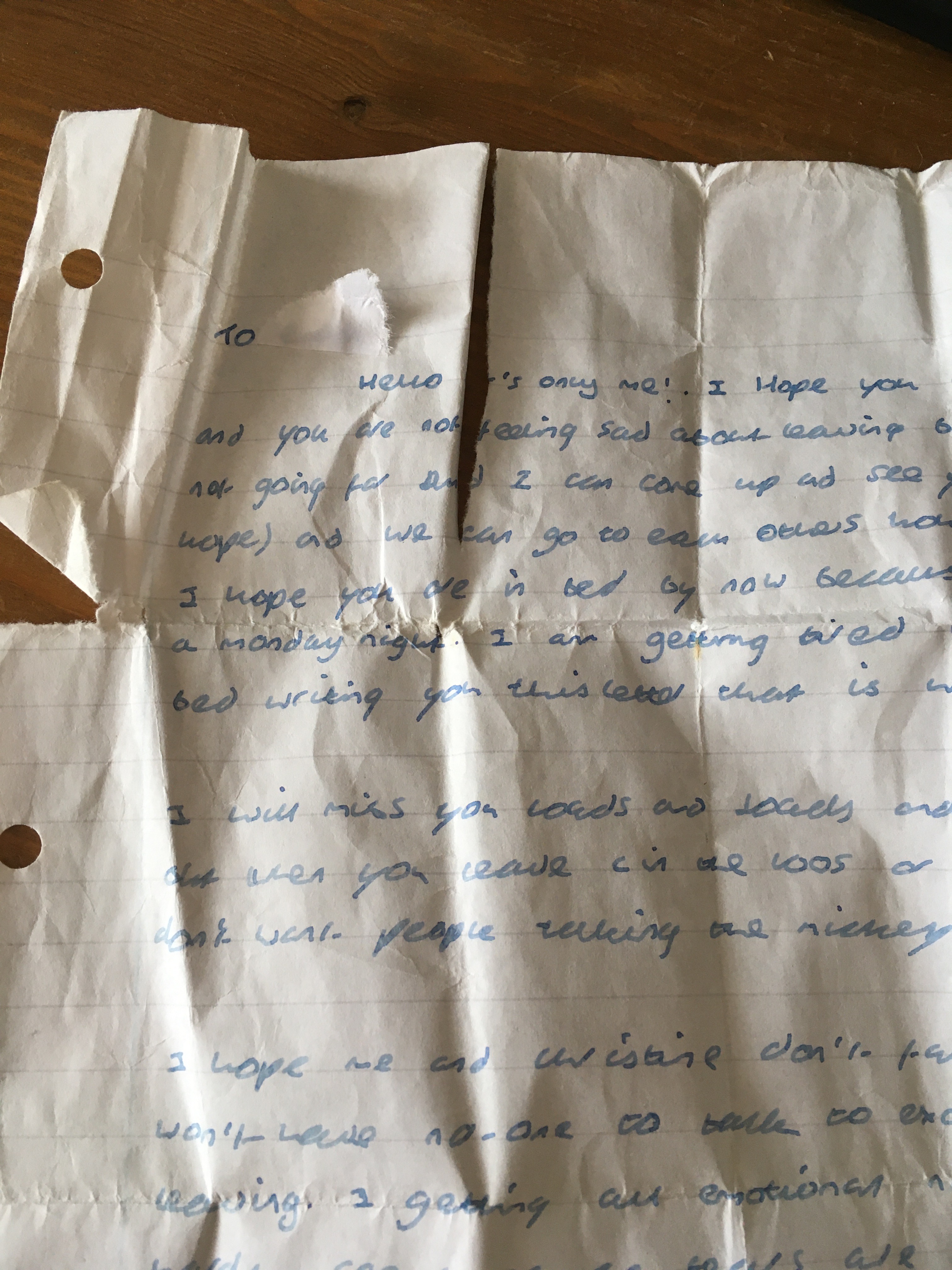
Slowly creeping out of lockdown and I have been volunteering at a local charity shop. Imagine my amazement when I found at the bottom of an old cardboard box, this letter. Handwritten in ink, it is a goodbye letter from one schoolgirl friend, Anne, to another, Angela – although those are not actually their real names because you never know, they may one day stumble across this blog and know it is their letter. Stranger things have happened.

Letter to my friend.JPG

Anne is saying farewell to Angela because Angela is moving away, presumably with her family, and Anne is saying how much she will miss her – she’ll ‘cry her eyes out in the loos so that no-one can take the mickey’ out of her. As she writes, she says how the words are getting bleary because her eyes are filled with tears. Very moving – and let’s face it – an author’s dream to find such a thing. Talk about inspiration. I hope their lives worked out ok and Anne moved on to find other friends. 

But did Anne ever post this letter? Did Angela ever receive it?  Who kept it for so long? Why was it in the bottom of a box destined for a charity shop? And how long had it been there?

Where should my story take these two young teenagers? Do they meet again in middle age?

Amongst all the chipped mugs and glittery discarded Prosecco glasses, this letter is without doubt a glorious gem.

Easing out of Lockdown?

Feel I should be writing a poem or something.

But as I’m not I thought I might have a go at this:

A Fiction Desk comp about gardens

Exploring our theme of ‘gardens’…

Until the end of July, we’re looking for short stories on a theme of ‘gardens’:

“Private gardens, public gardens, or shared gardens. The neighbour’s garden, or gardens of the rich and famous. Secret gardens, exotic gardens, well-kept gardens, forgotten gardens, haunted gardens, dangerous gardens, gardens of the past or of the future. What do they mean to us? How do we use them – or not use them? What might happen in them – or not happen?”

Indeed – what might happen in them. It must be the weird in me but my first thought was of course burying the body under the patio, then I thought ‘perhaps I should write a really moving poem about all our old dead pets buried in the Cat Cemetery (aka the shady border)’ and then I got all teary remembering all those tails and whiskers and had to stop for a cup of coffee and some toast. You know how it is. Lockdown Lunacy.

So. Gardens it is.

https://www.thefictiondesk.com/submissions/garden-stories.php
This little fella’s up for it…
wynand-uys-K2IuxOKaNBg-unsplash

see – just too many legs…
                  ..and don’t even mention those eyes..