South Warwickshire Literary Festival 2023

As some of you may know last year was our first year at having a go at Doing A Lit Fest and we got so excited about it that this month sees us doing it again, this time in Harbury, near Leamington Spa, Warwickshire. We expanded our reach a bit by launching a writing competition in April and by the time you read this our winners will know they’ve won. It’s been a privilege reading work from so many authors; fiction, creative non-fiction and poetry and thankfully I didn’t have to judge any of the entries. Our three authors who did do the judging had a difficult job as we received so much great stuff. Where to start! Anyhow, it’s always great to win, right? but for those who haven’t on this occasion, the best advice is to just keep plugging away. I say this from experience! ‘Ah so what’ I mutter, as yet another rejection email slips into my inbox. ‘Clearly the world isn’t ready for my amazing writing just yet and where the hell is that bottle opener…?’
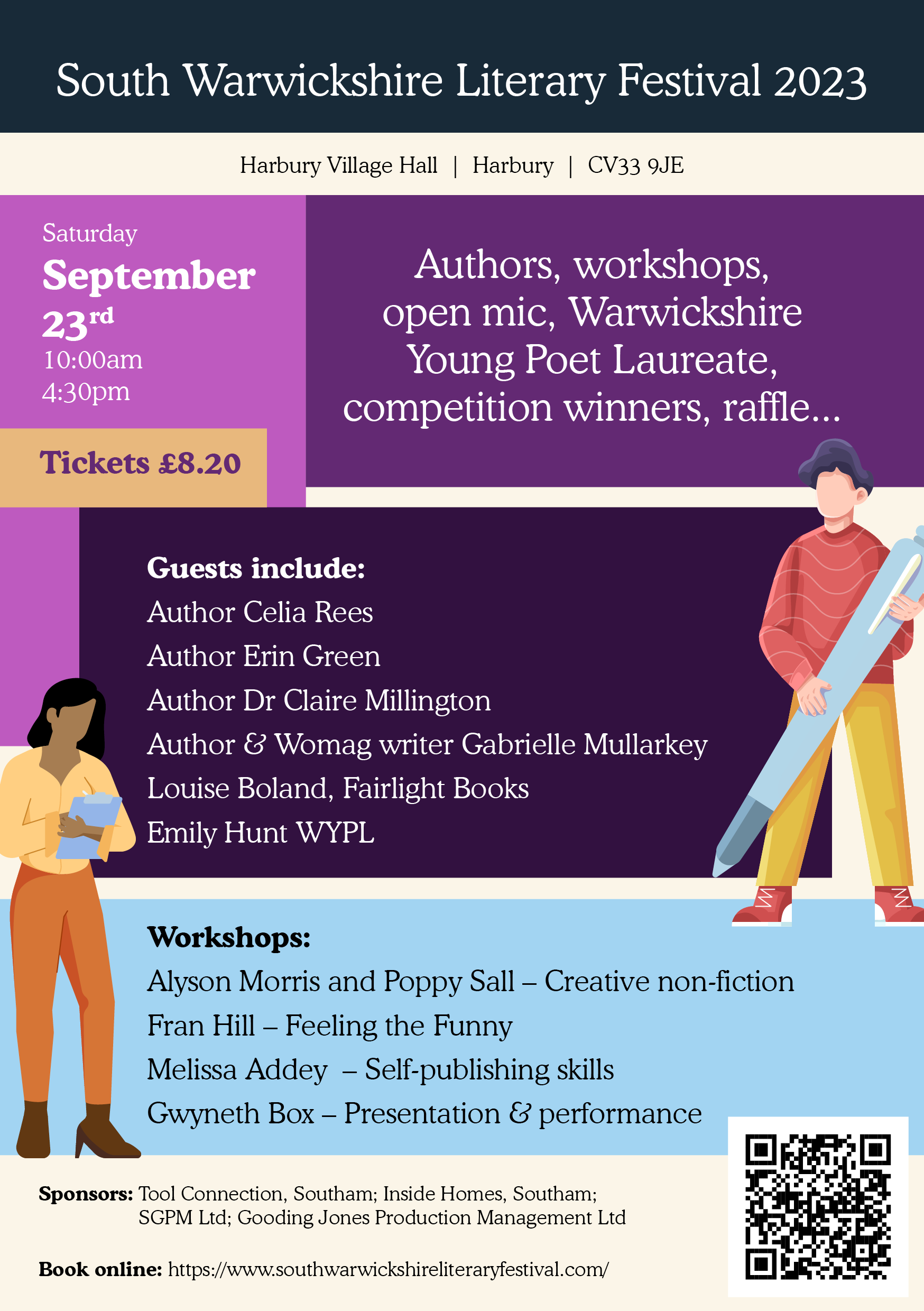
But here we are heading toward Saturday 23rd – here’s the postcode if you fancy coming along – CV33 9JE – all our workshops are now full but we have an amazing running order. Just look at this lot! Author Erin Green – she of the 12 romance and romcom novels – will be giving a talk on life as an agented and published author, sharing her insight and experience and telling it like it is to be a writer in the current climate. We delighted to have Louise Bolan, founder of the superb Fairlight Books giving the headline talk on everything you’ll ever need to know about how to get your work in front of a small publisher. Local author Celia Rees, author of award-winning Witch Child is joining us, historian Dr Claire Millington is opening the show with a talk about her children’s book set in Pompeii at a time when things got a bit hot and dusty, and no SWLF would be complete without our current Young Poet Laureate. Honestly, kids these days! Poetic, Talented, The Future!

Our workshops are full so sorry if you’ve missed out there – we won’t tell you about the fantastic stuff you are missing out on as that would be meany meany of us but do still nab a ticket and come along to enjoy our lunchtime Open Mic – oh that’ll be a hoot! Got a poem to perform, a flash to voice, or a short story to shout about? Now’s your chance! Oh and if all this delicious writery stuff isn’t enough, we’ll also have a raffle with some great prizes on offer. Books anyone?

To be sure to get a ticket please hop over to the SWLF website. There may be a possibility to buy on the door but numbers are limited and you know what they say…when we’re full, we’re full. Or something like that… See You There!
Writing Ideas and Picture Prompts

Summer is often the time, if you’re not working and have the opportunity, to rest the mind and sink into the world of books. Summer reading is always a big thing, with bookshops doing their best to tempt you with beach reads and not-to be-missed novels. Shop windows will be magnificently dressed to entice you in. Maybe offers of coffee and comfy sofas too will be positioned near to the door offering you the chance to nip in to browse then nab a book or three.

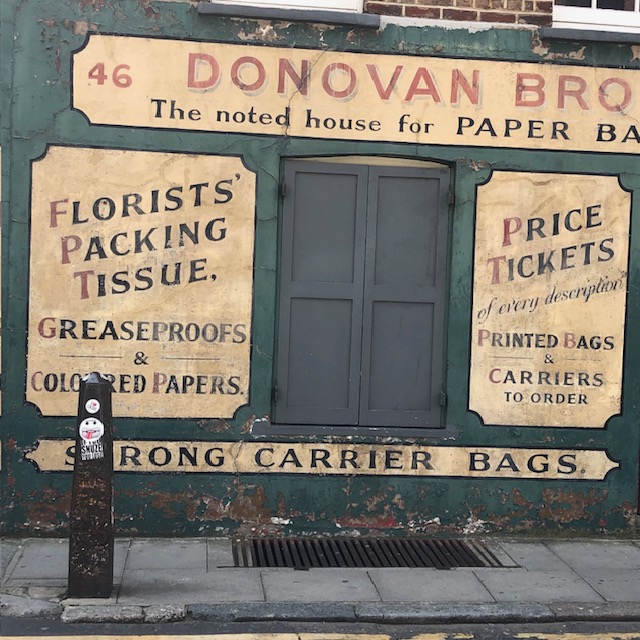
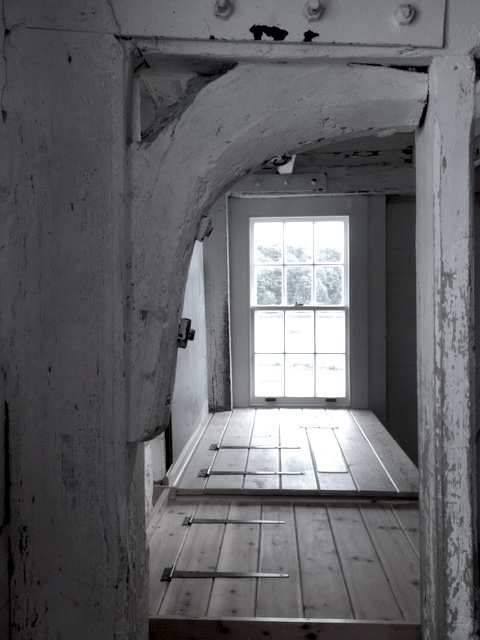
But what if you’re the writer? Been to a few lit fests and been inspired? Need to get those words down? Well now’s the time, and never shy to offer you, loyal reader, a few writing prompts, how about these: how often do you see a shop described as a Noted house for paper bags? Isn’t it wonderful? If you’d like to know more, here’s a link to the website Ghost Signs where you can learn more about it. If you fancy a bit of black and white, try this, taken at one of the UK’s last remaining tidal mills, Woodbridge Tidal Mill in Suffolk.

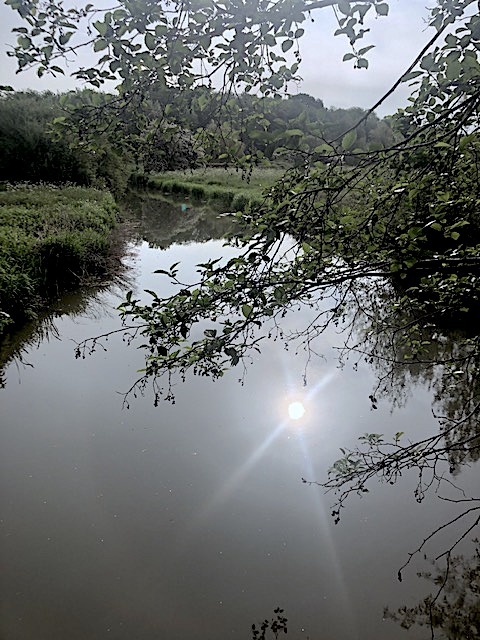
Or maybe this? Early morning sunlight on the River Leam in Leamington Spa. And here, one of my favourites this year, taken somewhere in the Caribbean. And not by me unfortunately! No filters, nuthin.

How about some written prompts then?

Here’re some that may nudge you toward a poem or short story, novel even…

1 The Tunisian sand, warm beneath his feet, shifted slightly as he moved. There, out at sea, he saw something resting on the water…

2 Heat was everywhere. The ground, the walls, the windows, fever-hot and unrepentant. Shadow was in short supply…

3 Midday and the forest air was still. Silently life continued deep underground and in the canopy, but for now, the stillness held an eerie calm…

4 The fight in the street caused little interest. A baby cried somewhere and a desolate dog barked. Ed returned with onions and apples stolen from his local supermarket and his stomach grumbled, hollow and cold…

How To Win A Writing Competition

Or at least stand a chance. Having been the curator and administrator of several writing competitions over the last few years I understand what comp organisers mean when they ask for ‘new voices’ or ‘new ideas’ or ‘fresh perspectives’. What they are politely saying is please don’t send us any more stories on death, divorce, dementia, aged parents, losing children, losing your mind, nostalgia, what you did at school, how the old days were better and absolutely nothing that involves the wearing of rose tinted glasses. Sometimes the old adage write what you know is not necessarily a good thing. The list above is of course a list of life events but does everyone need to read about yours? Or if they do, can you write it in a different way? Can you step out of your comfort zone and write something set in the future for example? Or, if you are sci-fi writer, write an historical piece?

If you enter a lot of competitions but seem to get nowhere, there has to be a reason, right? Do you read previous winners and runner-ups? Can you see the difference in what the winner has written and your entry? Do you have a favourite piece of your own work that you enter in many comps but get nowhere with? Dare I say there has to be a reason for that. I know, brutal, and after all, one judge’s opinion is just that, their opinion – because they didn’t choose you doesn’t necessarily mean they didn’t like your work, they just liked someone else’s more. But there is a good chance that it failed at the first hurdle because the subject chosen was commonplace and there could be fifteen other entries written on the same subject. Do not be so in love with your story that you can’t see its flaws.

A long time ago I read a winning short story about a wake. Oh here we go, I thought. Same old same old. But no. The setting was Belfast in the 1970s and a bomb exploded just outside where the wake was taking place. Consequently nearly all the action of the story took place from a child’s perspective as they hid from the chaos underneath the bier. The story stuck with me because I pre-judged it as being the usual death/funeral story with the usual mourners with no doubt a stereotypical end. And it wasn’t any of those. If the writer is still out there and reading this – your work worked! I can still recall it now, many years later.

I’ve entered a few competitions in the last few months and not reached any longlists, let alone short lists. But it always serves as a good shake to my writing. Simply, write better! I know what I must do.

Tips!

1. Always read previous winners. How many include the life events mentioned earlier? If none, and yours does, maybe think twice before sending it in.

2. Buy anthologies – good ones. Professional writers’ groups and small publishers will print their winning collections and they are a good place to start.

3. Spare a thought for the organisers, readers and judges receiving your work. They are not therapists! Yes, your work can be emotive, but don’t slip into self-indulgence or melancholy.

4. Choose a subject different from your usual choice. Used to be a teacher so feel compelled to write a school-based story? Or a dentist, just itching to write about customers and their teeth? Stand back, take a deep breath, and walk the other way.

5. Ask for beta readers. Ask me, if you like!

6. Here’s a prompt for you: You are in Peru. You see a small artefact on the ground and pick it up. What happens next? 800-1000 words; no life events!

7. Check out unconscious bias – you might surprise yourself.

7 Tips for Clever Writing

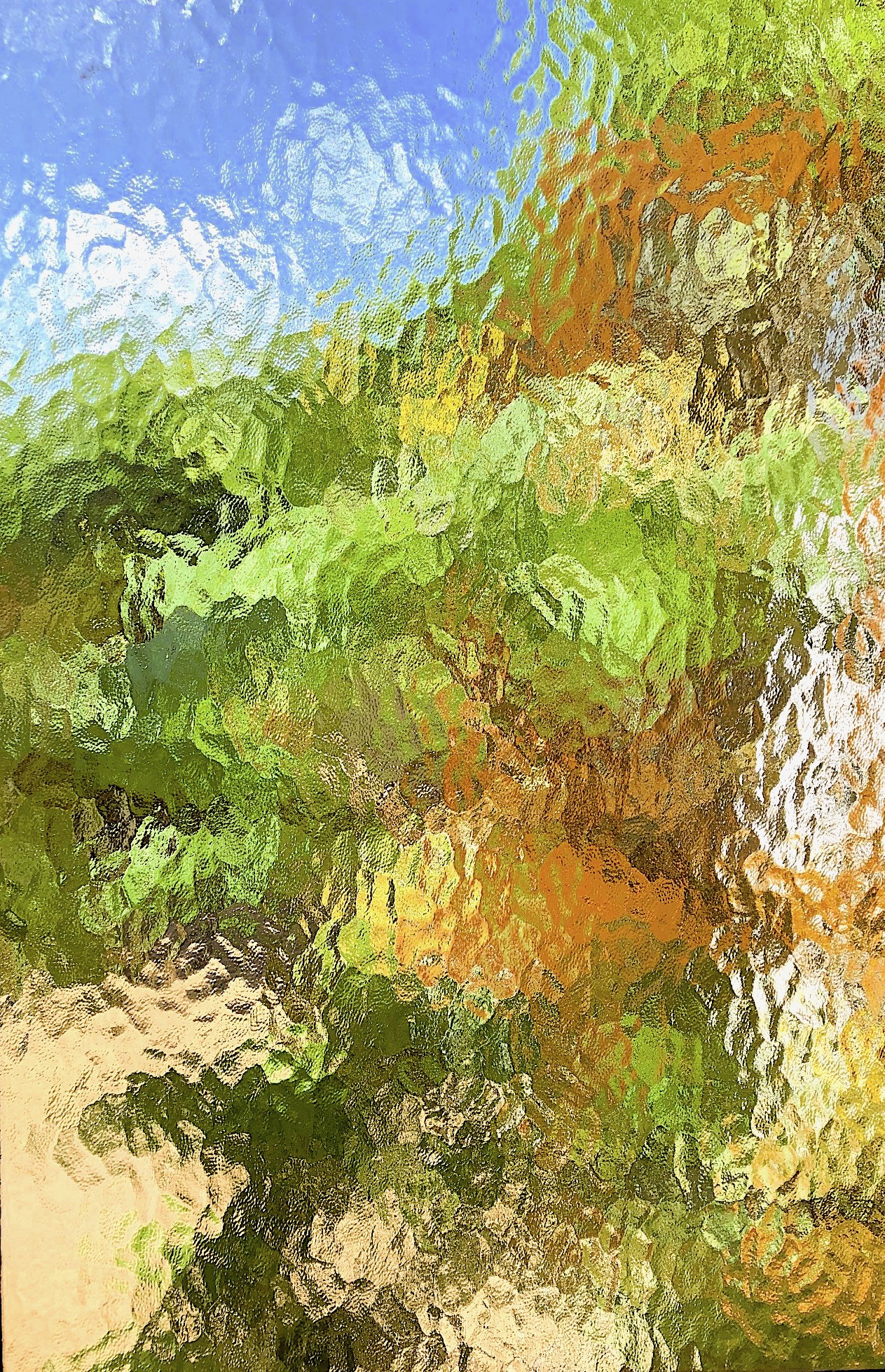
A few blogs back I wrote about being inspired by art. Well, with that in mind, I painted this picture to give vent to my lack of artistic talent. Like it? Not bad is it. I like the way the lines all merge together in a conclusion of colour that burst from the screen.

Confession time.

It’s a photo. It’s a photo of the sky and some plants taken through a wibbly wobbly window but it looks ok doesn’t it! Think you’re looking at one thing, but really you’re looking at another. That’s the trick. Now turn that into clever writing.

What do I mean by clever writing? What even is that?! Do I even know?

I guess I mean presenting the reader at the beginning with what they think is one thing but by the time they get to the end realise it’s a different thing altogether – but in a good way. Isn’t that what they call a Twist? Or Plot? Or maybe even a Plot Twist?

So here’re a few tips for you, should be you interested. Just my thoughts and observations… nothing too taxing. Let me know if you agree…or not

  1. Do your research then write like you haven’t. Eh? Wha..? As in, make your story so natural that your readers are drawn in straight away, without any time to argue the toss or disagree with what you’ve written. Make sure you know what you’re writing about in terms of exposition, especially in historic fiction.
  2. Writing science fiction? Make your new world as relatable as this old one and your readers will be there from the get-go. With time and good pacing of chapters you can unfold your new world without anyone really noticing and then bam – they’re residents of your new world without even booking a removal van.
  3. Without doubt clever dialogue is the way forward. What is clever dialogue? Is it what you hear all around, every day? Or is it well structured, over-long and completely unlikely? Do we speak now as Mr Darcy spoke then? Be brief. Be bright. Be Clever. If in doubt, chuck it out.
  4. Nab yourself a clever idea which will grow into your story giving rise to a great plot. Clever idea huh? Well excuse me while I just pop down to the clever plot shop. Simple’s always best. Make it too complicated – too many brush strokes – and you’ll lose your reader. Say for example you’re writing a cli-fi, how about the seas suddenly freezing over rather than warming up? Oh Contraire I hear you gasp.  It’s a 180 to the current crisis, so why not?
  5. Characters always help in a story, don’t you think? Making them mad a genius or an astronaut lost in space s a bit too clever – you’d have to know a lot about geniuses or space to pull that one off effectively. Nah, go clever. Writing crime? Police procedure? Let’s have no more of the grizzled-nearly-sacked-maverick-cop with a penchant for late night whiskey, but something cleverer. A deaf detective? Could be interesting.
  6. Develop a good support cast. Could be a horse. Could be a kid. Could be an older gent or lady with a secret past. Make your support characters shine.
  7. Read. Read other authors; work out why you like what they write. Read authors you’ve never heard of in genres you’d never normally consider. Give it a go, and be clever about it. Obvs.

Vincent van Gogh and Experimental Writing

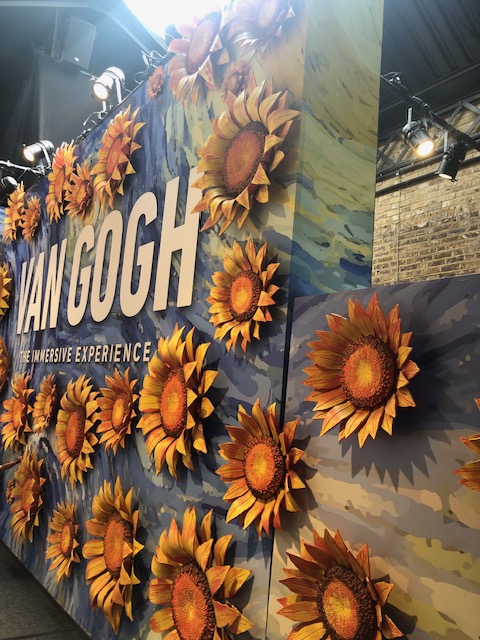
As you may have seen on a Twitter post from me recently I was lucky enough to visit the Vincent van Gogh Immersive Experience in Shoreditch and see for myself what all the excitement was about. And exciting it was.

I can’t honestly say I’m a fangirl of ol’ Vincent’s, but I do love a bit of art. Any art. The exhibition covered his life and premature death, his friendship with artist Paul Gauguin and the love of his brother. Did you know van Gogh originally wanted to be a priest? Me neither. You could say lucky for us that he failed in that respect.

The use of colour in Gogh’s work has often been discussed by those who discuss such things, and reading from the information sheets at the exhibition it seems that the conclusion drawn is that van Gogh may have suffered from xanthopsia, a condition which causes the sufferer to see in yellow more than any other colour. It’s not until you see so many of his hundreds of paintings together that you realise how much he loved his yellow. Think you know his sunflowers? Think again! He painted over 500 images of sunflowers, some of which you’ve probably never seen or even knew existed. It’s those big blousy ones in the vase that get all the attention. Drama queens.

Much of his work seemed to my untrained eyes very experimental – but then I’m no artist so what do I know – but according to the exhibition he had been told by one who knew so little, not to bother painting. He ignored such ill-founded advice and forged ahead.

Many of his preliminary sketches were on display and they put me in mind of a writer producing that scrappy first draft – you know the one – all puff and fluff, ideas and inspiration rather than proper prose and sentence structure.

How many times have you started with the puff and fluff, the idea and inspiration, to get fifteen minutes in declare it rubbish? That is not the way ahead my friend. Keep your puff and fluff, it could reap fantastic rewards a few months from now, because amongst the puff is the kernel of an idea that you had, and that must have some merit. Just because your whole story/novel/poem/essay isn’t formed yet doesn’t make it valueless.

Don’t be put off by that little niggly voice in your head telling you that what you’re writing isn’t any good. It might not be perfect – yet – but take a page off of Vincent’s canvas and stick with it.