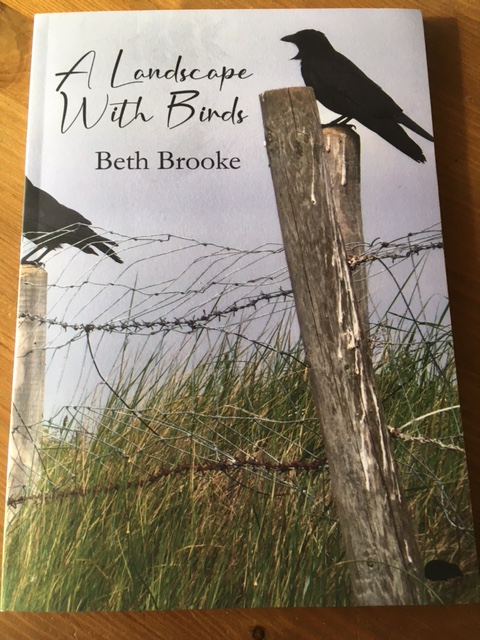
A Landscape with Birds by Beth Brooke

This wonderful collection of short verse from author Beth Brooke is poignant, clever, and expressive. Beth brings the landscape to us, presses us to acknowledge we are linked to it, part of it, draws out of us our unacknowledged place in the world today. Simple lines can hit the mark and make us think of places we would rather be. In Ploughing, April 2020, we are on the sidelines watching a farmer plough a field, seagulls diving toward the turned earth. Yet in an instant we leave the rich winter field, those seagulls transporting us from the bucolic to the ocean in six simple words. We are there, we can feel the salt on our skin and the tang in the air because we know what it’s like to miss the sea, somehow we understand that intangible desire the sea arouses in us to be near it. And it is the much maligned seagull that takes us there.

Beautiful imagery, like a classic film or an assortment of incredible art, plays throughout this collection, pushing to the forefront birds and their landscape, from the opening poem Jackdaws (and you know it’s true!) to the feathery, flitting, daring nonchalance of sparrows and the oh so sad kauai o’o bird. Every poem demands a second read – sometimes a third – and returning to the book a month or so later, you’ll find yourself wanting to read them all again at once.

We Take Our Son to University is a lovely lovely poem, so neat, so gentle, touching. And you can see that red kite, skimming across the page as you read the words. In Betrayal, the flight of ravens articulates the words that cannot be said; they speak for anyone wounded by duplicity.

            If you like birds, nature, the landscape all tied together in beautiful poetry, then I would recommend a read of this book. It’s not a big book, coming in at only 31 pages, but each poem is patiently observed and crafted. An absolute gem.

A Landscape with Birds is published by Hedgehog Poetry Press, Bristol.

http://www.hedgehogpress.co.uk

Review and Author Interview

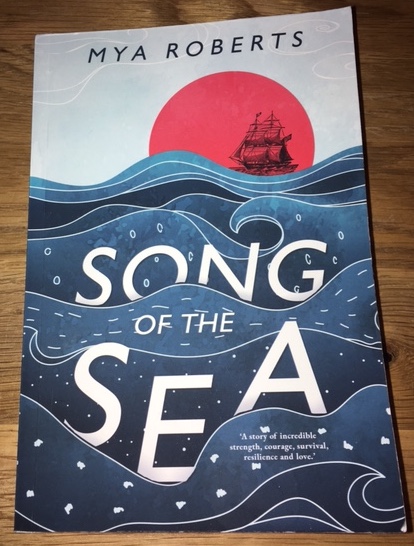
Mya Roberts, Song of the Sea

Mya is a Guernsey author and the sea has always been an essential part of her life. Last year she completed her first novel, Song of the Sea, and will be appearing at this year’s Guernsey Literary Festival. I met Mya many years ago on a writing course and it was there she read the first few captivating chapters of what was to become Song. The first question then Mya, and of course the most obvious, what is your book about?

My story starts on Guernsey in the Channel Islands in the 1700s. My main character, Elise, has a pioneering spirit and is about to leave the only home she’s known in order to join her fisherman husband, Thomas, in Nova Scotia. We follow Elise across the Atlantic Ocean and into the arms of her husband and her life as a fisherman’s wife. Her adventures exceed her expectations, the splendours and extremes of her environment are beyond her imaginings; her trials and fears challenge her courage to the full.

That sounds a very interesting story – where did the idea come from?

Some years ago, my husband Ian and I were exploring Nova Scotia, Canada, in a 32ft recreational vehicle we named ‘The Beast”. On The Beast’s aerial we proudly displayed a little Guernsey flag. The area is spectacular, the campgrounds were a delight and the people were warm and generous. We were having the time of our lives. In our travels we discovered Isle Madame and on Isle Madame we came upon a harbour named Arichat. We saw two cannon pointing out towards a small, unimposing island. A plaque read, “Jersey traders, who were French-speaking British citizens, settled on Jerseyman Island off Arichat in the late 18th century. The island was later attacked by American privateer John Paul Jones, forcing the inhabitants to move to Isle Madame.”  I’m a writer. Need I say more?

Indeed not! What great inspiration. And of course coming from an area where the sea is part of everyday life, did you find it easy to start writing Song?

We do possess some of the most beautiful coastline you can imagine, though on a much smaller and in general less rugged scale than in that part of Canada. I was born by the sea, and have lived with the sea most of my life. To my mind the sea does speak and the range of its voice is extraordinary. 

How quickly did your main character form?

Elise and Thomas grew slowly and surely as the story developed. Marcel was more of a wild card. Each of my three main characters surprised and challenged me as they evolved. It was rather like producing and at the same time acting in play. You start with a story outline, which develops and you enrich your characters, and they enrich your story and your story enriches them.

How much research did you do?

It was endless and I loved it. Like a treasure hunter I sifted and pried. I went to Jersey to investigate the archives, and I interviewed experts, and, best of all, returned to Nova Scotia (and the 32ft Beast) to follow Elise’s journey, make notes, take photos, and undertake more interviews. It was difficult to leave great quantities of that fascinating material on the ‘cutting room floor’. I had to accept that my reader may not be as enthralled with the drying and salting process of fish as I had become.

Well Mya, you might be surprised there! Many authors of historical fiction read works by other historical fiction writers – who knows what one author can learn from another.  Once you’d done all your research and gathered all your lovely facts, how did the editing go? Do you see it as a necessary evil or something you enjoy?

A bit of each. The torment of a scene or a chapter that doesn’t work is deeply frustrating. The sculpting of a book when it blossoms on the page is a joyful thing.

Did you let the book stew – say, leave it for a month and then come back to it to edit?

It stewed to the point of extinction many times.

Well I’m glad you persevered! Now, tell us about that gorgeous cover.

The cover started life rather Beige. A beige sea. I suspect my publishers were testing the ground by offering me a starting point. I was afraid they’d transform Elise into a double D, bodice ripping, lip-pouting glamour girl. Instead they offered that vivid startling sea, the glorious sunset and the galleon. It was love at first sight.

And so from cover to publishing – how are you publishing this book and why?

I have enough rejection slips to paper at least one wall. But I realise now that Song was rejected for good reasons. I dried my tears, stopped sulking, then started over. Only better.  Cranthorpe Millner accepted Song just weeks before Christmas 2021, and only weeks after I’d just completed major surgery followed by a gruelling course of Chemo. The offer was a good sign for the future, perhaps?  After all, I had to be around for book signings, didn’t I?

You most certainly do. Do you have a strategy for finding reviewers?

I gave my publishers a list of possibilities and they took it from there. A handful are in Canada, and they are very enthusiastic and supportive. I think I’m going to be big in Canada.

If you could have been the original author of any book, what would it be?

Something amazingly clever. Something that looks like it flowed from the  author’s brain to their keyboard in one smooth, electric stream: All The Light We Cannot See, Where the Crawdads Sing, JK writing as Robert Galbraith, or a Hillary Mantel, perhaps.

And finally…

What advice would you give to your younger self?

You’re worth more than you think, more talented than you feel and cleverer than you believe: now go for it.

Song of the Sea is the account of Elise’s journey – real and metaphorical – from her sheltered upbringing in Guernsey to Nova Scotia, Canada in 1755. Once reunited with her fisherman husband Thomas, she faces the unforgiving realities of life as a fisherman’s wife. Before she departs her home of Guernsey however, we see glimpses of the life she is leaving behind, of her gift as a herbalist that could end up seeing her hanged for witchcraft, a gift her grandmother made her promise to keep secret. As Elise’s new life unfolds in Nova Scotia there are distant rumblings of war, the threat of how her and her husband Thomas’s life could change forever. There is love, and loss, but also achievement and triumph as we travel with Elise to a time and place about which very little was known. She experiences motherhood, brutal war, and endures the horror of attack on her husband, and hopes in time to nurse him back to some sort of health. Throughout, Elise has to call upon strength she did not know she had. As her fortunes twist and turn Elise becomes a respected herbalist, a teacher and more. She becomes an independent woman in an age of great turmoil when women had very little choice over the lives they led.

We see her grow, and age, embracing one last challenge before her time is done, at one with the song of sea.
Poetry Prose and Other Things

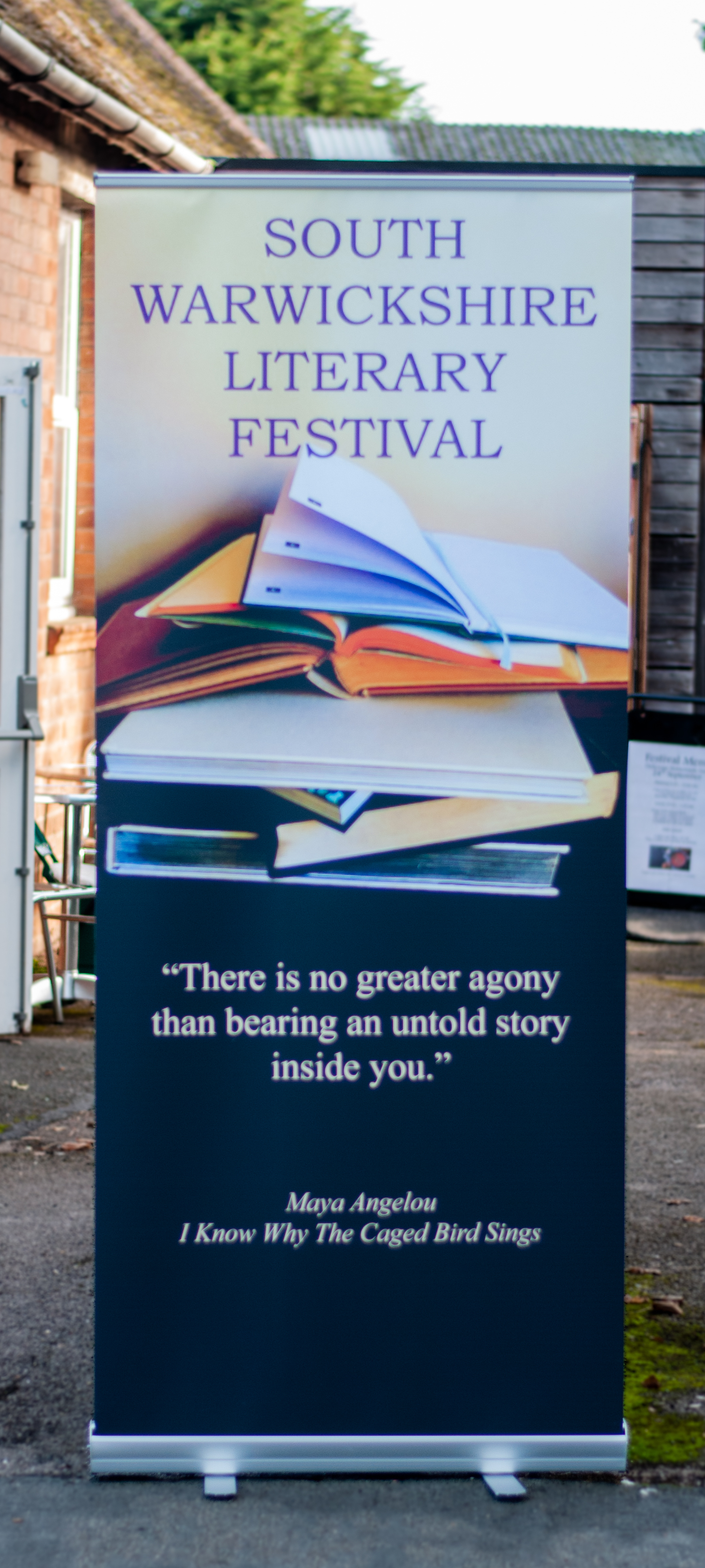
As part of the on-going preparations for next year’s South Warwickshire Literary Festival, this Saturday I’m very much looking forward to hopping over to Rugby library to see and hear the contestants for next year’s Warwickshire Young Poet Laureate. It’s been a while since I attended the event due to you-know-what, so it’ll be good to get back in the audience and hear these excellent poets read their work. The event is being hosted by poet Steve Pottinger and it’ll be good to hear his work too.

On the subject of words, poets and writery things, in an email I received from from the Evesham Festival of Words Director Sue Abblet today, she shared this about the festival and how such events can be an inspiration:

“When the Festival first started we used to run a Junior Short Story Competition.  A regular winner was Iona Mandal who said that our Festival was a huge source of inspiration.  Huge congratulations to Iona who was recently selected as Birmingham Young Poet Laureate (2022 – 2024).” Isn’t that just fantastic? So keep those short story and poetry competitions going – they’re so important.

And not only but also, the Young Poets Network is an online platform for poets under the age of 25 and is packed full of contacts and ideas, and is a great confidence builder for those young poets just starting out. Does the world need more poets I hear you rhyme? Yeah, all the time. Hey – I’m not 24 any more, ok?! 

Going back to short story comps, the marvellous Banbury Writers’ Cafe are hosting a free to enter picture prompt comp which closes at the end of this month. If you zip over to their website you’ll find the four photos to stir your inspiration and all you have to do is tiptappitytip away on your keyboard and get an entry in. Poetry is also accepted. Yeah! I know! 1500 words or less. Guidelines are all on the website. Apparently they’re happy to chuck fifty quid at the winner, thirty at second place and a flat unbendy twenty for third place.  They’re a generous bunch.

We Did It!

Here we are!

We did it – our first south Warwickshire literary festival and what a brilliant turn out it was! The sun shone – which was just as well as we had to move our many authors outside to sell their books due to ticket sales.

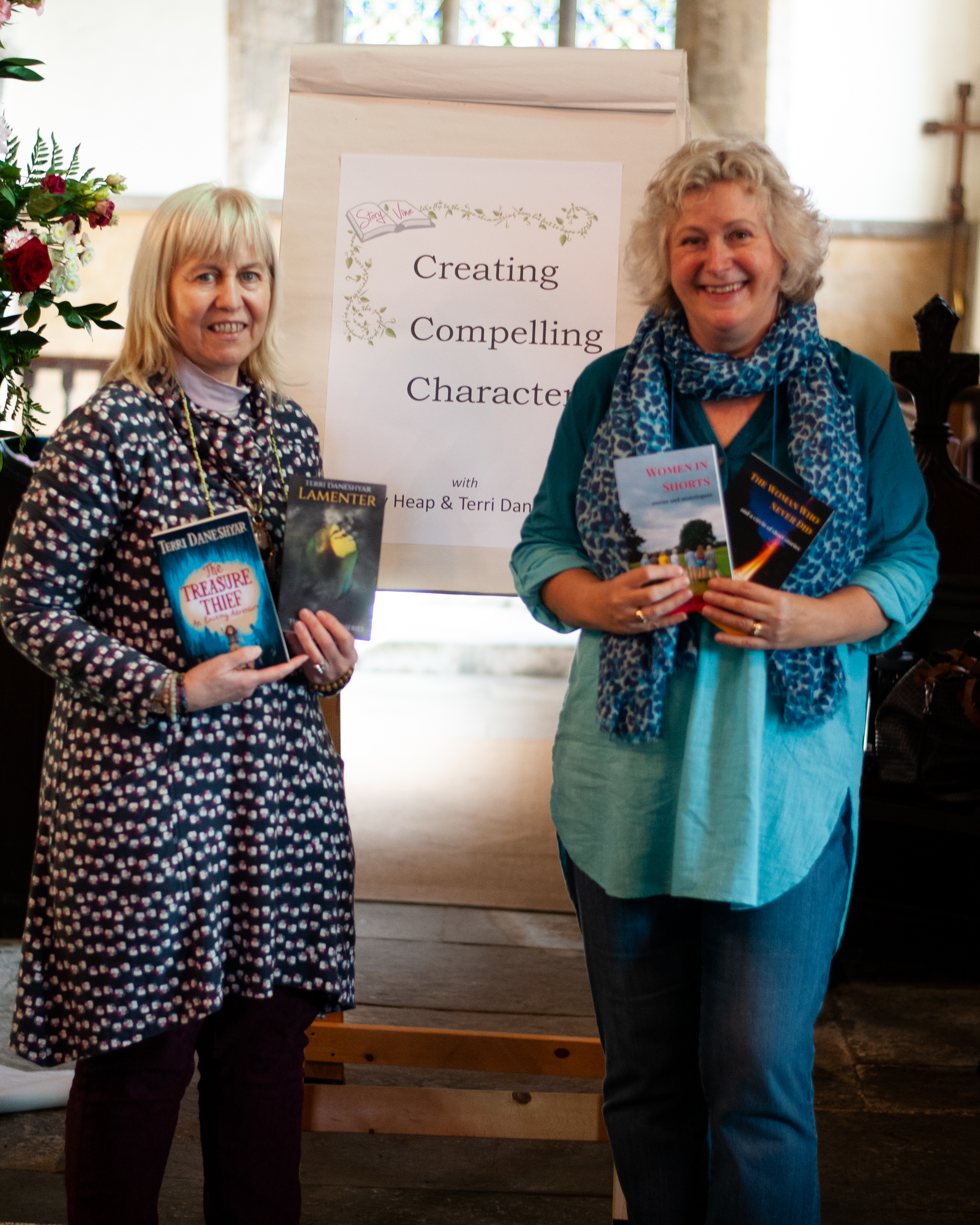
Creating Characters with Terri and Jenefer

Our workshops were packed. Everyone seemed to have a great time and our workshop leaders delivered some fantastic content. All of them are to be commended – Hugo Kerr, Jenefer Heap and Terri Daneshyar, Cate West and last but not least Mslexia judge Audrey Niven. They were superb. From what our attendees told us it was an excellent day.

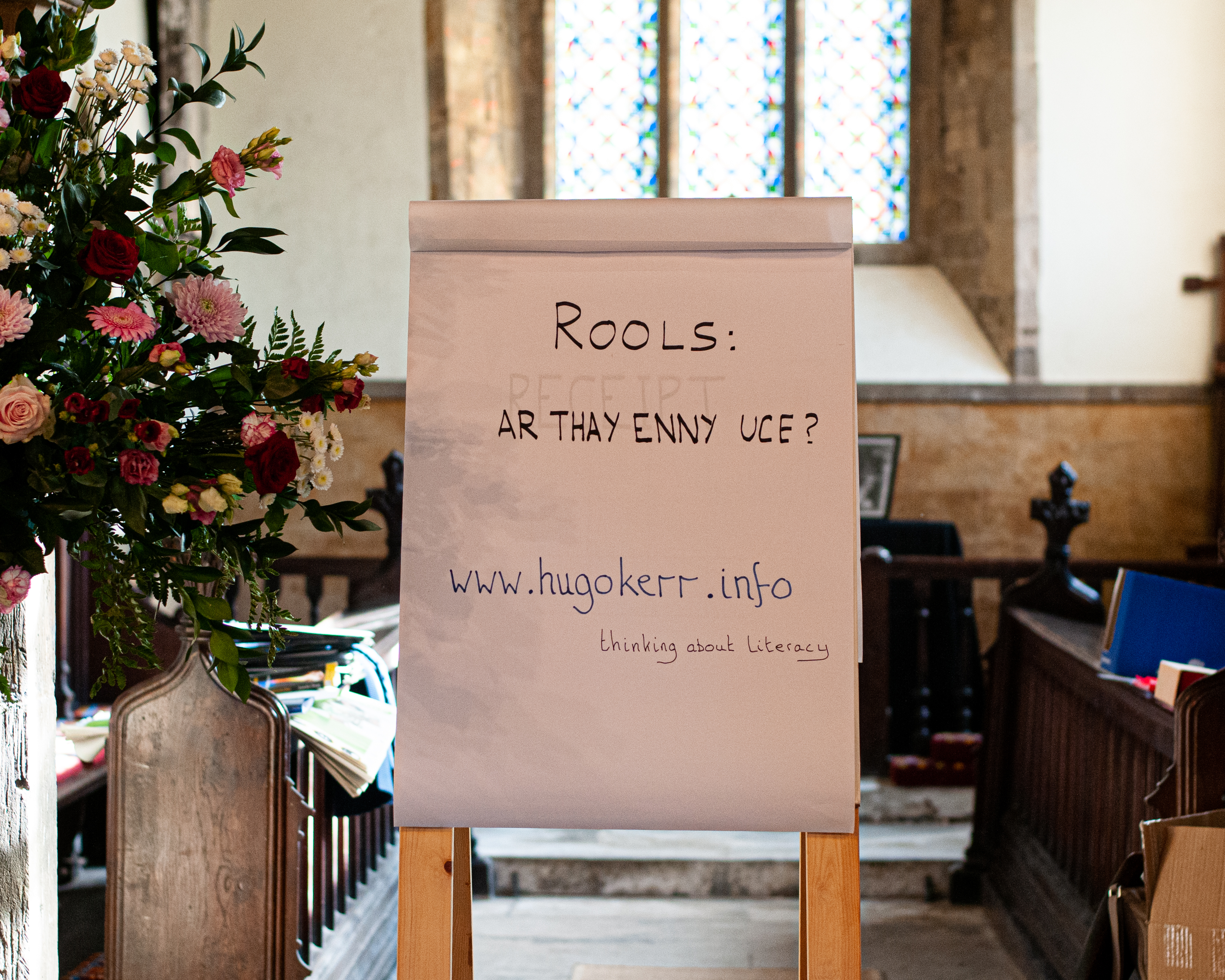
Well, are they?!

And our speakers in the main hall – well! The Young Poets certainly made an impact! We were blown away by their eloquence, observation and just damned talent! Award-winning young poet Emily Hunt drew much attention with her clever poems on nature, and Dan Wale, the Warwickshire Young Poet Laureate had us clapping almost out of our seats, and YPL runner-up Jolyon Summerfield also delighted us with his work.

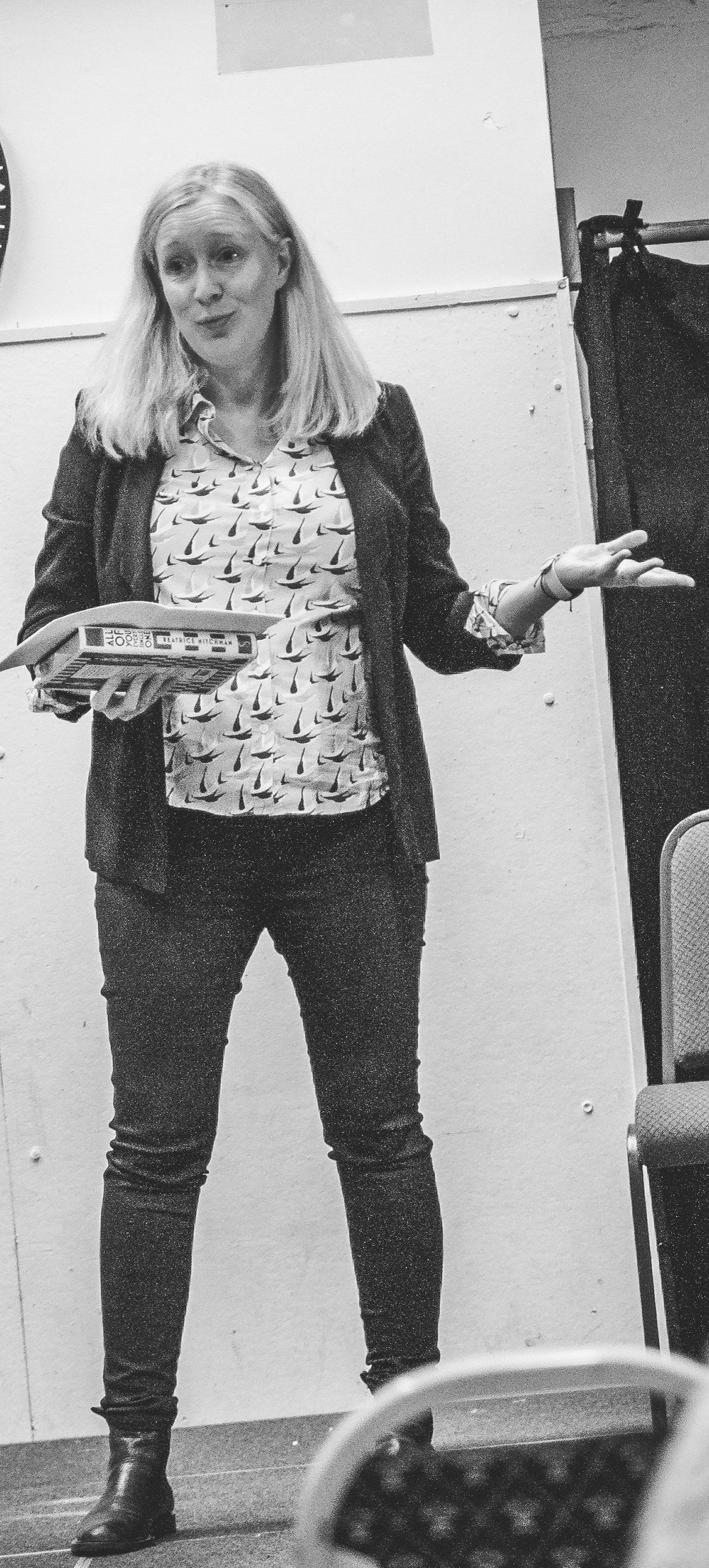
HWA long-lister Author Bea Hitchman
‘The Fish’ author Jo Stubbs and poet Gwyneth Box

All our authors were wonderful and we owe a huge debt to them for agreeing to take part for nothing. A special thank you has to go to poet, author and translator Gwyneth Box who stepped in at the very last minute – Cinderella timing if ever there was any – when one of our speakers was unable to come – and delivered a great hour-long talk off the hoof. Superb stuff.

Oh, and cake? Did we mention that? Well, our lit fest attendees did. In droves! Apparently it was pretty good!

         So – plans for next year? You bet!

Already drawing up the schedule…

like a rock

From the blog of the excellent author and poet Gwyneth Box, with regard to her heroic standing-in at the last minute at the South Warwickshire Literary Festival on Saturday. She was, and is, amazing. Read on!

don't confuse the narrator's avatardon't confuse the narrator

Yesterday, I took part in a local literary festival. Originally, I had been invited to read a short set of poetry during one of the sessions; then one of the speakers was ill so she dropped out, and, at the last minute, I was asked to step in and give a talk. And I do mean the last minute. I got a text message on Friday afternoon to give me advance warning that my help might be needed: maybe I could give a short talk on poetry or translation? I duly rustled up some old notes on the latter and thought about changes I’d need to make so it would suit the audience.

View original post 1,376 more words

How To Create A Literary Festival Part 2

For those who read my previous blog regarding starting a lit fest with just a will and a thought and a maybe, here’s part two to let all you lovely readers know what’s been going on since July. Lists, mainly. Over the weekend I constructed the most recent To Do list, put it aside on Saturday morning to scrape up something red and sticky one of the SWLF cats had gifted me, only to find said list had made it’s way through space and time, reappearing down the back of the sofa on Monday evening. Not far short of fantastical I’d say. Maybe a goblin had squirrelled it off the table when I wasn’t looking and got up to mischief with it, ramming it between the cushions and the soggy Christmas peanuts just for lols.

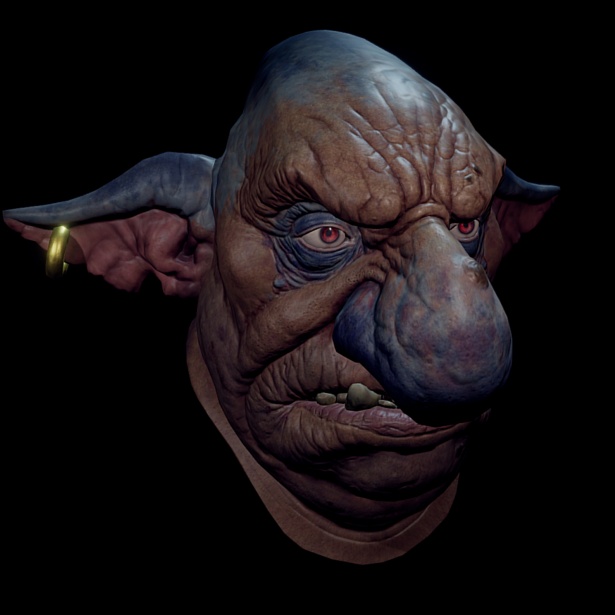
What? You don’t have goblins in your house?

In between writing the list, losing it and then finding it again, lots of things happened at SWLF HQ.  Emails were sent and received. Freebie pens were designed and paid for. A dodgy looking map was created for the back of the festival programme. The merits of cooler weather were discussed with the postman. Twitter posts were written and discarded, then written again and scheduled to hit the twittersphere sometime this week. A surprised ewe was found wandering the village, questioned, cautioned and returned to the flock. Wednesday was spent gawping at the rain and wishing out loud ‘Go on, GO ON!’ as the lightning cracked the sky. And now here we are, Thursday, and back to the list.

            Here are just some of things I’d written down:

  1. Write Press release
  2. Contact radio stations
  3. Contact local newspapers
  4. Update Instagram
  5. Comfrey leaves
  6. Finish copy for festival programme
  7. Try for sponsorship again

Now…nothing very unexpected there apart from item 5. Comfrey leaves. Did I mean something else? Comfy sleeves perhaps? Between trying to write a press release and updating Instagram I am now confounded and sidetracked by my own very obvious comfrey leaves citation. Pick them? Boil them? Make them into a hat? You tell me. Perhaps it was a note that had slipped off my other list about compiling the guidelines for a writer’s group short story competition and somehow landed itself on the SWLF list.

What ever its meaning – which is now unknown to me – I hope I don’t get to the morning of September 24th and hear myself say ‘Oh!!!!!! Comfrey Leaves!’