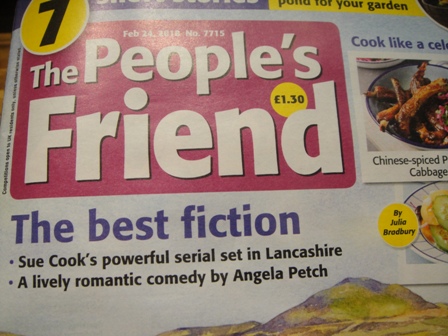
This post was triggered by a People’s Friend blog by Abbie, one of the editors. It states the obvious, really, that before you submit a story to a magazine such as The People’s Friend, check that it’s suitable for them.
I’ve lost count of the times I’ve seen posts on social media along the lines of ‘I’ve written a short story, I might send it to People’s Friend as they take women’s stories, don’t they?”
Yes, they do. But if you are unfamiliar with the type of story they publish, I would bet good money that your story will be sent straight back with a ‘thanks but no thanks’.
Abbie suggests checking the market after you’ve written your story. I would go a step further and say you should do this before you put finger to keyboard. Write the sort of story the market wants, not vice versa, at least…
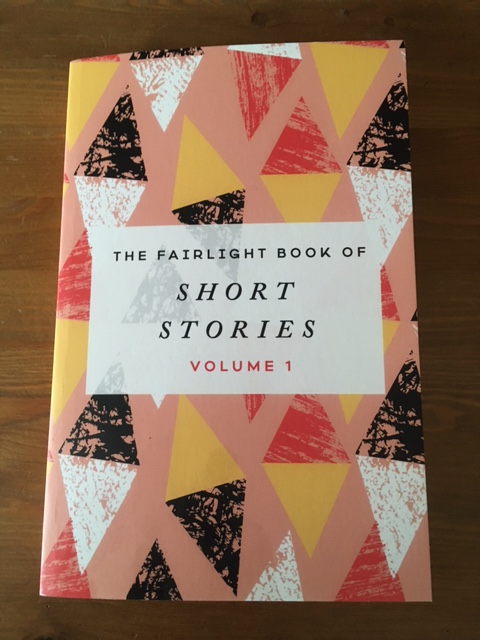
Reading reading reading! Like many writers out there, the urge to write as been less than the urge to eat my least favourite food, although for some others the need and will to write has never been greater – Carpe Diem and all that. However, having spent many hours staring at a blank screen with a keyboard that seems to have lost all its letters and is holding the space bar to ransom, I have been reading instead. I found a great second-hand book site Awesome Booksand bought enough books at remarkably low prices to get me through to the Spring equinox. Meanwhile, I have this superb collection of short stories from Fairlight Books to review for @TSS – long or short reading, I love it all and there is so much to learn from other authors. This week I was engrossed in Stacey Hall’s The Familiars (@stacey_halls) and prior to that The Lost Book of Salem by Katherine Howe and prior to that the brilliant The Vanishing Witch by Karen Maitland. Seems January brought about a incursion into witchiness. Mind you, I did make the long-list for Fantastic Books Publishing’s fantasy horror competition, which was quite a surprise!
So, if like me you’re in the Can’t Write A THING RIGHT NOW camp, or the OMG I just HAVE TO WRITE THIS NOW camp, February is a good time to be upping your skills, giving yourself a break and entering some competitions. And with that in mind…
The Writers’ and Artists’Short Story Competition is open to both published and unpublished writers.Submit short stories of up to 2,000 words. This year’s judge is Alysoun Owen who is the Editor of the Writers’ & Artists’ Yearbook and the Children’s Writers’ & Artists’ Yearbook and has worked in publishing for more than 25 years Deadline – 12th February, Free entry
The latest round of the Reflex Fiction Flash Fiction Competition is open to stories of between 180 and 360 words. The judge is author, Sophie van Llewyn.
Prize – First prize: £1,200 / Second Prize: £600 / Third prize: £300 / Fourth prize: £150 / All long-listed stories will also be published online.
Deadline – 28th February, Entry fee – Choose your own entry fee (suggested fee is £7).
The judges of the international, Crime Writers’ Association Margery Allingham Short Story Competition are seeking entries of up to 3,500 words that fit the legendary crime writer’s definition of what makes a great story: “The mystery remains box-shaped, at once a prison and a refuge. Its four walls are, roughly, a crime, a mystery, an enquiry and a conclusion with an element of satisfaction in it.”
Prize – £500 and two passed for CrimeFest 2022, Deadline– 26th February, Entry fee – £12.
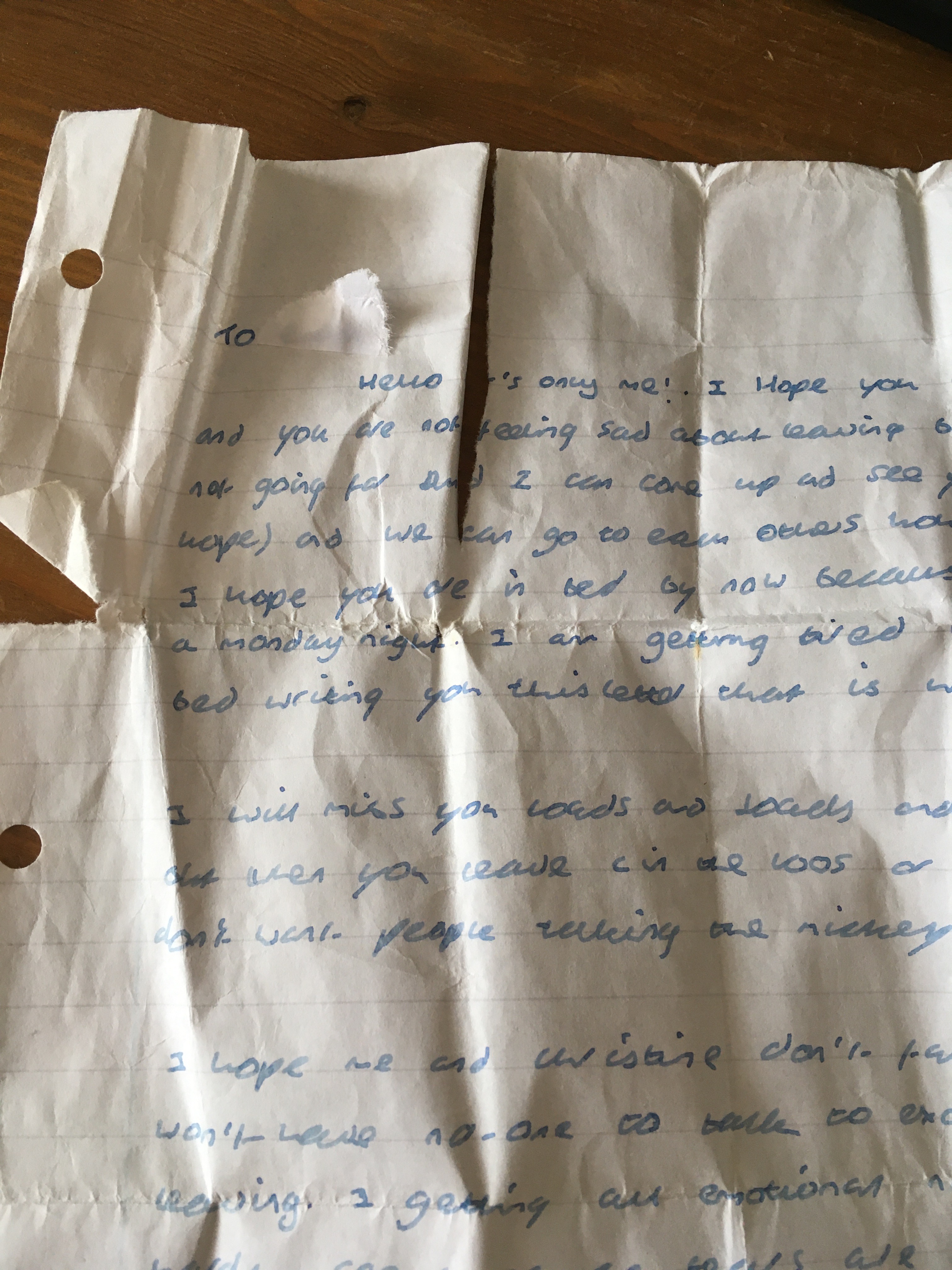
Slowly creeping out of lockdown and I have been volunteering at a local charity shop. Imagine my amazement when I found at the bottom of an old cardboard box, this letter.Handwritten in ink, it is a goodbye letter from one schoolgirl friend, Anne, to another, Angela – although those are not actually their real names because you never know, they may one day stumble across this blog and know it is their letter. Stranger things have happened.
Anne is saying farewell to Angela because Angela is moving away, presumably with her family, and Anne is saying how much she will miss her – she’ll ‘cry her eyes out in the loos so that no-one can take the mickey’ out of her. As she writes, she says how the words are getting bleary because her eyes are filled with tears. Very moving – and let’s face it – an author’s dream to find such a thing. Talk about inspiration. I hope their lives worked out ok and Anne moved on to find other friends.
But did Anne ever post this letter? Did Angela ever receive it? Who kept it for so long? Why was it in the bottom of a box destined for a charity shop? And how long had it been there?
Where should my story take these two young teenagers? Do they meet again in middle age?
Amongst all the chipped mugs and glittery discarded Prosecco glasses, this letter is without doubt a glorious gem.
But as I’m not I thought I might have a go at this:
A Fiction Desk comp about gardens
Exploring our theme of ‘gardens’…
Until the end of July, we’re looking for short stories on a theme of ‘gardens’:
“Private gardens, public gardens, or shared gardens. The neighbour’s garden, or gardens of the rich and famous. Secret gardens, exotic gardens, well-kept gardens, forgotten gardens, haunted gardens, dangerous gardens, gardens of the past or of the future. What do they mean to us? How do we use them – or not use them? What might happen in them – or not happen?”
Indeed – what might happen in them. It must be the weird in me but my first thought was of course burying the body under the patio, then I thought ‘perhaps I should write a really moving poem about all our old dead pets buried in the Cat Cemetery (aka the shady border)’ and then I got all teary remembering all those tails and whiskers and had to stop for a cup of coffee and some toast. You know how it is. Lockdown Lunacy.
Who’s to know? What will the next fashion in writing be? As writers, alone with our keyboards and our thoughts, it can get demoralising when we’re receiving decline after decline ‘…not what we’re looking for at the moment…’ ‘…not on our current list of whatevers…’ So what’s to do? Get out that great big shiny crystal ball I’d say and give it a good polish. Failing that, get on the internet and do some research or buy a trade newspaper and see what those in the know are chattering about.
Some say young adult, some say fantasy, some say non-fiction – but all signs point to audio and digital rather than an old fashioned love-it-or-hate-it paper version of your book. No doubt such changes will be driven by authors in their twenties and thirties, embracing technology in a way that older authors don’t. If you are an autonomous author you can of course continue to write your kind of novel, and you will find your audience eventually, but it can be hard work. If you are agented the hill is no less steep, and you will have helping hands along the way – but only if you’ve ticked the agent’s ‘Ah yes this is exactly what we’re looking for’ box. Slippery old eel, that just what we’re looking for idea. Checking out an agent’s website you will see that each agent gives and indication of their likes and possibly dislikes, and if you’re not writing what they like, don’t bother sending your work to them. Save yourself the misery of a no thanks. If you want to be agented, find an agent that, like you, likes crime, or horror, or romance – funnily enough you’ll stand more of a chance of them taking notice of your work. Have a look at what’s going on in the world – does your book align with any world events? I’m guessing the next five years will show a rise in dystopian After The World Ended novels, especially for young and new adult readers – and most of it will be on an audio or digital platform. If you’re a self-publisher then you have the freedom to write what you like, but that is not a get out of jail clause for sloppy writing. Some self-published author’s work I’ve read has come across as them just talking very loudly at me, brow-beating me with what they think a good book is because that’s exactly what theirs is and am I paying attention? There may well be an uptake in Immigration writing, words of those from war-ridden countries who have been freed from refugee camps and tell it like it is; when America has a new president we may well see a raft of political thrillers again, and not forgetting AI, fantasy and science fiction for young adult and older readers alike (according to my research) – all set to be popular in the next 24 months. Likewise Life Before The Internet is also growing in popularity for millennial readers; a hankering perhaps to experience what their parents and grandparents sometimes speak of ‘Oh yes, there were only three television channels and they went off at midnight!’ But then there were four, then five, then all-night tv, dial up phones were replaced by push button ones and a what? A mobile telephone? What even is that? Another world, eh? So fantasy and science fiction can come full circle and join hands with memoir and historical romance, if you wanted them to.



 There may well be an uptake in Immigration writing, words of those from war-ridden countries who have been freed from refugee camps and tell it like it is; when America has a new president we may well see a raft of political thrillers again, and not forgetting AI, fantasy and science fiction for young adult and older readers alike (according to my research) – all set to be popular in the next 24 months. Likewise Life Before The Internet is also growing in popularity for millennial readers; a hankering perhaps to experience what their parents and grandparents sometimes speak of ‘Oh yes, there were only three television channels and they went off at midnight!’ But then there were four, then five, then all-night tv, dial up phones were replaced by push button ones and a what? A mobile telephone? What even is that? Another world, eh? So fantasy and science fiction can come full circle and join hands with memoir and historical romance, if you wanted them to.
 Jacci Gooding, Author
You must be logged in to post a comment.