Close, but no cigar…

On a wet and windy night last week I attended the Bedford International Writing Competition winners announcement evening at the lovely Quarry Theatre. Congratulations go to winner Torshia Seales whose short story The Longest Rope was a moving and evocative tale of loss, love, and freedom.  Judge Eleanor Dryden gSAM_1525.JPGave a wonderful speech on the importance of short stories and the incredible talent she’d seen displayed in all the entries. For a shortlister who didn’t quite make it to the top three, it was great to hear these words of encouragement and support from someone so experienced and knowledgeable in the publishing trade.  Other prizes up for grabs were for poetry, short story in the 17-30 age group and local Bedford prizes. Two charities, SMART, and Schoolreaders, which helps to improve childhood literacy, also benefitted from some of the competition entry fees. 

It was a great evening and if you’ve ever been shortlisted you’ll know what that buzz feels like!  This year’s competition opens on May 1st– so if you’re reading this, absolutely go for it! I will!

Bedford Writing Comp 2020


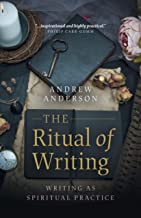
Review – The Ritual of Writing; writing as a spiritual practice

In his book The Ritual of Writing, Andrew Anderson considers writing as a spiritual practice – an unusual and intriguing concept.

The more I read however, the more it makes sense to connect your writing with seasonal celebrations, with nature and your sense of place within it.  For many – even in today’s hurried and worrisome world – or maybe because of it – ritual is an important part of life. You could say that setting the clocks back in the autumn then forward again in the spring has become modern ritual, such actions inviting particular emotions within us. Clocks go back, we all grunt and groan about the winter; clocks go forward, and the simple ritual of changing the time can make us feel brighter, more optimistic, because we have been gifted more daylight. We haven’t of course, but it just feels like it. Such is the power of ritual: ‘It’s the summer!’says Anderson, ‘Time for heat waves and holidays…I find summer is the season for focusing on the here and now, for writing in the present tense.’ I fully get that – as sunlight and warmth breathe new life into the new season we feel the directness of it, and Anderson encourages us to embrace it.
The Ritual of Writing.jpgHowever, Andrew Anderson’s book delves far deeper than how we feel when changing the clocks. He is exploring the fascinating relationship between writing and ritual within Pagan spirituality. In essence, Anderson suggests we take more account of the natural world around us, listen to the seasons, the weather, and the bird, insect, amphibian life we cannot see – ever more important
for a planet threatened as it is by over-heating, deforestation and destruction.
As a creative writing tutor Anderson offers writing tasks throughout the book – short writing exercises to help the reader approach a subject or idea from a different, more spiritual aspect. But don’t worry, if you’re not sure what that means Anderson’s clear and concise instructions will soon get you on your way and it becomes easy. This is practical and informative workbook for lay or experienced writer. It is accessible, easy to read but at the same time giving plenty of time for the reader to pause and reconsider, and perhaps take a different path. Anderson encourages you to develop your writing, go out of your comfort zone and give it a go. There are no losers, only winners, and you may find your writing improves because of it.

Each chapter is clear, informative, unusual, and Anderson is very keen to encourage the reader to read their work out loud. Much can be learned from hearing your words set free – hearing them as others would – and that is a great tool for editing. Speechwriters the world over will read and re-read their speeches out loud to ensure that their message reaches their audience in the best condition, with correct inflection, with pauses in the right places, everything mixing together to create the best prose they can. Think of the famous speeches from history – you can bet they weren’t scribbled on the back of a matchbox or quickly noted on a phone before they were set free. No, they were considered, written, read out, re-written. Anderson cannot rate this approach highly enough as a way to improve your work. And he’s right.

I wasn’t sure what I was going to make of this book when it arrived through the post, but it has been an interesting and honest way of approaching writing. Critics say never mention the weather, well…I may have to disagree. From snow (James Joyce’s The Dead) to wind (Wuthering Heights) there’s a lot to be said for embracing the rush of nature and its affect on our writing. As Anderson says,

            ‘I want to finish this book with a reminder to keep working on your writing while out and about in wild spaces. As a follower of an earth-base religion, there is no better way of honouring nature than writing whilst amongst her beauty.’
Here here, Mr. Anderson.

Published by Moon Books
£8.99

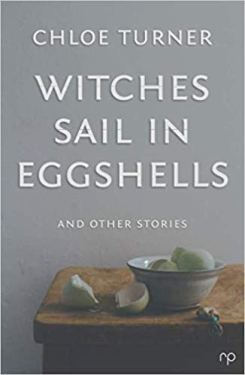
Review – Witches Sail in Eggshells

If you want to write well, you must read, so the saying goes. What a joy then, to be able to read and review Stroud-based writer Chloe Turner’s collection of short stories, Witches Sail in Eggshells.

Witches Sail In Eggshells.jpg

This expertly observed debut collection of short stories reads between the lines of life and explores how we love and lose, then find ourselves and others again.  From an hilarious yet uncomfortable child’s birthday party where the past is laid bare for all to see – yet only seen by some – to the meeting of two women who have loved the same man, to the horror of environmental catastrophe, all stories are told with a melancholic humour that packs a powerful punch.  An example of Turner’s excellent ability to find humour in a sad situation is cleverly explored in Waiting for the Runners in which a mother waiting for her son to finish a cross-country race bumps into the woman who stole her husband. The stooge in the story is Mrs Harris, the PE teacher: Mrs Harris’s Lycra thighs emerged from the shrubbery like purple hams brings brevity to the sadness, the reader having just learned of a terrible sorrow brought upon the narrator years before. Turner does this very well. We feel the pain of each woman – of wife and mistress, of their discomfort and disconnectedness, and yet the story ends with a sigh, a release, that is positive and uplifting. Such juxtaposition of emotions runs through all these stories, often taking the reader by surprise – and that is the magic of Turner’s writing.  In the intriguingly entitled The House With Three Stories That Might Be Five, an unusual but not implausible story unfolds, and this, like the others, has some beautiful observations casually dropped in to the narrative that make you catch your breath. Turner describes Cathy, a group member on a tour, succinctly with a simple line ‘I’ve been alone so long, sometimes I wonder if my reflection might leave me,’ and you feel Cathy’s loneliness like a sting.
The honesty in the writing cuts straight to the core of the story.

In Show Me What You’re Made Of, Turner takes a darker turn, leaving the reader wondering.  Creepiness at it’s best.

There are similar themes running through many of these stories – nature, especially, is given a good chance to be seen, but so too danger and menace, humour, melancholy; many stories have a good helping of stoicism which shines a gentle and up-beat light on a human condition which Chloe Turner captures so well. Insightful, resonant, and emotionally touching in different ways, this collection of stories is well worth a read.

Available from Reflex Press, £8.99

Warwickshire’s Young Poet Laureate

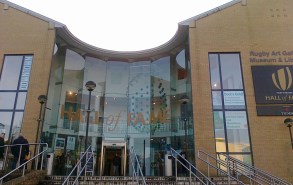
Congratulations, Ruby Murphy! Pour quoi, I hear you ask. Well, Ruby is Warwickshire’s new Young Poet Laureate, crowned last Saturday at Rugby Library.  Competition was stiff, all candidates putting up a poetic fight – immensely talented, all of them.

            With seven minutes to spare and having successfully navigated the Asda car park and the angry man with a small dog and two large children in the back of his Range Rover who wanted to get in front of me at all costs, fed the ticket machine with a collection of still-shiny and under-used five pence pieces, I then hoofed up the exit steps dodging the ripped open and discarded multi-pack of Maltesers – some of which had died on the steps beneath heavy and determined feet – past the young rapper rapping extremely loudly about God and his virtues with a full on loudspeaker that you could probably hear in space, I then legged it three steps at a time into the library entrance where I was eventually guided, slightly breathless and a little dizzy,  by two library assistants to the last remaining seat, to hear the opening speech for this year’s Warwickshire Young Poet Laureate crown.

Rugby Library.jpgThe event was hosted by Former Worcestershire Poet Laureate Fergus McGonigal and punctuated by a small child emitting intermittent screams and bawls at just the right moment as to cause smiles all round. A writer in the making, I mused, trying to get through the pain of the creative process. We’ve all be there, right?

            To my left was a lady who sat through the whole proceedings talking quietly to herself, and often disagreeing with herself, and to my right, as it turned out, a poet, writer, musician and generally talented guy, Mike Took. Mike runs open mic nights for poets in Banbury, Leamington and elsewhere, and hosts a Saturday morning radio show. The place was awash with creativity of one sort or another.

            So why was I at this event I hear you asking. Of course of you are. Well, one of this year’s decisions was to accept as many – as is feasibly possible – offers to go out and about, to meet and greet and catch the vibe. And so that’s what I did.

            Once again, congrats to the organisers, the competitors, the library staff. Excellent.

Eyeing-Up The #Competition

And here we go again! Another year of ideas, of writing, editing, networking. From October last year I began entering all sorts of competitions; short story, flash, meet the agent, pitch your novel, win a basket of kittens etc etc.  In the week before Christmas I received a rejection a day, Monday through to Friday. A No Thanks. A Not Today. A what-some-like-to-call Rejection of my work every single day for a week. Fine. Have it your way I thought. But after a quick sulk and an hour on Twitter looking at large cats squashing themselves into small boxes and dogs pretending they hadn’t been caught emptying the kitchen bin I decided that my work hadn’t be rejected, but declined. That made me feel better. And it’s true isn’t it – one competition judge’s decline is another’s accept, so that’s what I’m going into the New Year with – positivity.
There are lots of competitions out there at the moment. Big ones, little ones, short ones, long ones, international and closer to home ones. So let’s get going! Tinsel and tat long gone, let’s get on with the business of boosting your writing and confidence by entering some. Here are my top tips:

1 – and I never thought I’d ever say this – get yourself a spreadsheet and list what you’ve sent, where you’ve sent it, when the results day is and what the process will be – ie winner notification, shortlisters posted on the competition website etc etc. Dull as it may sound, having a spreadsheet will help. Trust me. Seeing how many comps you’ve entered keeps you on track

2 Go for ones with good prizes, not just ‘and you’ll get published on our website’, good as they may be. Go for something really worth writing for, like a decent cash prize, a presentation (ie a chance to network) and possibly publication

3 Try to enter two or three a week

4 It can get expensive so look for some free to enter comps

5 Share the opportunities with others – FB, Twitter, in person. What goes around comes around my friend.

Here’s six of the juiciest I’ve found this week: (but there are loads and loads out there!)

1 The Chipping Norton Festival ChipLit Short Story Comp 2020 – closes 8thFeb

2 Retreat West – The Retreat West Novelette-in-Flash Prize 2020. Word count for this competition is 8000 words. The narrative arc should be made up of standalone flash fiction chapters of up to 500 words each. Deadline May 31st, £10 entry fee https://www.retreatwest.co.uk/novelette-in-flash-prize/

3 The Fiction Desk – Ghost Story (always a favourite) £3 entry fee, deadline 31 January 2020. Theme: Ghosts Across Borders
https://www.thefictiondesk.com/submissions/ghost-stories.php

4 Bath Flash Fiction Award Maximum length is 300 words excluding title https://bathflashfictionaward.com/ ClosesMidnight February 16th 2020

5 The 2020 Bristol Short Story Prize in association with Tangent Books, is open for entries from writers all around the world

6 And if you’re looking to stretch your writerly muscles, why not write for someone else? That no-nonsense gang of writers down west, Writers HQ, are looking for people to write their blog occasionally. Nothing ventured, nothing gained…
https://writershq.co.uk/write-for-us/
watercolour morning

Reposting this observational blog here to tie-up with this short fantasy horror competition; 1500-200 words https://www.fantasticbooksstore.com/competitions/current-competitions
Thanks for the inspiration, DCtN!

don't confuse the narrator's avatardon't confuse the narrator

The idea of paintings and pictures as windows and doors into other worlds is fairly common in literature.

From MR James’ The Mezzotint to Wilde’s The Picture of Dorian Gray, pictures reveal secrets that are hidden from the real world; from Princess Rosamund in George MacDonald’s The Lost Princess to Edmund and Lucy Pevensie and their cousin Eustace Scrubb in CS Lewis’ The Dawn Treader, children step – or tumble – through into other worlds and places.

View original post 36 more words