Five Tips on Writing Characters

Having a bit of a blank when it comes to writing a character? Can’t quite get into their head? Worry not. It’s easy peasy lemon squeezy really. By using one of your best writer’s skills – Observation – you’ll see your characters are all around, fully formed and perfect for harvesting. Reading The Metro recently I was delighted to find five fully-formed characters staring at me from the page, ready to be gathered together like spring flowers and plopped into a novel. Let me share them with you:

Shy Blonde In Red Coat
Very Shy Girl
Brunette With Light Blue Eyes
Rachel The Sleepy Blonde
and my absolute favourite,
The Sweaty Guy With A Runny Nose.

All these are love-lorn commuters looking for love through The Metro’s Rush Hour Crush. So, a sweaty guy with a runny nose. Sounds better than Plague Victim I guess, but what a base to build a character on. Had he been running in cold weather? Or was he ill? On drugs maybe? Blond or bald?  For Shy Blonde read Assassin for sure, and Brunette with light blue eyes – well, not necessarily a woman is it?

Another place to find a character, even if you’re not especially looking for one, is at an event. Last week I was at a Jaguar Car Heritage Day at Blenheim Palace – not my usual entertainment for a Sunday but it’s good to do something you wouldn’t naturally do – and there he was. The Character I had a name for but not an appearance. I have a character that is not a nice person, but I didn’t want him to be a characterisation of a bad person – he has to be real. And there he was, right in front of me.

Picture the scene: millions of pounds worth of vintage cars, polished and buffed to within an inch of their historic automotive lives, surrounded by fans and enthusiasts – mainly dressed in beige slacks and leather shoes or designer jeans and trainers – when into my view swaggered a cigarette smoking man of about 45. Hair still dark, long to his collar and in which he’s parked his sunglasses, designer jeans – but with the hems trodden down at the back, scruffy around the pockets, wearing a jacket that didn’t match nor fit especially well and fraying slightly on one sleeve. He loped around a few of the cars, dropped his shades over his eyes and stood against a low wall for a while. He seemed distracted – he could have been waiting for a bus – but I knew straight away he was the character in my next short story. Gotcha. See – easy peasy lemon squeezy.

How To Make Them Real:

1 Observation. Always. Look closely, if you can; observe the shoes, the hair, the hands that serve you that coffee.
2 Short snippets in newspapers or online. The small bits that are used for fillers are often the gold nuggets where you’ll discover your characters
3 Amalgamation Jigsaws. Take the best of worst of lots of people you know or are in contact with. Squish ‘em together, make a character. I call this my Frankenstein Character – they don’t all turn out to be monsters!
4 Animals. This way of creating a character is usually done when the moon is full and the creative juices have gone off-piste for a bit, but you can have a lot of fun doing it. Old dog, limps slightly due to hip trouble, a bit deaf, square hairy face, independent spirit,
or,
Old man, limps slightly due to hip trouble, a bit deaf, square hairy face, independent spirit. You get the idea.
5 Start with the name. A woman called Star, for example. What would she do? Singer? Librarian? Full-time Mum? Make a list – I love excel for this* – create names in one column, profession/job/life direction in another. Match up as your instinct tells you. Then ignore that instinct and match up differently. Maybe Colin in Accounts becomes Colin the professional tennis player by day and drag queen by night. Up to you. 

Try this fella for size…andrii-podilnyk-1060018-unsplash.jpg

photo by Andrii Podilnyk
on Unsplash
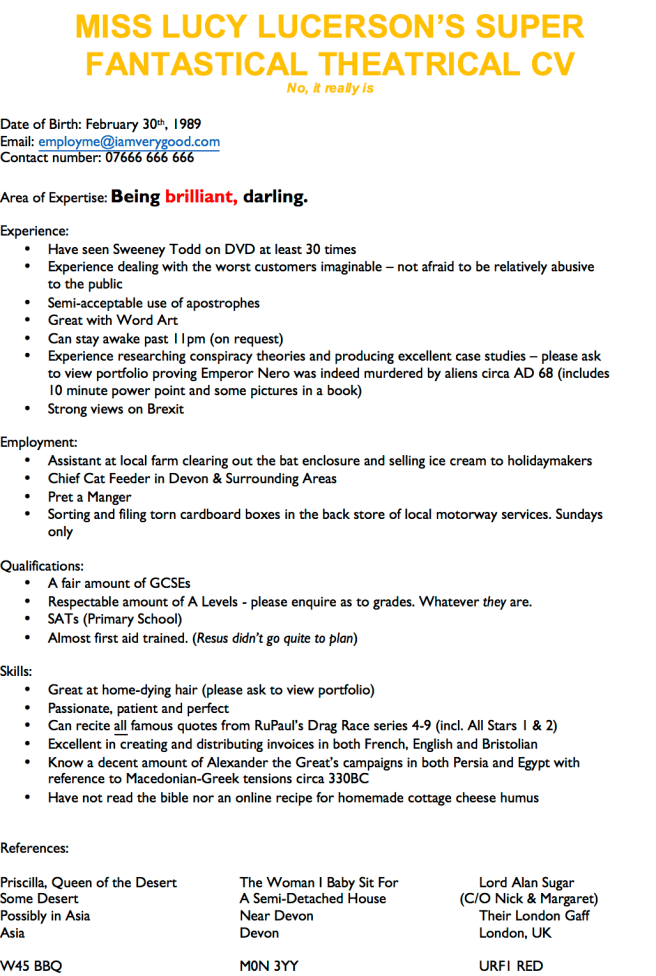


*note to self. Out. More. Get.

Anyone Can Write a Book

…right? Right! It’s the other bit that’s so hard. I’ve had three emails already this week – and it’s only Monday – asking me about marketing and promotion, those two holy grails (can you have two holy grails?) of independently published book selling. Before we go any further though, this week’s blog isn’t a long list of Dos and Don’ts and Hints and Tips, it is an interview with writer, on-line radio producer and theatre critic Nick Le Mesurier who offers writers a little light in the bewildering darkness of self-promotion.Hard at Work at Stratford Words.jpeg

Nick has two undertakings running concurrently, the writer’s radio platform Stratford Words via on-line radio Welcomb Radio, and a new podcast, Speak, Muse! To start off then Nick, tell us a little more about each…

‘Well, writing is difficult enough in itself: promoting your work is even harder. Both Stratford Words and Speak Muse aim to provide a platform for writers to present their work and to discuss it. Services such as the BBC tend to feature only established artists, and while that provides good material and interesting copy it ignores a lot of other writers who, for various reasons might not have been so lucky, or who are at earlier stages in their careers’.

And how do you go about this? That is to say, how do you get the best from your guests?

‘In each format I try to give subjects a little space to explore their experience and what drives them. Stratford Words has a nice live feel to it but Speak Muse can allow for a bit more space; I also transcribe the Speak Muse interviews so the audience can get a fuller appreciation of what each guests says. So along with providing a positive environment for discussion and reading I try to find some questions that will interest listeners and readers (who I assume are often interested in the writer as much as the written word) and also shows an awareness of what the writer is trying to do.’

The art of asking a good question is quite a hard one to master I would imagine. What inspires the questions you ask of your guests? Is there a role model you work to?

‘I would say my role models for each are radio 4, with a nudge towards radio 3, and The Paris Review interviews. The latter are really the gold standard. I don’t mind trying to be a bit high-brow: in the rush for publicity brows are too easily lowered! And yes, that means I have to do some homework. But it’s not my job to trip up my subjects but to bring the best out of them.’

Yes, I’ve heard it said that some writers, although they may pour their heart and soul in to a novel are quite shy and retiring in person.

‘Indeed. Yet the principles of interviewing a well-known author apply equally to an unknown author or someone just starting out. I’ve had some good interviews with people like poet Ann Alexander whose work I love, and also Paul Budd, whose novel A Material Harvest is worthy of more attention. Then I have Vanessa Berridge talking about her love of the social history of gardening.  Or Amanda Laidler who is not so well known but has a lot of experience working with young actors. Then there are a couple of young authors just starting out on their careers, Natasha Dubalia and Sacha Wood, for example. They’ve some way to go yet, but to be encouraged and taken seriously at this stage could be very helpful to them later on.’

If you would like to know about Nick and his work with authors on Stratford Words and Speak, Muse, please contact him here: nicklemesurier@icloud.com

As Nick says, ‘The truth is that there is an over-supply of writers and not enough listeners and readers for new work. It’s hard to get a reward for the years spent working on one’s writing. Mine might be only a small platform, but it is that at least, I hope.’


Props and Prompts

Fancy your chances in a short story competition? Here are eight ideas to help you find your inspiration.

Unsplash – a generously free-to-use website, showcasing some amazing photos taken by some superb photographers. They upload their work and as I say, generously put it out there for anyone to use free of charge. All they ask is that you give them a mention. How big-hearted is that?

Read winning short stories. See if you can work out why they are winners. Do you agree with the judges? If yes, as a writing exercise, write part-two of a winning story – just for your own benefit and practice. If no, re-write the story how you think it should read and then compare the two.

Let the sounds do the talking. Listen to some on-line recordings of the sea (YouTube) or thunder and rain (YouTube), or fishes having a chat. Maybe the gentle mechanical turnings of a windmill (YouTube again). Immerse yourself in sound and see where it takes you.

Picture prompts are always a good one – see number 1 above – but this time try an art gallery, museum or art shop – all of which are free. One of the best forms of art and expression has to be graffiti. There is one particular piece of urban art local to me which always makes me smile when I pass it – across a derelict For Sale sign advertising an abandoned plot of land, some enterprising young person has spray painted the word TWAT in silver paint. I love a good four letter word, and this particular piece of art always brings a smile to my face because a) it’s written in silver. Who has a random can of silver paint hanging around?! b) the use of language is short and to the point – but who Expressive.JPGare they talking to? Are they calling the billboard a twat?!  c) why bother in the first place when they could just as easily have scaled the fence onto the abandoned land and got up to all sorts of mischief instead. But they didn’t – they chose to write a word, which is better than an exaggerated cartoon version of the oft-use phallus young males are wont to draw. The fact that they didn’t should be applauded. I think it could only have made me smile more if they’d written the word Bum instead.

The website of your local theatre/arts centre. Have a look to see who’s coming to town and that may jolt the creative juices into flowing for you. I’m not in any way suggesting you plagiarise characters from shows or anything like that, but for example, there may be a singer song-writer-stand-up comedian playing sometime and she or he may spark the idea for a character – someone you may not have considered before.

Three unrelated props. A key, a stone and a bag of flour. Write them together somehow. Borrow from your friends and neighbours – this way the items will be unfamiliar to you. Likewise three inexpensive things from a charity shop; and old book, a toy, a vase. You can take them all back when you’ve finished.

Visit your local tip and take a couple of photos of stuff being thrown away. I once saw an entire, perfectly recyclable and sellable oak dresser being chucked away. I also saw a woman chuck her car keys away along with the rubbish that was in her hand. Funnily enough the council tip guy had a very long pole with a hook on one end for rescuing such inadvertent deposits. Comedy gold Mrs, comedy gold.

Best prop and prompt ever: cup of coffee, large cake, seat by the window. You know what comes next.

Lovin’ this Live Lit M’Larky!

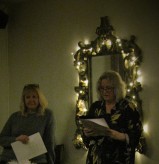
A few days ago – may be it was weeks – you know what us writery types are like – I was very lucky to be involved in the fabulous Words of Love author event run by brilliant author Jenefer Heap. Her Words of.. events (Shakespeare, Winter, Change and most recently Love) have proven a great success, rolling out the talents of many Warwickshire-based writers and poets of all styles and varieties. As is often the way with creative types we started off in one pub and ended up in another. Not that same evening, you understand. We have moved to new premises and now Upstairs at Merchants Wine Bar, Swan Street, Warwick is our new home for such events. The MWB website describes itself as an  Fiery Fairy Dust.jpg
English Restaurant, Gin House, Whisky Den, Cocktail Emporium & generally fantastic place to get a cup of proper English Tea.
Anywhere that has the words Gin, Den and Emporium in the same sentence has to be worth a look. And as you can see, it even has a magical mirror lit from behind with fiery fairy dust. No really. That truly is fiery fairy dust.
If you’ve never been to an author event – call it stand-up if you will, although we like to think of it simply as story telling – do look about for one in your area and go along. And if you can’t find one – make one! It’s a great place to test new work, create new work, or read old work.
As our evening was a love-based cornucopia of hearts and flowers, I thought I’d write a soppy poem. Here it is. It is called
Elements
So hot, the air
stopped me from breathing
my heart
too
paused;
had that just happened?
I couldn’t tell
A rage of heat now burned me raw
and I welcomed the experience
No, no, too much
It was too much
I turned and faced the breeze
that breath of wind that carries memories
and desires half way around the world
and then on further
because there is no end
The wind just keeps on blowing
until
it arrives again
from where it had departed
There is no escape
And this, too, is good
I do not want
to escape
We danced
and flirted; you smiled, laughed nervously
and I, a child again, observed
Is this it? Is this what it’s meant
to feel like?
To be burned and cooled and burned again
so much so that I
become it?
I hope it is
That first flash of fire
dissipates
calms, moves over, lets a gentler state
arrive
Solid, strong, supportive
I am surprised
More so by myself – I did not intend
for this to happen
so fast
But it feels right
As if it should be
And now, that element of earth
feels firm
beneath my feet
Without it, there is nothing
We would fall away
and spin and spin and spin
for ever
We laugh and play
one day blown by the wind, our emotions
scattered
No boundaries for you and I
But then the burning heat returns
The door
made purposefully to slam
does so, loudly
First me, then you
then you again
then me
But never closing
There is always a crack
a slit where light can creep
and usually by dawn
the door is open wide
again
This whirlwind has lasted longer
than half my life
and more than half of yours as well
This hurricane of heat and flame
of solid earth and
breeze that turns so quickly
into a twisting violent tempest
is the esoteric force
enjoyed by some
the lucky ones
while others stand aside
No choice
That day the breeze
blew you
to my door
single,
alone and done with the world
was a good day
It brought fire and air and hot and cold
back into an empty pointless life
And now
in times of transience
when we cannot change events
when everything has been against us
we have navigated those waters
held on tightly to the sides
of our little boat
as we hurtled head-first
down-stream
to whatever awaited at the end
but always
somehow
dragged ourselves half drowned
onto the reassuring earth
again
fire wind water earth
we are these things.

Read Write Research

Are you struggling with how to get going with your research? Here are a few tried and tested tips that may help you crack on with it. Not all infallible of course, but you have to start somewhere!

1 – and the most immediate and obvious – The Internet! – go anywhere in the world! Meet people, look at photos, read blogs – and this even applies if you’re setting your novel in a fictional town or village that just so happens is similar to the place you live or grew up in, or is perhaps a favourite holiday destination. If you have an idea for a novel, it would be daft not to use the internet – and especially so on a cold wet rainy day. Save the touchy feeling research for when the weather’s better. And sign up for every newsletter going – that way you get find out about free stuff, new stuff, odd stuff.
2 – my favourite – Listen. Or ear-wigg. Or eavesdrop – whatever you want to call it – listen to snippets of conversation and write them down. Anywhere there are people is good for this; in the winter, cafes, supermarkets, cinemas etc. In warmer weather, parks and public spaces. Be alert! And take a notebook and pen. Or dictate – whatever you do, don’t miss the moment. Often random comments can help create a character or even lead to a whole scene you hadn’t even thought about.
3 – Talk. And not always to yourself. Sure, dictate notes into your phone or whatever, but strike up conversation. Some people will give you a wide berth, others will be more than happy to chat. And it’s all research.
4 – Whenever you can, research through reading and observation, both of which are free. Use your library, bookstores and local cafes. In these quiet places you can read to your hearts content. When writing fiction it’s important to read in your genre so that you understand who essentially, you’re writing for. If you want to write crime for example, get ten crime novels from your library, pitch up in a cafe and get scan-reading. If after chapter two of a particular novel you know you don’t like it, make notes as to why – poor use of English? Too much English? Slang? Sentence structure? Knowing how you don’t want to write is great help in defining how you do.
5 – For historical fiction research you have to know your onions because you can absolutely bet your readership will, and they can be very unforgiving if you get it wrong. If you find two conflicting references to the same thing, seek out a third and if you’re still not sure, don’t include it.
6 – Logistics. You must get your logistics right. If you’re following characters a, b and c down a corridor and character d appears from behind a fake palm tree, then the narration immediately has that character following, the reader will want to know how character d suddenly got behind them all without anyone noticing. If you have people on bus seats, make sure the right person stands at the right time for it to make sense in the story.
7- Travel/ing – If you’re writing about a journey on a bus, for example – go on a bus! Feel the seats, smell the smells, see the litter, note the bus driver’s expression or sitting position. All these small details can bring a character to life.
8 – Local Attractions. You don’t have to go globetrotting of course – a trip to the local supermarket can be a deep well of research. Need to take a character to Istanbul or Poland just so they can have something to eat? Check out the international aisle and see what you can buy. Then buy it and take it home and eat it. Experience the taste and flavours. And keep a look out for exhibitions in your locality – museums for example, local art festivals, council-funded displays etc. Much can be found on your doorstep and much of it free.
9 – Getbackto. Write what you need to write and when editing highlight the areas that need clarification through research. Then on a different day, let’s call it A RESEARCH DAY, (snappy huh? yeah I thought so too) you can spend the whole day researching, rather than trying to write and research at the same time and getting so completely distracted that you, literally, lose the plot.
They way you research is personal to you – there’s no right or wrong way. We all learn differently. I know one writer who has different colour pens for each character and when he’s researching something they’d do, he only writes about them in that colour. So do what you will, your way. If you’re new to research it may help to create some questions for your characters to answer to keep you on track. Why doesn’t Edwin like tomato soup, for instance? Does it matter that he doesn’t? It might. Don’t worry about excluding something of course – not all research is relevant and if it’s delivered in clumpy spade-loads, your readers may soon feel they are being told something rather than absorbing it through the narrative and that can be very distracting.

So, done enough research for today? Crack on then!