
Anyone Can Write a Book

…right? Right! It’s the other bit that’s so hard. I’ve had three emails already this week – and it’s only Monday – asking me about marketing and promotion, those two holy grails (can you have two holy grails?) of independently published book selling. Before we go any further though, this week’s blog isn’t a long list of Dos and Don’ts and Hints and Tips, it is an interview with writer, on-line radio producer and theatre critic Nick Le Mesurier who offers writers a little light in the bewildering darkness of self-promotion.Hard at Work at Stratford Words.jpeg
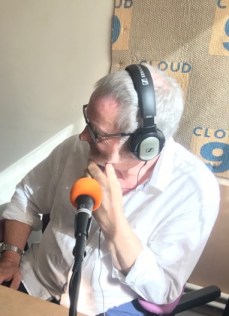
Nick has two undertakings running concurrently, the writer’s radio platform Stratford Words via on-line radio Welcomb Radio, and a new podcast, Speak, Muse! To start off then Nick, tell us a little more about each…

‘Well, writing is difficult enough in itself: promoting your work is even harder. Both Stratford Words and Speak Muse aim to provide a platform for writers to present their work and to discuss it. Services such as the BBC tend to feature only established artists, and while that provides good material and interesting copy it ignores a lot of other writers who, for various reasons might not have been so lucky, or who are at earlier stages in their careers’.

And how do you go about this? That is to say, how do you get the best from your guests?

‘In each format I try to give subjects a little space to explore their experience and what drives them. Stratford Words has a nice live feel to it but Speak Muse can allow for a bit more space; I also transcribe the Speak Muse interviews so the audience can get a fuller appreciation of what each guests says. So along with providing a positive environment for discussion and reading I try to find some questions that will interest listeners and readers (who I assume are often interested in the writer as much as the written word) and also shows an awareness of what the writer is trying to do.’

The art of asking a good question is quite a hard one to master I would imagine. What inspires the questions you ask of your guests? Is there a role model you work to?

‘I would say my role models for each are radio 4, with a nudge towards radio 3, and The Paris Review interviews. The latter are really the gold standard. I don’t mind trying to be a bit high-brow: in the rush for publicity brows are too easily lowered! And yes, that means I have to do some homework. But it’s not my job to trip up my subjects but to bring the best out of them.’

Yes, I’ve heard it said that some writers, although they may pour their heart and soul in to a novel are quite shy and retiring in person.

‘Indeed. Yet the principles of interviewing a well-known author apply equally to an unknown author or someone just starting out. I’ve had some good interviews with people like poet Ann Alexander whose work I love, and also Paul Budd, whose novel A Material Harvest is worthy of more attention. Then I have Vanessa Berridge talking about her love of the social history of gardening.  Or Amanda Laidler who is not so well known but has a lot of experience working with young actors. Then there are a couple of young authors just starting out on their careers, Natasha Dubalia and Sacha Wood, for example. They’ve some way to go yet, but to be encouraged and taken seriously at this stage could be very helpful to them later on.’

If you would like to know about Nick and his work with authors on Stratford Words and Speak, Muse, please contact him here: nicklemesurier@icloud.com

As Nick says, ‘The truth is that there is an over-supply of writers and not enough listeners and readers for new work. It’s hard to get a reward for the years spent working on one’s writing. Mine might be only a small platform, but it is that at least, I hope.’




It’s All About The Syntax

During my daily writing endeavours I read a lot of websites, newsletters, blog posts, emails and social media comments under the banner of ‘research’. Consequently I come across some absolute howlers. I received this in an email yesterday and was struck by the architectural aspect of it:

‘…should be reported to the office in a timely manor..’

Now, you can’t blame people for finding spelling difficult, (see my previous blog interview with writer Hugo Kerr) any more than you can blame people for struggling with maths, but sometimes do you think – Get Someone To Check It Before You Send It? Or, if you’ve been asked to read/review the work of an autonomous author, think: (Why Didn’t You) Get Someone To Check It Before You Printed It? If you want your work to work well, there really is no excuse.

Ben-Hershey-550479-Unsplash.jpg
Thank you, Ben Hershey + Unsplash.

A while ago had some short stories copy-edited by two people at the same time just to gauge their different points of view and editing techniques. One comment still stands out today. I had used the word ‘silty’, but the copy editor was sure I meant ‘salty’. I assured him I did not. ‘Was I absolutely sure?’ he asked. I confirmed I was. The other copy editor didn’t comment on this word at all, clearly happy with the word and my use of it. But it threw up an interesting point – would my readers think I meant salty even though I’d written silty? Did it matter? I think it did. It still does. From my point of view as a writer, I want my readers to enjoy my work, not stumble head-first over an unfamiliar word or a familiar word in the wrong place. Control freak? Possibly.

In an email I received last week I noticed that some of the punctuation in this sentence had fallen away – if indeed it was ever there in the first place. I suspect it wasn’t:

‘I have sent this email in edith’s best interest would you suggest this is left for edith to dispose of going forward.’

I don’t really know what this person is saying to me. But it seems rude to ask, somehow. Yes, yes, yes, I’m as guilty as the next writer of missing out or adding an extraneous word to what I thought was a perfectly formed sentence, but when it comes to syntax…ah… now you’re talking. This can take hours to get right, and yet still be wrong.

Below is a statement from a website menu I read earlier today and shared here for your delectation:

… our delicious roast dinners from just £12 each, the meat alternates each week and will be uploaded to Facebook.

I really did not make that up!

Props and Prompts

Fancy your chances in a short story competition? Here are eight ideas to help you find your inspiration.

Unsplash – a generously free-to-use website, showcasing some amazing photos taken by some superb photographers. They upload their work and as I say, generously put it out there for anyone to use free of charge. All they ask is that you give them a mention. How big-hearted is that?

Read winning short stories. See if you can work out why they are winners. Do you agree with the judges? If yes, as a writing exercise, write part-two of a winning story – just for your own benefit and practice. If no, re-write the story how you think it should read and then compare the two.

Let the sounds do the talking. Listen to some on-line recordings of the sea (YouTube) or thunder and rain (YouTube), or fishes having a chat. Maybe the gentle mechanical turnings of a windmill (YouTube again). Immerse yourself in sound and see where it takes you.

Picture prompts are always a good one – see number 1 above – but this time try an art gallery, museum or art shop – all of which are free. One of the best forms of art and expression has to be graffiti. There is one particular piece of urban art local to me which always makes me smile when I pass it – across a derelict For Sale sign advertising an abandoned plot of land, some enterprising young person has spray painted the word TWAT in silver paint. I love a good four letter word, and this particular piece of art always brings a smile to my face because a) it’s written in silver. Who has a random can of silver paint hanging around?! b) the use of language is short and to the point – but who Expressive.JPGare they talking to? Are they calling the billboard a twat?!  c) why bother in the first place when they could just as easily have scaled the fence onto the abandoned land and got up to all sorts of mischief instead. But they didn’t – they chose to write a word, which is better than an exaggerated cartoon version of the oft-use phallus young males are wont to draw. The fact that they didn’t should be applauded. I think it could only have made me smile more if they’d written the word Bum instead.

The website of your local theatre/arts centre. Have a look to see who’s coming to town and that may jolt the creative juices into flowing for you. I’m not in any way suggesting you plagiarise characters from shows or anything like that, but for example, there may be a singer song-writer-stand-up comedian playing sometime and she or he may spark the idea for a character – someone you may not have considered before.

Three unrelated props. A key, a stone and a bag of flour. Write them together somehow. Borrow from your friends and neighbours – this way the items will be unfamiliar to you. Likewise three inexpensive things from a charity shop; and old book, a toy, a vase. You can take them all back when you’ve finished.

Visit your local tip and take a couple of photos of stuff being thrown away. I once saw an entire, perfectly recyclable and sellable oak dresser being chucked away. I also saw a woman chuck her car keys away along with the rubbish that was in her hand. Funnily enough the council tip guy had a very long pole with a hook on one end for rescuing such inadvertent deposits. Comedy gold Mrs, comedy gold.

Best prop and prompt ever: cup of coffee, large cake, seat by the window. You know what comes next.