Meeting Mike Gayle

On Wednesday I was lucky enough to be the in the audience for an evening of author talk with the very open and interesting multi-novellist author Mike Gayle, his editor Nick Sayers of Hodder and Stoughton, hosted by independent book shop Kenilworth Books which is based in Warwickshire, slap bang in the heart of the UK.
If you haven’t been to one yet but get the chance to attend an evening where an author talks about their process, their history, their long journey to publication, then I thoroughly encourage you to go. One of the most useful nuggets we came away with was the need for planning. No, not the sort of planning that involves three cups of coffee, a cuddle with the cat and a wander outside for ‘a bit of fresh air’ with a notebook doing absolutely nothing, but the sort of proper planning that involves – and get this wannabe authors – writing a two line synopsis for every chapter of your book. My friend said to me afterward of a masterpiece she is working on ‘that’ll be why I haven’t finished my book – I have no idea what’s going on.’
I’ve never thought about doing a chapter by chapter synopsis. I’ve done actual planning for an entire novel only to find the end result is nothing like I’d thought – nay planned – it would be. Odd how that happens. One person asked about ‘the muse’; does it ever strike? No, was Mr. Gayle’s definite answer. For muse read procrastination. True. But what if you’re not in the creative zone busy carving out characters that live in a whole new world created by you? Short answer – edit. Stop being all arty farty and get brutal instead. Get out your scalpel and trim trim trim trim. And I don’t mean your beard, my furry faced friend. Amputate your adjectives and ditch those descriptors! Squeeze out the fat and get to the muscle beneath, and when you’ve done that, you may see the bare bones of the story (I’m sensing a theme here…). It’s good to edit. But then of course, you have to know how to. There’s a big difference between changing your mind about something you’ve written ‘I don’t like that bit. I’ll change his jumper to blue’ and proper editing. How about not mentioning the jumper at all? Chekov’s Gun and all that. And that of course is where Nick Sayers’ insight was invaluable. How do you know what even needs editing? someone asked. Well, ‘you just do’, was the answer. Clunky dialogue, confusing/boring/pointless sentences/paragraphs/chapters will stand out to an expert, which is why they are experts at what they do. Midwives, really, helping the author deliver what the author thinks they want to deliver; what they had planned in those two-line chapter by chapter synopses.
And talking of which – I sent off some work to a very well known agency recently:
‘send both synopsis and the first 3000 words of your novel in one document only.’ Well that’s easy enough. I can do that. Edited the work in question, added it to the same document as the pain-stakingly created, written, revised, rewritten 3 page synopsis and pressed send. God they’ll think I’m brilliant.
And then I saw that little teeny weeny bit that said ‘send a synopsis of no more than a page…’

Should have edited properly, shouldn’t I.

Five Tips on Writing Characters

Having a bit of a blank when it comes to writing a character? Can’t quite get into their head? Worry not. It’s easy peasy lemon squeezy really. By using one of your best writer’s skills – Observation – you’ll see your characters are all around, fully formed and perfect for harvesting. Reading The Metro recently I was delighted to find five fully-formed characters staring at me from the page, ready to be gathered together like spring flowers and plopped into a novel. Let me share them with you:

Shy Blonde In Red Coat
Very Shy Girl
Brunette With Light Blue Eyes
Rachel The Sleepy Blonde
and my absolute favourite,
The Sweaty Guy With A Runny Nose.

All these are love-lorn commuters looking for love through The Metro’s Rush Hour Crush. So, a sweaty guy with a runny nose. Sounds better than Plague Victim I guess, but what a base to build a character on. Had he been running in cold weather? Or was he ill? On drugs maybe? Blond or bald?  For Shy Blonde read Assassin for sure, and Brunette with light blue eyes – well, not necessarily a woman is it?

Another place to find a character, even if you’re not especially looking for one, is at an event. Last week I was at a Jaguar Car Heritage Day at Blenheim Palace – not my usual entertainment for a Sunday but it’s good to do something you wouldn’t naturally do – and there he was. The Character I had a name for but not an appearance. I have a character that is not a nice person, but I didn’t want him to be a characterisation of a bad person – he has to be real. And there he was, right in front of me.

Picture the scene: millions of pounds worth of vintage cars, polished and buffed to within an inch of their historic automotive lives, surrounded by fans and enthusiasts – mainly dressed in beige slacks and leather shoes or designer jeans and trainers – when into my view swaggered a cigarette smoking man of about 45. Hair still dark, long to his collar and in which he’s parked his sunglasses, designer jeans – but with the hems trodden down at the back, scruffy around the pockets, wearing a jacket that didn’t match nor fit especially well and fraying slightly on one sleeve. He loped around a few of the cars, dropped his shades over his eyes and stood against a low wall for a while. He seemed distracted – he could have been waiting for a bus – but I knew straight away he was the character in my next short story. Gotcha. See – easy peasy lemon squeezy.

How To Make Them Real:

1 Observation. Always. Look closely, if you can; observe the shoes, the hair, the hands that serve you that coffee.
2 Short snippets in newspapers or online. The small bits that are used for fillers are often the gold nuggets where you’ll discover your characters
3 Amalgamation Jigsaws. Take the best of worst of lots of people you know or are in contact with. Squish ‘em together, make a character. I call this my Frankenstein Character – they don’t all turn out to be monsters!
4 Animals. This way of creating a character is usually done when the moon is full and the creative juices have gone off-piste for a bit, but you can have a lot of fun doing it. Old dog, limps slightly due to hip trouble, a bit deaf, square hairy face, independent spirit,
or,
Old man, limps slightly due to hip trouble, a bit deaf, square hairy face, independent spirit. You get the idea.
5 Start with the name. A woman called Star, for example. What would she do? Singer? Librarian? Full-time Mum? Make a list – I love excel for this* – create names in one column, profession/job/life direction in another. Match up as your instinct tells you. Then ignore that instinct and match up differently. Maybe Colin in Accounts becomes Colin the professional tennis player by day and drag queen by night. Up to you. 

Try this fella for size…andrii-podilnyk-1060018-unsplash.jpg
photo by Andrii Podilnyk
on Unsplash


*note to self. Out. More. Get.

Wolf

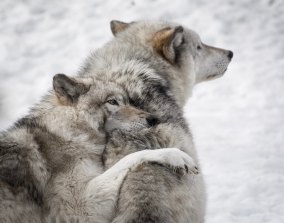
What is it about the word ‘wolf’ that conjures up so much mischief? Hilary Mantel’s book Wolf Hall has, in my humble, one of the best titles for a book ever. Yes I know she didn’t make up the title – who but the Tudors would name their homes so? Houses of the nineteenth and twentieth centuries were bestowed more pastoral names such as Sunnyside, Rose Cottage, Orchard View; no lupine references there to warn any visitor ofyannick-menard-1272925-unsplash the ambience of the place. Forget entering the lion’s den – the mere assonance of the words wolf and hall tells you all you need to know. In literature, as we know, the wolf has done a marvellous job securing a place in folklore – whether for good or ill – there’s the favourite, little red and all her trials and traumas; that sneaky double-dealer the wolf in sheep’s clothing, Peter and his wolf, which has a sort of nice ending – the wolf doesn’t end up brown bread, but he is wolfnapped and put behind bars in a zoo. Then there’re those house-building pigs and their nuisance neighbour who wanted to puff their properties down, and indeed, thanks to Aesop, the attention-seeking little boy who couldn’t help himself and kept crying ‘wolf!’ until one day there really was a wolf and…well…we all know what happened then, plus any number of other wolfie-related stories, sayings and poems littered through history and literature. ‘Holding the wolf by the ears’ is a great metaphor for things being a bit tricky, and keeping ‘the wolf from the door’ has a delicious medieval ring to it, sounding much better than ‘too much month left at the end of the pay packet’. The most up to date wolf story I found this week (although it may well be old news by the time you’re reading it) is about the young wolf who got himself stuck in a freezing river but thankfully was rescued. Except the rescuers didn’t know what they were rescuing – imagine being in a car with a cold and grumpy wolf across your lap, taking the scenic route to the vet. Dodgy. But it is a heartwarming story, so here it is, courtesy of the BBC.

The wonderful photo above is by Yannick Menard, freely published on Unsplash. Thank you Mr Menard
@yannickmenard

https://www.bbc.co.uk/news/world-europe-47330924

And now a poem by Richard Edwards
taken from
The Thing That Mattered Most: Scottish Poems for Children
edited by Julie Johnstone (SPL/B&W, 2006)

A Wolf In The Park

Is there a wolf,
A wolf in the park,
A wolf who wakes when the night gets dark?
Is there a wolf in the park?

Is there a wolf,
A wolf who creeps
From his hidden den while the city sleeps?
Is there a wolf in the park?

Is there a wolf,
Whose nightly track
Circles the park fence, zigzags back?
Is there a wolf in the park?

Is there a wolf,
Who pads his way
Between the tables of the closed café,
Is there a wolf in the park?

Is there a wolf,
A wolf whose bite
Left those feathers by the pond last night,
Is there a wolf in the park?

Is there a wolf?
No one knows,
But I’ve heard a howl when the full moon glows…
Is there a wolf in the park?

Anyone Can Write a Book

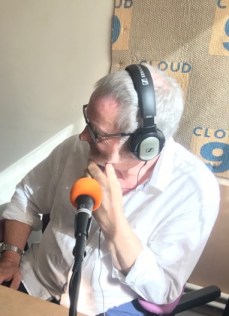
…right? Right! It’s the other bit that’s so hard. I’ve had three emails already this week – and it’s only Monday – asking me about marketing and promotion, those two holy grails (can you have two holy grails?) of independently published book selling. Before we go any further though, this week’s blog isn’t a long list of Dos and Don’ts and Hints and Tips, it is an interview with writer, on-line radio producer and theatre critic Nick Le Mesurier who offers writers a little light in the bewildering darkness of self-promotion.Hard at Work at Stratford Words.jpeg

Nick has two undertakings running concurrently, the writer’s radio platform Stratford Words via on-line radio Welcomb Radio, and a new podcast, Speak, Muse! To start off then Nick, tell us a little more about each…

‘Well, writing is difficult enough in itself: promoting your work is even harder. Both Stratford Words and Speak Muse aim to provide a platform for writers to present their work and to discuss it. Services such as the BBC tend to feature only established artists, and while that provides good material and interesting copy it ignores a lot of other writers who, for various reasons might not have been so lucky, or who are at earlier stages in their careers’.

And how do you go about this? That is to say, how do you get the best from your guests?

‘In each format I try to give subjects a little space to explore their experience and what drives them. Stratford Words has a nice live feel to it but Speak Muse can allow for a bit more space; I also transcribe the Speak Muse interviews so the audience can get a fuller appreciation of what each guests says. So along with providing a positive environment for discussion and reading I try to find some questions that will interest listeners and readers (who I assume are often interested in the writer as much as the written word) and also shows an awareness of what the writer is trying to do.’

The art of asking a good question is quite a hard one to master I would imagine. What inspires the questions you ask of your guests? Is there a role model you work to?

‘I would say my role models for each are radio 4, with a nudge towards radio 3, and The Paris Review interviews. The latter are really the gold standard. I don’t mind trying to be a bit high-brow: in the rush for publicity brows are too easily lowered! And yes, that means I have to do some homework. But it’s not my job to trip up my subjects but to bring the best out of them.’

Yes, I’ve heard it said that some writers, although they may pour their heart and soul in to a novel are quite shy and retiring in person.

‘Indeed. Yet the principles of interviewing a well-known author apply equally to an unknown author or someone just starting out. I’ve had some good interviews with people like poet Ann Alexander whose work I love, and also Paul Budd, whose novel A Material Harvest is worthy of more attention. Then I have Vanessa Berridge talking about her love of the social history of gardening.  Or Amanda Laidler who is not so well known but has a lot of experience working with young actors. Then there are a couple of young authors just starting out on their careers, Natasha Dubalia and Sacha Wood, for example. They’ve some way to go yet, but to be encouraged and taken seriously at this stage could be very helpful to them later on.’

If you would like to know about Nick and his work with authors on Stratford Words and Speak, Muse, please contact him here: nicklemesurier@icloud.com

As Nick says, ‘The truth is that there is an over-supply of writers and not enough listeners and readers for new work. It’s hard to get a reward for the years spent working on one’s writing. Mine might be only a small platform, but it is that at least, I hope.’


Props and Prompts

Fancy your chances in a short story competition? Here are eight ideas to help you find your inspiration.

Unsplash – a generously free-to-use website, showcasing some amazing photos taken by some superb photographers. They upload their work and as I say, generously put it out there for anyone to use free of charge. All they ask is that you give them a mention. How big-hearted is that?

Read winning short stories. See if you can work out why they are winners. Do you agree with the judges? If yes, as a writing exercise, write part-two of a winning story – just for your own benefit and practice. If no, re-write the story how you think it should read and then compare the two.

Let the sounds do the talking. Listen to some on-line recordings of the sea (YouTube) or thunder and rain (YouTube), or fishes having a chat. Maybe the gentle mechanical turnings of a windmill (YouTube again). Immerse yourself in sound and see where it takes you.

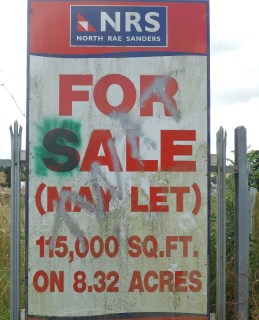
Picture prompts are always a good one – see number 1 above – but this time try an art gallery, museum or art shop – all of which are free. One of the best forms of art and expression has to be graffiti. There is one particular piece of urban art local to me which always makes me smile when I pass it – across a derelict For Sale sign advertising an abandoned plot of land, some enterprising young person has spray painted the word TWAT in silver paint. I love a good four letter word, and this particular piece of art always brings a smile to my face because a) it’s written in silver. Who has a random can of silver paint hanging around?! b) the use of language is short and to the point – but who Expressive.JPGare they talking to? Are they calling the billboard a twat?!  c) why bother in the first place when they could just as easily have scaled the fence onto the abandoned land and got up to all sorts of mischief instead. But they didn’t – they chose to write a word, which is better than an exaggerated cartoon version of the oft-use phallus young males are wont to draw. The fact that they didn’t should be applauded. I think it could only have made me smile more if they’d written the word Bum instead.

The website of your local theatre/arts centre. Have a look to see who’s coming to town and that may jolt the creative juices into flowing for you. I’m not in any way suggesting you plagiarise characters from shows or anything like that, but for example, there may be a singer song-writer-stand-up comedian playing sometime and she or he may spark the idea for a character – someone you may not have considered before.

Three unrelated props. A key, a stone and a bag of flour. Write them together somehow. Borrow from your friends and neighbours – this way the items will be unfamiliar to you. Likewise three inexpensive things from a charity shop; and old book, a toy, a vase. You can take them all back when you’ve finished.

Visit your local tip and take a couple of photos of stuff being thrown away. I once saw an entire, perfectly recyclable and sellable oak dresser being chucked away. I also saw a woman chuck her car keys away along with the rubbish that was in her hand. Funnily enough the council tip guy had a very long pole with a hook on one end for rescuing such inadvertent deposits. Comedy gold Mrs, comedy gold.

Best prop and prompt ever: cup of coffee, large cake, seat by the window. You know what comes next.