Review – Witches Sail in Eggshells

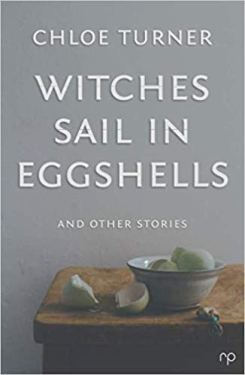
If you want to write well, you must read, so the saying goes. What a joy then, to be able to read and review Stroud-based writer Chloe Turner’s collection of short stories, Witches Sail in Eggshells.
Witches Sail In Eggshells.jpg

This expertly observed debut collection of short stories reads between the lines of life and explores how we love and lose, then find ourselves and others again.  From an hilarious yet uncomfortable child’s birthday party where the past is laid bare for all to see – yet only seen by some – to the meeting of two women who have loved the same man, to the horror of environmental catastrophe, all stories are told with a melancholic humour that packs a powerful punch.  An example of Turner’s excellent ability to find humour in a sad situation is cleverly explored in Waiting for the Runners in which a mother waiting for her son to finish a cross-country race bumps into the woman who stole her husband. The stooge in the story is Mrs Harris, the PE teacher: Mrs Harris’s Lycra thighs emerged from the shrubbery like purple hams brings brevity to the sadness, the reader having just learned of a terrible sorrow brought upon the narrator years before. Turner does this very well. We feel the pain of each woman – of wife and mistress, of their discomfort and disconnectedness, and yet the story ends with a sigh, a release, that is positive and uplifting. Such juxtaposition of emotions runs through all these stories, often taking the reader by surprise – and that is the magic of Turner’s writing.  In the intriguingly entitled The House With Three Stories That Might Be Five, an unusual but not implausible story unfolds, and this, like the others, has some beautiful observations casually dropped in to the narrative that make you catch your breath. Turner describes Cathy, a group member on a tour, succinctly with a simple line ‘I’ve been alone so long, sometimes I wonder if my reflection might leave me,’ and you feel Cathy’s loneliness like a sting.
The honesty in the writing cuts straight to the core of the story.

In Show Me What You’re Made Of, Turner takes a darker turn, leaving the reader wondering.  Creepiness at it’s best.

There are similar themes running through many of these stories – nature, especially, is given a good chance to be seen, but so too danger and menace, humour, melancholy; many stories have a good helping of stoicism which shines a gentle and up-beat light on a human condition which Chloe Turner captures so well. Insightful, resonant, and emotionally touching in different ways, this collection of stories is well worth a read.

Available from Reflex Press, £8.99

Five Tips on Writing Characters

Having a bit of a blank when it comes to writing a character? Can’t quite get into their head? Worry not. It’s easy peasy lemon squeezy really. By using one of your best writer’s skills – Observation – you’ll see your characters are all around, fully formed and perfect for harvesting. Reading The Metro recently I was delighted to find five fully-formed characters staring at me from the page, ready to be gathered together like spring flowers and plopped into a novel. Let me share them with you:

Shy Blonde In Red Coat
Very Shy Girl
Brunette With Light Blue Eyes
Rachel The Sleepy Blonde
and my absolute favourite,
The Sweaty Guy With A Runny Nose.

All these are love-lorn commuters looking for love through The Metro’s Rush Hour Crush. So, a sweaty guy with a runny nose. Sounds better than Plague Victim I guess, but what a base to build a character on. Had he been running in cold weather? Or was he ill? On drugs maybe? Blond or bald?  For Shy Blonde read Assassin for sure, and Brunette with light blue eyes – well, not necessarily a woman is it?

Another place to find a character, even if you’re not especially looking for one, is at an event. Last week I was at a Jaguar Car Heritage Day at Blenheim Palace – not my usual entertainment for a Sunday but it’s good to do something you wouldn’t naturally do – and there he was. The Character I had a name for but not an appearance. I have a character that is not a nice person, but I didn’t want him to be a characterisation of a bad person – he has to be real. And there he was, right in front of me.

Picture the scene: millions of pounds worth of vintage cars, polished and buffed to within an inch of their historic automotive lives, surrounded by fans and enthusiasts – mainly dressed in beige slacks and leather shoes or designer jeans and trainers – when into my view swaggered a cigarette smoking man of about 45. Hair still dark, long to his collar and in which he’s parked his sunglasses, designer jeans – but with the hems trodden down at the back, scruffy around the pockets, wearing a jacket that didn’t match nor fit especially well and fraying slightly on one sleeve. He loped around a few of the cars, dropped his shades over his eyes and stood against a low wall for a while. He seemed distracted – he could have been waiting for a bus – but I knew straight away he was the character in my next short story. Gotcha. See – easy peasy lemon squeezy.

How To Make Them Real:

1 Observation. Always. Look closely, if you can; observe the shoes, the hair, the hands that serve you that coffee.
2 Short snippets in newspapers or online. The small bits that are used for fillers are often the gold nuggets where you’ll discover your characters
3 Amalgamation Jigsaws. Take the best of worst of lots of people you know or are in contact with. Squish ‘em together, make a character. I call this my Frankenstein Character – they don’t all turn out to be monsters!
4 Animals. This way of creating a character is usually done when the moon is full and the creative juices have gone off-piste for a bit, but you can have a lot of fun doing it. Old dog, limps slightly due to hip trouble, a bit deaf, square hairy face, independent spirit,
or,
Old man, limps slightly due to hip trouble, a bit deaf, square hairy face, independent spirit. You get the idea.
5 Start with the name. A woman called Star, for example. What would she do? Singer? Librarian? Full-time Mum? Make a list – I love excel for this* – create names in one column, profession/job/life direction in another. Match up as your instinct tells you. Then ignore that instinct and match up differently. Maybe Colin in Accounts becomes Colin the professional tennis player by day and drag queen by night. Up to you. 

Try this fella for size…andrii-podilnyk-1060018-unsplash.jpg
photo by Andrii Podilnyk
on Unsplash


*note to self. Out. More. Get.

New Words for Old

There have been some really good words about recently – new words that is. Not new meanings for old words, but actual new words born into the world. There are some words I’d be happy to see replaced however. Y’know, a bit like a spring clean. Clearing out the dictionary.  For example, normal. It’s judgemental for one thing, and exclusive. If you are not ‘normal’ you are deemed to be ab-normal ergo not good enough. A carrot farmer was sighing this unhappy truth to me last autumn. He had abnormal carrots. But they’re just carrots, I said. Not straight enough, he said. Green leafy bit (that gets cut off and never seen by anyone else) deemed not green or leafy enough. By whom? Carrot Judge? Seemed a strange state of affairs. All the world’s languages (current estimate 7,000!) are chock full with tongue-twisting and diverse lexicons so you’d think that we could do without certain words. No-one would notice, surely?
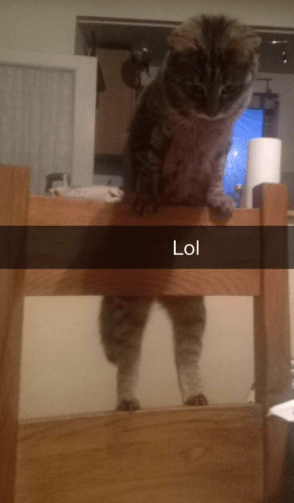
Recently, a friend was laughing hysterically at an on-line photograph of a cat and the text beneath. I interrupted his chortling to ask him where the word meme came from.

“The internet,” he said.LOL.png
“But what does it mean?” I asked.
“Doesn’t mean anything. It’s just funny.”
Hmmmmm…
“It must have come from somewhere,” I persisted.
He gave me a look that said how stupid are you? which I chose to ignore. So, other than to admire pictures of pretty kitties, I too took to the internet and had a little search. I was very surprised to find that the word meme is a very old word indeed, it’s roots belonging to those ancient Greeks. The online Oxford English Dictionary currently defines the word thus:

an element of a culture or system of behaviour passed from one individual to another by imitation or other non-genetic means.
That’ll be the pre-internet definition then, courtesy of one Mr R Dawkins.

and

an image, video, piece of text, etc., typically humorous in nature, that is copied and spread rapidly by Internet users, often with slight variations.  

So, when I pointed out to my colleague that the word meme was not born in the early 2000’s it was fair to say he was so engulfed by disbelief he had to take the rest of the day off.
There’s a meme in there somewhere.talking cats.jpg

Anyone Can Write a Book

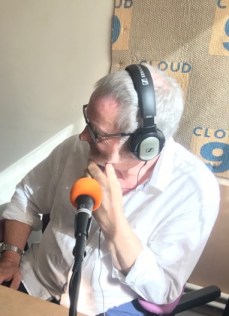
…right? Right! It’s the other bit that’s so hard. I’ve had three emails already this week – and it’s only Monday – asking me about marketing and promotion, those two holy grails (can you have two holy grails?) of independently published book selling. Before we go any further though, this week’s blog isn’t a long list of Dos and Don’ts and Hints and Tips, it is an interview with writer, on-line radio producer and theatre critic Nick Le Mesurier who offers writers a little light in the bewildering darkness of self-promotion.Hard at Work at Stratford Words.jpeg

Nick has two undertakings running concurrently, the writer’s radio platform Stratford Words via on-line radio Welcomb Radio, and a new podcast, Speak, Muse! To start off then Nick, tell us a little more about each…

‘Well, writing is difficult enough in itself: promoting your work is even harder. Both Stratford Words and Speak Muse aim to provide a platform for writers to present their work and to discuss it. Services such as the BBC tend to feature only established artists, and while that provides good material and interesting copy it ignores a lot of other writers who, for various reasons might not have been so lucky, or who are at earlier stages in their careers’.

And how do you go about this? That is to say, how do you get the best from your guests?

‘In each format I try to give subjects a little space to explore their experience and what drives them. Stratford Words has a nice live feel to it but Speak Muse can allow for a bit more space; I also transcribe the Speak Muse interviews so the audience can get a fuller appreciation of what each guests says. So along with providing a positive environment for discussion and reading I try to find some questions that will interest listeners and readers (who I assume are often interested in the writer as much as the written word) and also shows an awareness of what the writer is trying to do.’

The art of asking a good question is quite a hard one to master I would imagine. What inspires the questions you ask of your guests? Is there a role model you work to?

‘I would say my role models for each are radio 4, with a nudge towards radio 3, and The Paris Review interviews. The latter are really the gold standard. I don’t mind trying to be a bit high-brow: in the rush for publicity brows are too easily lowered! And yes, that means I have to do some homework. But it’s not my job to trip up my subjects but to bring the best out of them.’

Yes, I’ve heard it said that some writers, although they may pour their heart and soul in to a novel are quite shy and retiring in person.

‘Indeed. Yet the principles of interviewing a well-known author apply equally to an unknown author or someone just starting out. I’ve had some good interviews with people like poet Ann Alexander whose work I love, and also Paul Budd, whose novel A Material Harvest is worthy of more attention. Then I have Vanessa Berridge talking about her love of the social history of gardening.  Or Amanda Laidler who is not so well known but has a lot of experience working with young actors. Then there are a couple of young authors just starting out on their careers, Natasha Dubalia and Sacha Wood, for example. They’ve some way to go yet, but to be encouraged and taken seriously at this stage could be very helpful to them later on.’

If you would like to know about Nick and his work with authors on Stratford Words and Speak, Muse, please contact him here: nicklemesurier@icloud.com

As Nick says, ‘The truth is that there is an over-supply of writers and not enough listeners and readers for new work. It’s hard to get a reward for the years spent working on one’s writing. Mine might be only a small platform, but it is that at least, I hope.’


SPELLISM

Today it gives me great pleasure to host this poem by writer and adult literacy expert  Hugo Kerr. Hugo has published several books on the subject and is a wonderful exponent of just write it – it’ll be right!

He says on his website I love to debate with like-minds of like-enthusiasms. It has been my experience that great fruitfulness often results. Sometimes heat is generated, but so is light. If you want to discuss literacy with me you are very welcome to write to me via hkerr@aol.com
Over to you, Hugo…

Spellism

Some people find it hard to spell
While others do it very well.
The latter can be very quick
To criticise; they get a kick
From knowing how to spell a word
Of which most people haven’t heard.

They like to think this proves they’re clever,
Although they practically never
Stop to think if this is true
Or not. I recommend that you
And I should give some thought
To what it means to spell; we ought
To look at history – this will tell
That William Shakespeare couldn’t spell
For peanuts, and his royal queen
(H.R.H. Liz one, I mean)
Was twice as bad. One can tell at a
Glance, though, that it didn’t matter!

Dr Johnson hadn’t yet
Thrown his stiff, pedantic net
Over the language; he had not
Invented standard spelling – what
You wrote was what you thought looked best;
You simply wrote and left the rest.

You left the reading to the reader
Who, at this time, didn’t need a
Massive dictionary. (Which was
As well, you understand, because
There wasn’t one as yet.) You see
A writer, way back then, was free
To spell exactly how he liked.
His writing had not yet been spiked
By the debilitating fear
That folk might giggle, sniff or sneer
At what he’d written – for no better
Reason than they thought his letter
Patterns were a little odd
Compared to those laid down by God
(Or was it Dr Johnson) for
A standard spelling, evermore.
A “spellist” age we live in now,
Where you are often judged by how
You spell liaise or guarantee,
People or Arachnidae.

It’s very easy to admit
You have more than a little bit
Of problem with your maths, and yet
There is no way that you would let
The knowledge that your spelling’s bad
Get out at any price.

It’s sad
To say this, but we know
That spelling well just doesn’t show
Intelligence, for any fool
Can learn to spell in infant school –
Given the chance

For reasons why
Some don’t achieve this we should try
Examining the wider picture,
Which would make our theory richer.

As well as this, though, we should learn
How negative it is to spurn
A person (just as though he smells)
Simply because of how he spells.

Spelling is spelling, nothing more.
It isn’t “authorship” and nor
Does it equate to writing; it
Isn’t wisdom, truth or wit.

It is an unimportant skill,
A simple, boring memory drill;
Nothing to do, as you can see,
With art, or creativity.

Writing that’s beautiful, or true,
Has its influence on you
Not, for heaven’s sake, because
Of how the bloody spelling was!