Five Tips on Writing Characters

Having a bit of a blank when it comes to writing a character? Can’t quite get into their head? Worry not. It’s easy peasy lemon squeezy really. By using one of your best writer’s skills – Observation – you’ll see your characters are all around, fully formed and perfect for harvesting. Reading The Metro recently I was delighted to find five fully-formed characters staring at me from the page, ready to be gathered together like spring flowers and plopped into a novel. Let me share them with you:

Shy Blonde In Red Coat
Very Shy Girl
Brunette With Light Blue Eyes
Rachel The Sleepy Blonde
and my absolute favourite,
The Sweaty Guy With A Runny Nose.

All these are love-lorn commuters looking for love through The Metro’s Rush Hour Crush. So, a sweaty guy with a runny nose. Sounds better than Plague Victim I guess, but what a base to build a character on. Had he been running in cold weather? Or was he ill? On drugs maybe? Blond or bald?  For Shy Blonde read Assassin for sure, and Brunette with light blue eyes – well, not necessarily a woman is it?

Another place to find a character, even if you’re not especially looking for one, is at an event. Last week I was at a Jaguar Car Heritage Day at Blenheim Palace – not my usual entertainment for a Sunday but it’s good to do something you wouldn’t naturally do – and there he was. The Character I had a name for but not an appearance. I have a character that is not a nice person, but I didn’t want him to be a characterisation of a bad person – he has to be real. And there he was, right in front of me.

Picture the scene: millions of pounds worth of vintage cars, polished and buffed to within an inch of their historic automotive lives, surrounded by fans and enthusiasts – mainly dressed in beige slacks and leather shoes or designer jeans and trainers – when into my view swaggered a cigarette smoking man of about 45. Hair still dark, long to his collar and in which he’s parked his sunglasses, designer jeans – but with the hems trodden down at the back, scruffy around the pockets, wearing a jacket that didn’t match nor fit especially well and fraying slightly on one sleeve. He loped around a few of the cars, dropped his shades over his eyes and stood against a low wall for a while. He seemed distracted – he could have been waiting for a bus – but I knew straight away he was the character in my next short story. Gotcha. See – easy peasy lemon squeezy.

How To Make Them Real:

1 Observation. Always. Look closely, if you can; observe the shoes, the hair, the hands that serve you that coffee.
2 Short snippets in newspapers or online. The small bits that are used for fillers are often the gold nuggets where you’ll discover your characters
3 Amalgamation Jigsaws. Take the best of worst of lots of people you know or are in contact with. Squish ‘em together, make a character. I call this my Frankenstein Character – they don’t all turn out to be monsters!
4 Animals. This way of creating a character is usually done when the moon is full and the creative juices have gone off-piste for a bit, but you can have a lot of fun doing it. Old dog, limps slightly due to hip trouble, a bit deaf, square hairy face, independent spirit,
or,
Old man, limps slightly due to hip trouble, a bit deaf, square hairy face, independent spirit. You get the idea.
5 Start with the name. A woman called Star, for example. What would she do? Singer? Librarian? Full-time Mum? Make a list – I love excel for this* – create names in one column, profession/job/life direction in another. Match up as your instinct tells you. Then ignore that instinct and match up differently. Maybe Colin in Accounts becomes Colin the professional tennis player by day and drag queen by night. Up to you. 

Try this fella for size…andrii-podilnyk-1060018-unsplash.jpg

photo by Andrii Podilnyk
on Unsplash


*note to self. Out. More. Get.

New Words for Old

There have been some really good words about recently – new words that is. Not new meanings for old words, but actual new words born into the world. There are some words I’d be happy to see replaced however. Y’know, a bit like a spring clean. Clearing out the dictionary.  For example, normal. It’s judgemental for one thing, and exclusive. If you are not ‘normal’ you are deemed to be ab-normal ergo not good enough. A carrot farmer was sighing this unhappy truth to me last autumn. He had abnormal carrots. But they’re just carrots, I said. Not straight enough, he said. Green leafy bit (that gets cut off and never seen by anyone else) deemed not green or leafy enough. By whom? Carrot Judge? Seemed a strange state of affairs. All the world’s languages (current estimate 7,000!) are chock full with tongue-twisting and diverse lexicons so you’d think that we could do without certain words. No-one would notice, surely?
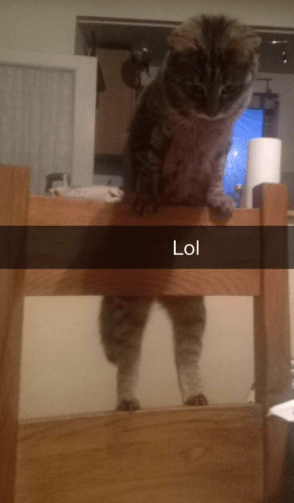
Recently, a friend was laughing hysterically at an on-line photograph of a cat and the text beneath. I interrupted his chortling to ask him where the word meme came from.

“The internet,” he said.LOL.png
“But what does it mean?” I asked.
“Doesn’t mean anything. It’s just funny.”
Hmmmmm…
“It must have come from somewhere,” I persisted.
He gave me a look that said how stupid are you? which I chose to ignore. So, other than to admire pictures of pretty kitties, I too took to the internet and had a little search. I was very surprised to find that the word meme is a very old word indeed, it’s roots belonging to those ancient Greeks. The online Oxford English Dictionary currently defines the word thus:

an element of a culture or system of behaviour passed from one individual to another by imitation or other non-genetic means.
That’ll be the pre-internet definition then, courtesy of one Mr R Dawkins.

and

an image, video, piece of text, etc., typically humorous in nature, that is copied and spread rapidly by Internet users, often with slight variations.  

So, when I pointed out to my colleague that the word meme was not born in the early 2000’s it was fair to say he was so engulfed by disbelief he had to take the rest of the day off.
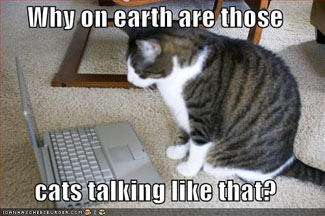
There’s a meme in there somewhere.talking cats.jpg

It’s All About The Syntax

During my daily writing endeavours I read a lot of websites, newsletters, blog posts, emails and social media comments under the banner of ‘research’. Consequently I come across some absolute howlers. I received this in an email yesterday and was struck by the architectural aspect of it:

‘…should be reported to the office in a timely manor..’

Now, you can’t blame people for finding spelling difficult, (see my previous blog interview with writer Hugo Kerr) any more than you can blame people for struggling with maths, but sometimes do you think – Get Someone To Check It Before You Send It? Or, if you’ve been asked to read/review the work of an autonomous author, think: (Why Didn’t You) Get Someone To Check It Before You Printed It? If you want your work to work well, there really is no excuse.

Ben-Hershey-550479-Unsplash.jpg
Thank you, Ben Hershey + Unsplash.

A while ago had some short stories copy-edited by two people at the same time just to gauge their different points of view and editing techniques. One comment still stands out today. I had used the word ‘silty’, but the copy editor was sure I meant ‘salty’. I assured him I did not. ‘Was I absolutely sure?’ he asked. I confirmed I was. The other copy editor didn’t comment on this word at all, clearly happy with the word and my use of it. But it threw up an interesting point – would my readers think I meant salty even though I’d written silty? Did it matter? I think it did. It still does. From my point of view as a writer, I want my readers to enjoy my work, not stumble head-first over an unfamiliar word or a familiar word in the wrong place. Control freak? Possibly.

In an email I received last week I noticed that some of the punctuation in this sentence had fallen away – if indeed it was ever there in the first place. I suspect it wasn’t:

‘I have sent this email in edith’s best interest would you suggest this is left for edith to dispose of going forward.’

I don’t really know what this person is saying to me. But it seems rude to ask, somehow. Yes, yes, yes, I’m as guilty as the next writer of missing out or adding an extraneous word to what I thought was a perfectly formed sentence, but when it comes to syntax…ah… now you’re talking. This can take hours to get right, and yet still be wrong.

Below is a statement from a website menu I read earlier today and shared here for your delectation:

… our delicious roast dinners from just £12 each, the meat alternates each week and will be uploaded to Facebook.

I really did not make that up!