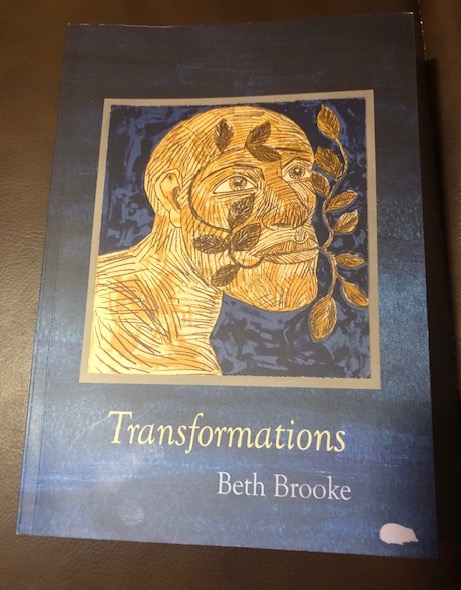
Transformations by Beth Brooke

Taking inspiration from sculptor Elisabeth Frink’s work, which at the time of writing is on display at the Dorset Museum, Beth Brooke has crafted beautiful and in some cases brutal poetry. Thus this new collection of ekphrastic poetry entitled Transformations and published by Hedgehog Press overflows such vivid imagery that to the reader it really does feel the works of art that inspired her live and breathe. Her offering Gourmand (one who enjoys eating and often does it too much) is deliciously dark, after all, who could not feel a tremor pass through them when presented with lines like ‘maggoty, they melt upon the tongue’ referring to bits of decaying flesh. Don’t worry though, we’re not talking human. I don’t think..! It’s the last two lines however that will make your toes curl. Beth’s view of the natural world is spot-on especially her ornithological observations.
In the wonderful poem Internal Monologue of the Wild Boar, line structure and word spacing make us really feel we are there with the boar as he snuffles gently across the forest floor gathering all to him. Acorns and crab apples are gobbled up with a ‘garnish of beetle’ as we ponderously wander the woods, nose down as earthy scents fill our nostrils and it is delightful.
Changing the pace is the next poem simply entitled Dog. Nothing exemplifies the happiness in this short poem than the line ‘howls with joy’ and you can feel the excitement and energy rushing off the page. Wonderful to read.
This gorgeous collection of poetry creates searing imagery through the thoughtful choice of words and their placement on the page. Not familiar with Elisabeth Frink’s work I certainly get an idea of it via Beth’s poems. For example in Chinese Horse I (Rolling Horse) although I cannot see the bronze I can see the horse, feel it’s strength and hear it’s pounding hooves through lines such as ‘I am body machine heart engine blood’ as the magnificent beast bursts into life, charging across the page with such vitality it is impossible not to feel the wind as it races by.

If you like poetry inspired by art and nature I cannot recommend Transformations enough. The poems are short, touching, clear in their message and in all cases emotionally moving in some way. And the image on the front cover? A favourite of mythology and folklore, the Green Man. A really enjoyable read.

Want me to review your work? Just message me!
Vincent van Gogh and Experimental Writing

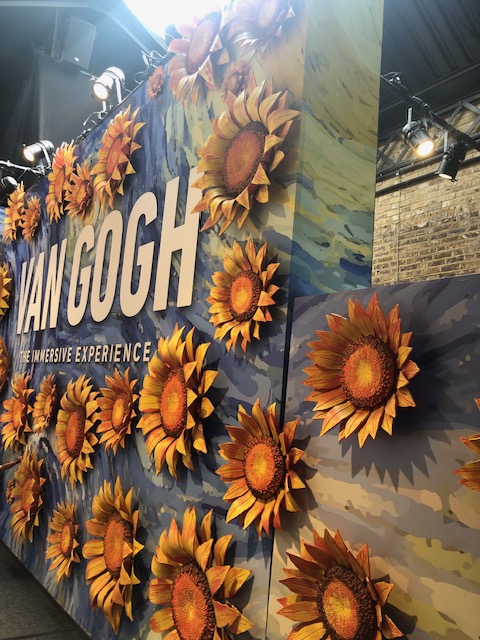
As you may have seen on a Twitter post from me recently I was lucky enough to visit the Vincent van Gogh Immersive Experience in Shoreditch and see for myself what all the excitement was about. And exciting it was.

I can’t honestly say I’m a fangirl of ol’ Vincent’s, but I do love a bit of art. Any art. The exhibition covered his life and premature death, his friendship with artist Paul Gauguin and the love of his brother. Did you know van Gogh originally wanted to be a priest? Me neither. You could say lucky for us that he failed in that respect.

The use of colour in Gogh’s work has often been discussed by those who discuss such things, and reading from the information sheets at the exhibition it seems that the conclusion drawn is that van Gogh may have suffered from xanthopsia, a condition which causes the sufferer to see in yellow more than any other colour. It’s not until you see so many of his hundreds of paintings together that you realise how much he loved his yellow. Think you know his sunflowers? Think again! He painted over 500 images of sunflowers, some of which you’ve probably never seen or even knew existed. It’s those big blousy ones in the vase that get all the attention. Drama queens.

Much of his work seemed to my untrained eyes very experimental – but then I’m no artist so what do I know – but according to the exhibition he had been told by one who knew so little, not to bother painting. He ignored such ill-founded advice and forged ahead.

Many of his preliminary sketches were on display and they put me in mind of a writer producing that scrappy first draft – you know the one – all puff and fluff, ideas and inspiration rather than proper prose and sentence structure.

How many times have you started with the puff and fluff, the idea and inspiration, to get fifteen minutes in declare it rubbish? That is not the way ahead my friend. Keep your puff and fluff, it could reap fantastic rewards a few months from now, because amongst the puff is the kernel of an idea that you had, and that must have some merit. Just because your whole story/novel/poem/essay isn’t formed yet doesn’t make it valueless.

Don’t be put off by that little niggly voice in your head telling you that what you’re writing isn’t any good. It might not be perfect – yet – but take a page off of Vincent’s canvas and stick with it.

Poetry Prose and Other Things

As part of the on-going preparations for next year’s South Warwickshire Literary Festival, this Saturday I’m very much looking forward to hopping over to Rugby library to see and hear the contestants for next year’s Warwickshire Young Poet Laureate. It’s been a while since I attended the event due to you-know-what, so it’ll be good to get back in the audience and hear these excellent poets read their work. The event is being hosted by poet Steve Pottinger and it’ll be good to hear his work too.

On the subject of words, poets and writery things, in an email I received from from the Evesham Festival of Words Director Sue Abblet today, she shared this about the festival and how such events can be an inspiration:

“When the Festival first started we used to run a Junior Short Story Competition.  A regular winner was Iona Mandal who said that our Festival was a huge source of inspiration.  Huge congratulations to Iona who was recently selected as Birmingham Young Poet Laureate (2022 – 2024).” Isn’t that just fantastic? So keep those short story and poetry competitions going – they’re so important.

And not only but also, the Young Poets Network is an online platform for poets under the age of 25 and is packed full of contacts and ideas, and is a great confidence builder for those young poets just starting out. Does the world need more poets I hear you rhyme? Yeah, all the time. Hey – I’m not 24 any more, ok?! 

Going back to short story comps, the marvellous Banbury Writers’ Cafe are hosting a free to enter picture prompt comp which closes at the end of this month. If you zip over to their website you’ll find the four photos to stir your inspiration and all you have to do is tiptappitytip away on your keyboard and get an entry in. Poetry is also accepted. Yeah! I know! 1500 words or less. Guidelines are all on the website. Apparently they’re happy to chuck fifty quid at the winner, thirty at second place and a flat unbendy twenty for third place.  They’re a generous bunch.

We Did It!

Here we are!

We did it – our first south Warwickshire literary festival and what a brilliant turn out it was! The sun shone – which was just as well as we had to move our many authors outside to sell their books due to ticket sales.

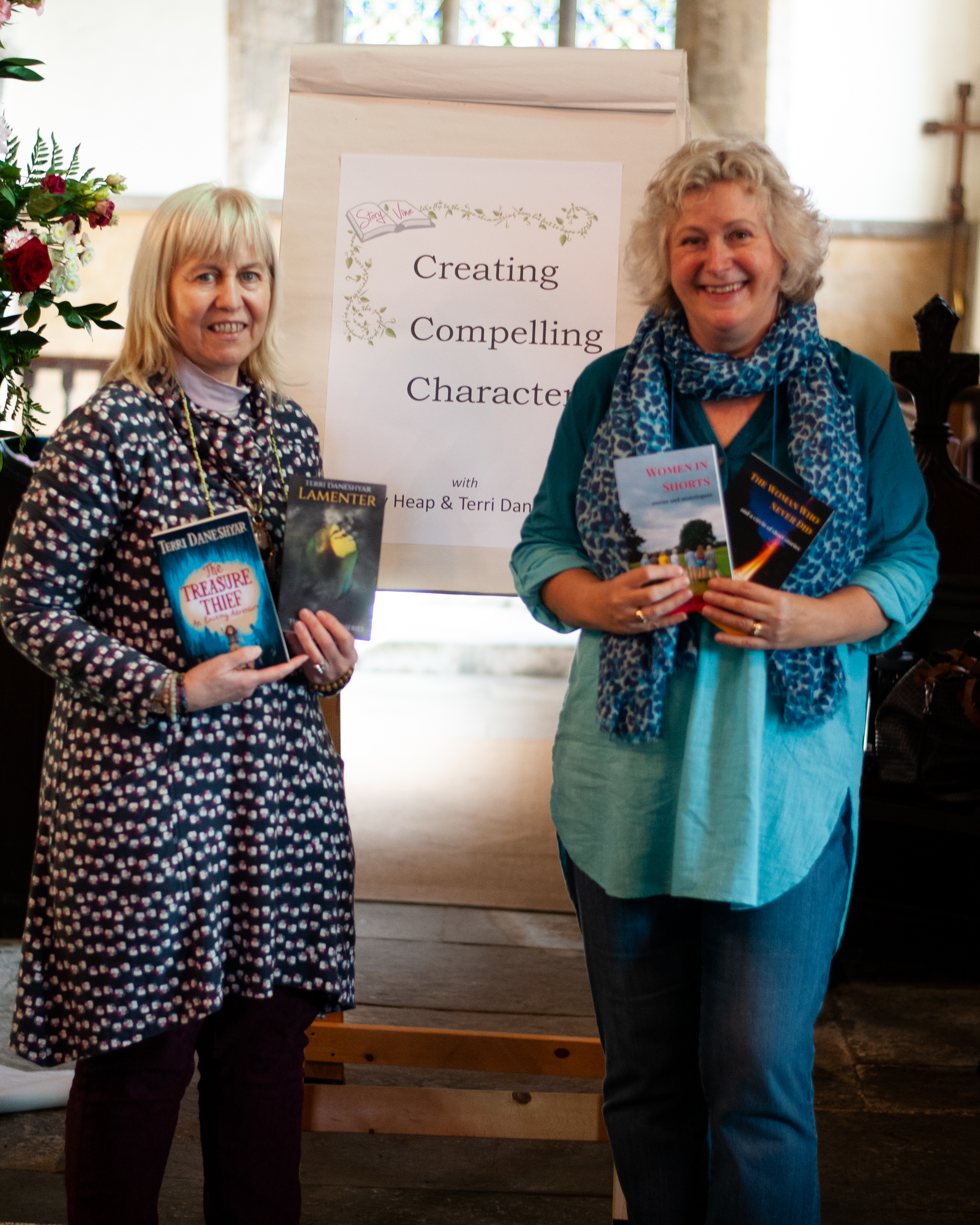
Creating Characters with Terri and Jenefer

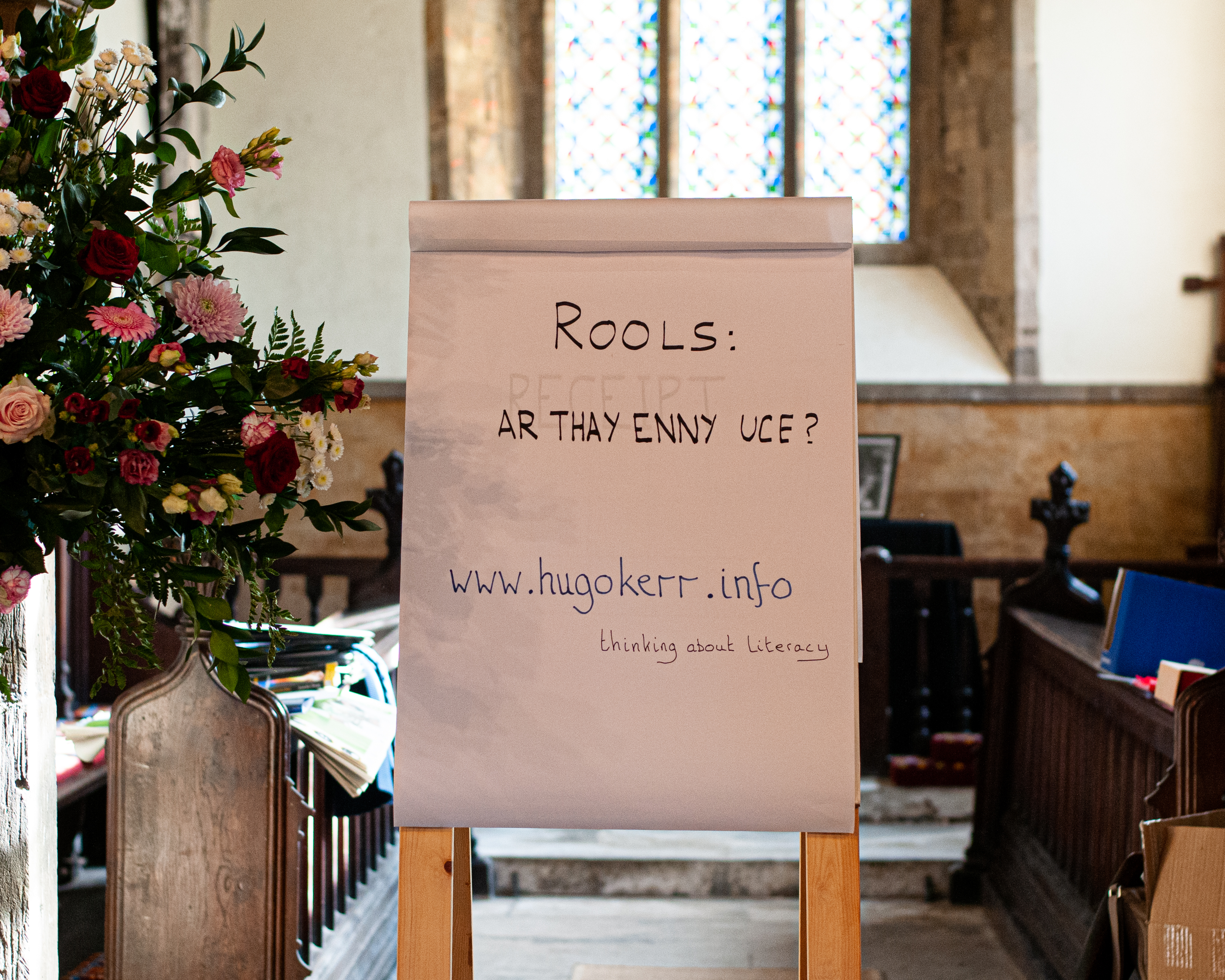
Our workshops were packed. Everyone seemed to have a great time and our workshop leaders delivered some fantastic content. All of them are to be commended – Hugo Kerr, Jenefer Heap and Terri Daneshyar, Cate West and last but not least Mslexia judge Audrey Niven. They were superb. From what our attendees told us it was an excellent day.

Well, are they?!

And our speakers in the main hall – well! The Young Poets certainly made an impact! We were blown away by their eloquence, observation and just damned talent! Award-winning young poet Emily Hunt drew much attention with her clever poems on nature, and Dan Wale, the Warwickshire Young Poet Laureate had us clapping almost out of our seats, and YPL runner-up Jolyon Summerfield also delighted us with his work.

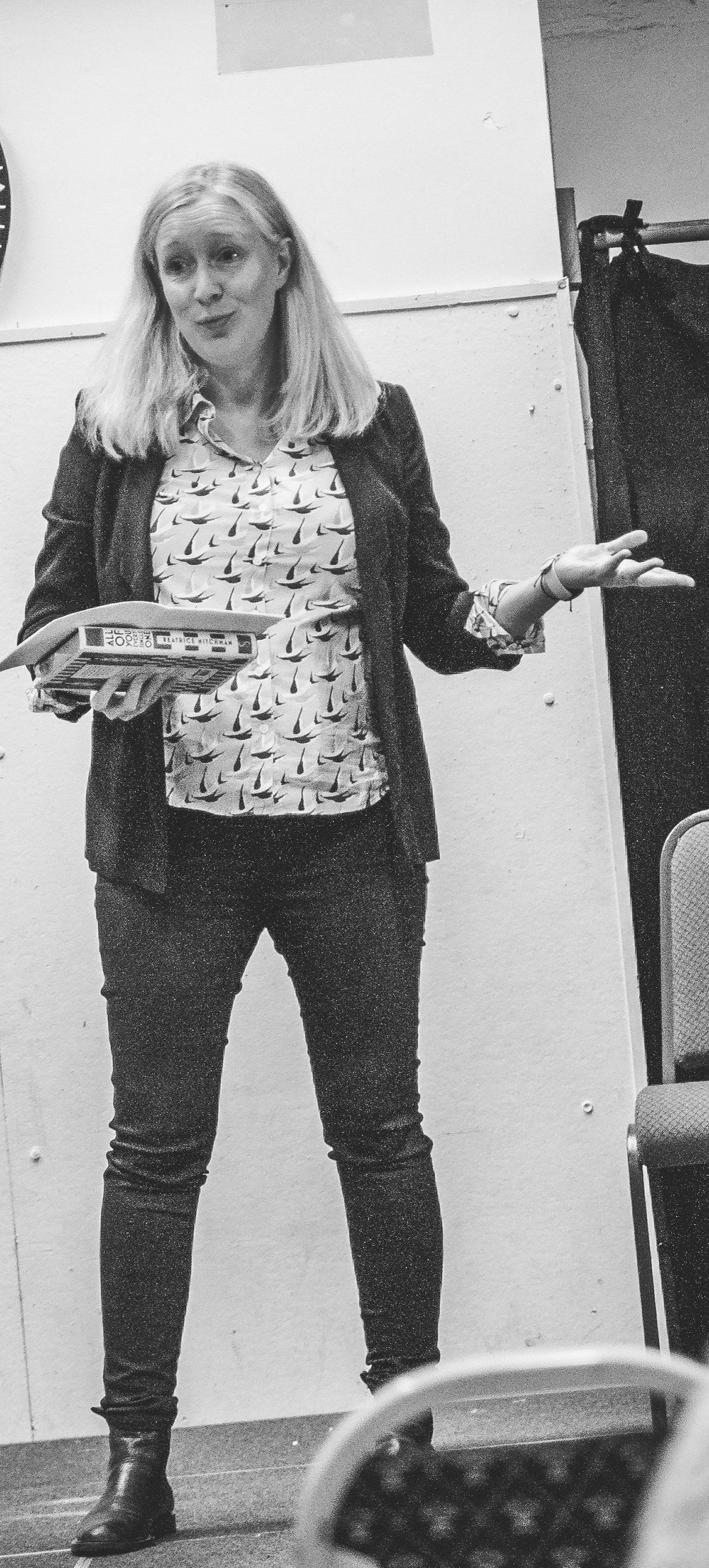
HWA long-lister Author Bea Hitchman
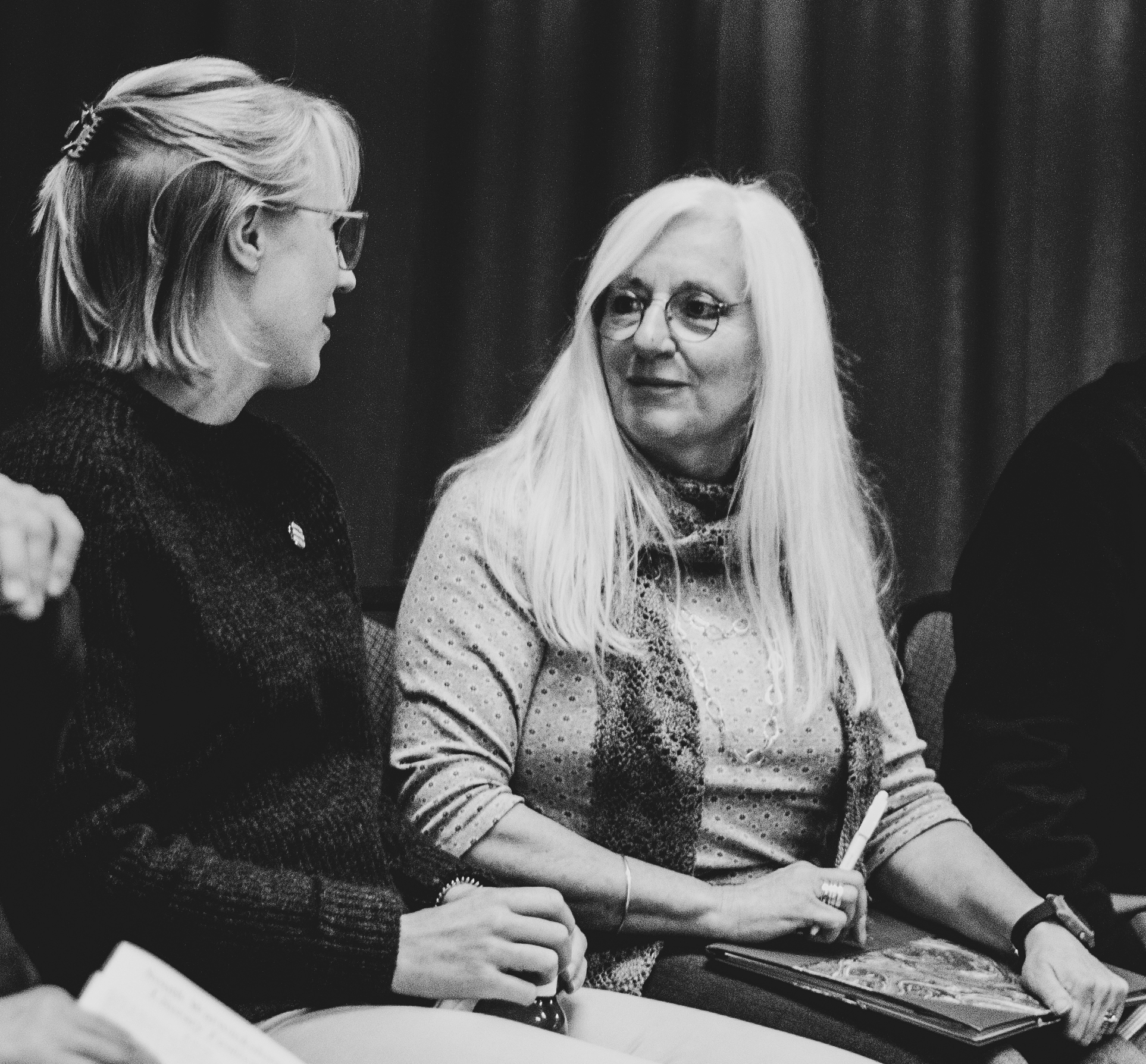
‘The Fish’ author Jo Stubbs and poet Gwyneth Box

All our authors were wonderful and we owe a huge debt to them for agreeing to take part for nothing. A special thank you has to go to poet, author and translator Gwyneth Box who stepped in at the very last minute – Cinderella timing if ever there was any – when one of our speakers was unable to come – and delivered a great hour-long talk off the hoof. Superb stuff.

Oh, and cake? Did we mention that? Well, our lit fest attendees did. In droves! Apparently it was pretty good!

         So – plans for next year? You bet!

Already drawing up the schedule…

Something About April

There’s just something about April, dontcha think? Is it gonna be warm? Is it gonna be cold? Is the sun gonna shine? When will it be summer? As I write, despite the horror news of the world burning to a crisp by Christmas it is quite actually properly April out there. You know the kind of thing here in the northern hemisphere, first bit of sun and we all rush outside like idiots getting sunburn while complaining it’s still chuffing cold, or migrating to the pub to quaff vast amounts of ale/cider/gin/something fizzy because it is SUMMER AND THAT’S WHAT WE DO only to discover that as soon as the sun goes down we return to winter and a halter-neck and flip flops just won’t cut it.

But why this nonsense about the weather? How about this is why we should include the weather in our writing:

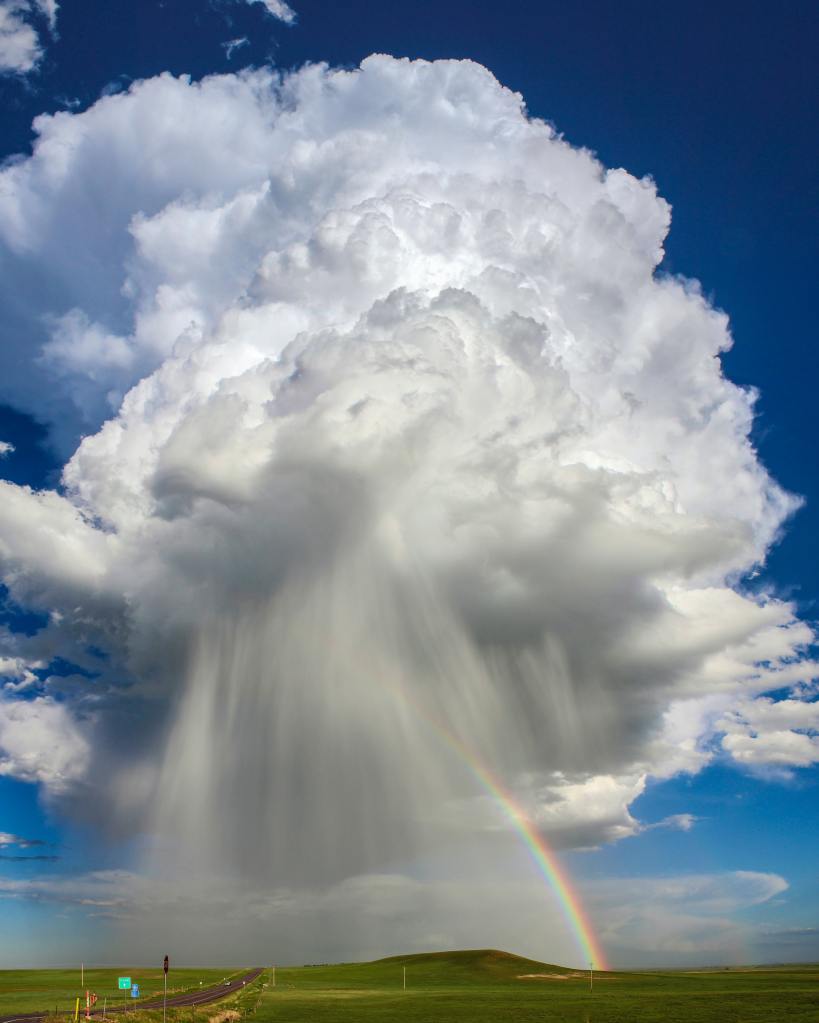
Thanks NOAA at Unsplash for this great picture

‘On the fifth day, which was Sunday, it rained very hard. I like it when it rains hard. It sounds like white noise everywhere, which is like silence but not empty.’ – Mark Haddon, The Curious Incident of the Dog in the Night Time

or

‘It was one of those March days when the sun shines hot and wind blows cold: when it is summer in the light, and winter in the shade.’ Charles Dickens, Great Expectations.

There was once a school of thought that suggested writing about weather in our work was dull. B Or Ing. Something we shouldn’t do if we wanted to keep our readers engaged. No one wants to read about the sunshine pouring in through the window or the rain battering the door we were told. Why ever not? I think one of the most important elements of a novel or short story or even flash, is, if applicable to the plot, the weather. It can set a mood, break a mood, and is as important a plot device as any of the others. Thrashing storms have to be thrashed out on the page to bring them to life. Simply saying there was a horrible storm at sea and the ship nearly sank doesn’t creative many waves, does it? So bring on the weather.

With climate change and the heating of the Earth many authors are turning their skills to writing cli-fi, much of it not fiction at all, so it looks like the weather in our writing is well and truly here to stay. But not in the way authors 50 years ago expected I guess.

Is cli-fi speculative? Can be. Dystopian? If you want. Utopian? Up to you. But all of it deals with the human fallout of a warming planet.

Climate Fiction: sounds like 21st century gothic horror to me.

Finding a Gem Amongst Junk

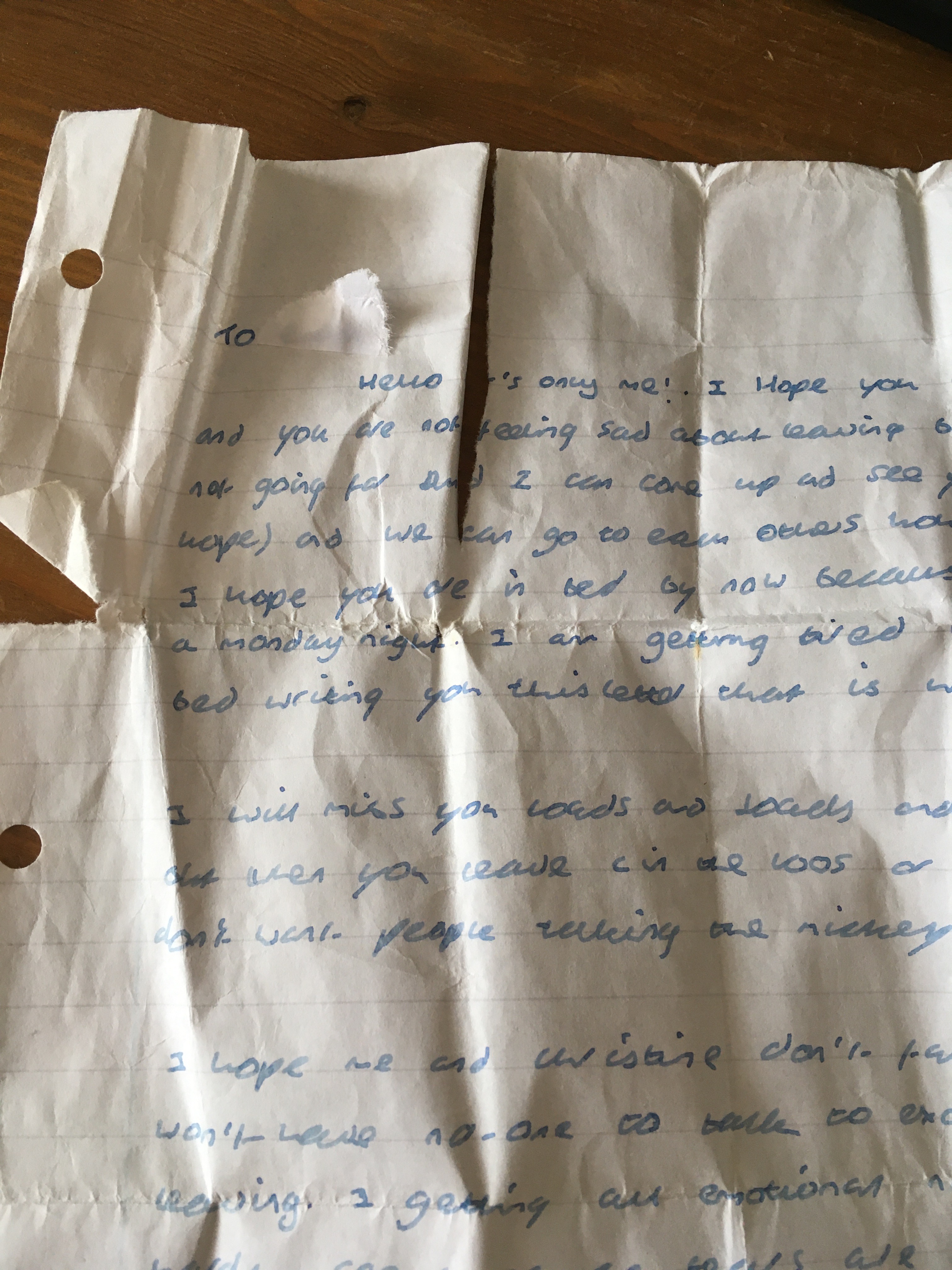
Slowly creeping out of lockdown and I have been volunteering at a local charity shop. Imagine my amazement when I found at the bottom of an old cardboard box, this letter. Handwritten in ink, it is a goodbye letter from one schoolgirl friend, Anne, to another, Angela – although those are not actually their real names because you never know, they may one day stumble across this blog and know it is their letter. Stranger things have happened.

Letter to my friend.JPG

Anne is saying farewell to Angela because Angela is moving away, presumably with her family, and Anne is saying how much she will miss her – she’ll ‘cry her eyes out in the loos so that no-one can take the mickey’ out of her. As she writes, she says how the words are getting bleary because her eyes are filled with tears. Very moving – and let’s face it – an author’s dream to find such a thing. Talk about inspiration. I hope their lives worked out ok and Anne moved on to find other friends. 

But did Anne ever post this letter? Did Angela ever receive it?  Who kept it for so long? Why was it in the bottom of a box destined for a charity shop? And how long had it been there?

Where should my story take these two young teenagers? Do they meet again in middle age?

Amongst all the chipped mugs and glittery discarded Prosecco glasses, this letter is without doubt a glorious gem.