
How To Win A Writing Competition

Or at least stand a chance. Having been the curator and administrator of several writing competitions over the last few years I understand what comp organisers mean when they ask for ‘new voices’ or ‘new ideas’ or ‘fresh perspectives’. What they are politely saying is please don’t send us any more stories on death, divorce, dementia, aged parents, losing children, losing your mind, nostalgia, what you did at school, how the old days were better and absolutely nothing that involves the wearing of rose tinted glasses. Sometimes the old adage write what you know is not necessarily a good thing. The list above is of course a list of life events but does everyone need to read about yours? Or if they do, can you write it in a different way? Can you step out of your comfort zone and write something set in the future for example? Or, if you are sci-fi writer, write an historical piece?
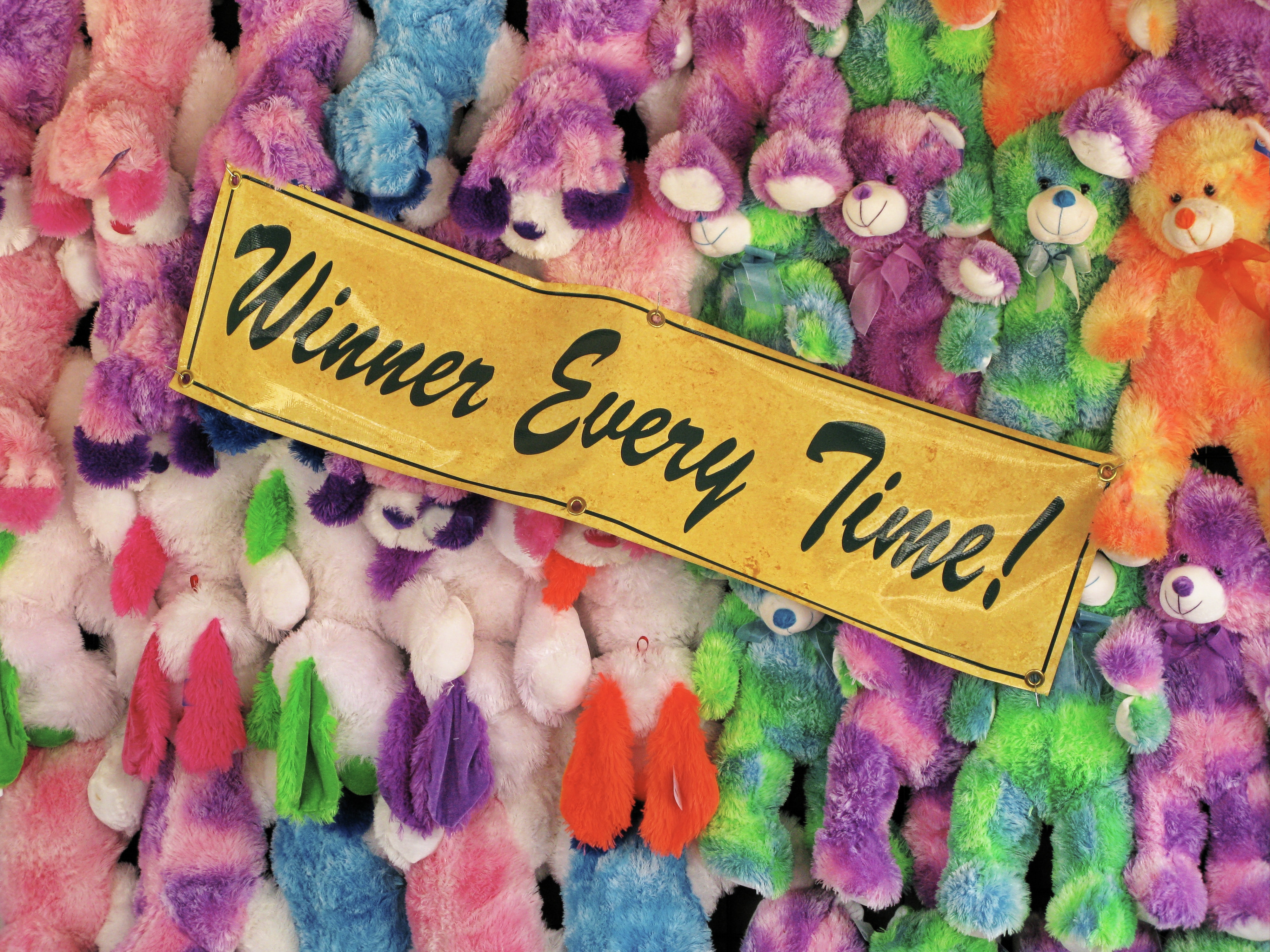
If you enter a lot of competitions but seem to get nowhere, there has to be a reason, right? Do you read previous winners and runner-ups? Can you see the difference in what the winner has written and your entry? Do you have a favourite piece of your own work that you enter in many comps but get nowhere with? Dare I say there has to be a reason for that. I know, brutal, and after all, one judge’s opinion is just that, their opinion – because they didn’t choose you doesn’t necessarily mean they didn’t like your work, they just liked someone else’s more. But there is a good chance that it failed at the first hurdle because the subject chosen was commonplace and there could be fifteen other entries written on the same subject. Do not be so in love with your story that you can’t see its flaws.

A long time ago I read a winning short story about a wake. Oh here we go, I thought. Same old same old. But no. The setting was Belfast in the 1970s and a bomb exploded just outside where the wake was taking place. Consequently nearly all the action of the story took place from a child’s perspective as they hid from the chaos underneath the bier. The story stuck with me because I pre-judged it as being the usual death/funeral story with the usual mourners with no doubt a stereotypical end. And it wasn’t any of those. If the writer is still out there and reading this – your work worked! I can still recall it now, many years later.

I’ve entered a few competitions in the last few months and not reached any longlists, let alone short lists. But it always serves as a good shake to my writing. Simply, write better! I know what I must do.

Tips!

1. Always read previous winners. How many include the life events mentioned earlier? If none, and yours does, maybe think twice before sending it in.

2. Buy anthologies – good ones. Professional writers’ groups and small publishers will print their winning collections and they are a good place to start.

3. Spare a thought for the organisers, readers and judges receiving your work. They are not therapists! Yes, your work can be emotive, but don’t slip into self-indulgence or melancholy.

4. Choose a subject different from your usual choice. Used to be a teacher so feel compelled to write a school-based story? Or a dentist, just itching to write about customers and their teeth? Stand back, take a deep breath, and walk the other way.

5. Ask for beta readers. Ask me, if you like!

6. Here’s a prompt for you: You are in Peru. You see a small artefact on the ground and pick it up. What happens next? 800-1000 words; no life events!

7. Check out unconscious bias – you might surprise yourself.

Eyeing-Up The #Competition

And here we go again! Another year of ideas, of writing, editing, networking. From October last year I began entering all sorts of competitions; short story, flash, meet the agent, pitch your novel, win a basket of kittens etc etc.  In the week before Christmas I received a rejection a day, Monday through to Friday. A No Thanks. A Not Today. A what-some-like-to-call Rejection of my work every single day for a week. Fine. Have it your way I thought. But after a quick sulk and an hour on Twitter looking at large cats squashing themselves into small boxes and dogs pretending they hadn’t been caught emptying the kitchen bin I decided that my work hadn’t be rejected, but declined. That made me feel better. And it’s true isn’t it – one competition judge’s decline is another’s accept, so that’s what I’m going into the New Year with – positivity.
There are lots of competitions out there at the moment. Big ones, little ones, short ones, long ones, international and closer to home ones. So let’s get going! Tinsel and tat long gone, let’s get on with the business of boosting your writing and confidence by entering some. Here are my top tips:

1 – and I never thought I’d ever say this – get yourself a spreadsheet and list what you’ve sent, where you’ve sent it, when the results day is and what the process will be – ie winner notification, shortlisters posted on the competition website etc etc. Dull as it may sound, having a spreadsheet will help. Trust me. Seeing how many comps you’ve entered keeps you on track

2 Go for ones with good prizes, not just ‘and you’ll get published on our website’, good as they may be. Go for something really worth writing for, like a decent cash prize, a presentation (ie a chance to network) and possibly publication

3 Try to enter two or three a week

4 It can get expensive so look for some free to enter comps

5 Share the opportunities with others – FB, Twitter, in person. What goes around comes around my friend.

Here’s six of the juiciest I’ve found this week: (but there are loads and loads out there!)

1 The Chipping Norton Festival ChipLit Short Story Comp 2020 – closes 8thFeb

2 Retreat West – The Retreat West Novelette-in-Flash Prize 2020. Word count for this competition is 8000 words. The narrative arc should be made up of standalone flash fiction chapters of up to 500 words each. Deadline May 31st, £10 entry fee https://www.retreatwest.co.uk/novelette-in-flash-prize/

3 The Fiction Desk – Ghost Story (always a favourite) £3 entry fee, deadline 31 January 2020. Theme: Ghosts Across Borders
https://www.thefictiondesk.com/submissions/ghost-stories.php

4 Bath Flash Fiction Award Maximum length is 300 words excluding title https://bathflashfictionaward.com/ ClosesMidnight February 16th 2020

5 The 2020 Bristol Short Story Prize in association with Tangent Books, is open for entries from writers all around the world

6 And if you’re looking to stretch your writerly muscles, why not write for someone else? That no-nonsense gang of writers down west, Writers HQ, are looking for people to write their blog occasionally. Nothing ventured, nothing gained…
https://writershq.co.uk/write-for-us/

Props and Prompts

Fancy your chances in a short story competition? Here are eight ideas to help you find your inspiration.

Unsplash – a generously free-to-use website, showcasing some amazing photos taken by some superb photographers. They upload their work and as I say, generously put it out there for anyone to use free of charge. All they ask is that you give them a mention. How big-hearted is that?

Read winning short stories. See if you can work out why they are winners. Do you agree with the judges? If yes, as a writing exercise, write part-two of a winning story – just for your own benefit and practice. If no, re-write the story how you think it should read and then compare the two.

Let the sounds do the talking. Listen to some on-line recordings of the sea (YouTube) or thunder and rain (YouTube), or fishes having a chat. Maybe the gentle mechanical turnings of a windmill (YouTube again). Immerse yourself in sound and see where it takes you.

Picture prompts are always a good one – see number 1 above – but this time try an art gallery, museum or art shop – all of which are free. One of the best forms of art and expression has to be graffiti. There is one particular piece of urban art local to me which always makes me smile when I pass it – across a derelict For Sale sign advertising an abandoned plot of land, some enterprising young person has spray painted the word TWAT in silver paint. I love a good four letter word, and this particular piece of art always brings a smile to my face because a) it’s written in silver. Who has a random can of silver paint hanging around?! b) the use of language is short and to the point – but who Expressive.JPGare they talking to? Are they calling the billboard a twat?!  c) why bother in the first place when they could just as easily have scaled the fence onto the abandoned land and got up to all sorts of mischief instead. But they didn’t – they chose to write a word, which is better than an exaggerated cartoon version of the oft-use phallus young males are wont to draw. The fact that they didn’t should be applauded. I think it could only have made me smile more if they’d written the word Bum instead.

The website of your local theatre/arts centre. Have a look to see who’s coming to town and that may jolt the creative juices into flowing for you. I’m not in any way suggesting you plagiarise characters from shows or anything like that, but for example, there may be a singer song-writer-stand-up comedian playing sometime and she or he may spark the idea for a character – someone you may not have considered before.

Three unrelated props. A key, a stone and a bag of flour. Write them together somehow. Borrow from your friends and neighbours – this way the items will be unfamiliar to you. Likewise three inexpensive things from a charity shop; and old book, a toy, a vase. You can take them all back when you’ve finished.

Visit your local tip and take a couple of photos of stuff being thrown away. I once saw an entire, perfectly recyclable and sellable oak dresser being chucked away. I also saw a woman chuck her car keys away along with the rubbish that was in her hand. Funnily enough the council tip guy had a very long pole with a hook on one end for rescuing such inadvertent deposits. Comedy gold Mrs, comedy gold.

Best prop and prompt ever: cup of coffee, large cake, seat by the window. You know what comes next.