
Anyone Can Write a Book

…right? Right! It’s the other bit that’s so hard. I’ve had three emails already this week – and it’s only Monday – asking me about marketing and promotion, those two holy grails (can you have two holy grails?) of independently published book selling. Before we go any further though, this week’s blog isn’t a long list of Dos and Don’ts and Hints and Tips, it is an interview with writer, on-line radio producer and theatre critic Nick Le Mesurier who offers writers a little light in the bewildering darkness of self-promotion.Hard at Work at Stratford Words.jpeg
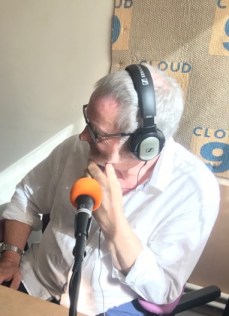
Nick has two undertakings running concurrently, the writer’s radio platform Stratford Words via on-line radio Welcomb Radio, and a new podcast, Speak, Muse! To start off then Nick, tell us a little more about each…

‘Well, writing is difficult enough in itself: promoting your work is even harder. Both Stratford Words and Speak Muse aim to provide a platform for writers to present their work and to discuss it. Services such as the BBC tend to feature only established artists, and while that provides good material and interesting copy it ignores a lot of other writers who, for various reasons might not have been so lucky, or who are at earlier stages in their careers’.

And how do you go about this? That is to say, how do you get the best from your guests?

‘In each format I try to give subjects a little space to explore their experience and what drives them. Stratford Words has a nice live feel to it but Speak Muse can allow for a bit more space; I also transcribe the Speak Muse interviews so the audience can get a fuller appreciation of what each guests says. So along with providing a positive environment for discussion and reading I try to find some questions that will interest listeners and readers (who I assume are often interested in the writer as much as the written word) and also shows an awareness of what the writer is trying to do.’

The art of asking a good question is quite a hard one to master I would imagine. What inspires the questions you ask of your guests? Is there a role model you work to?

‘I would say my role models for each are radio 4, with a nudge towards radio 3, and The Paris Review interviews. The latter are really the gold standard. I don’t mind trying to be a bit high-brow: in the rush for publicity brows are too easily lowered! And yes, that means I have to do some homework. But it’s not my job to trip up my subjects but to bring the best out of them.’

Yes, I’ve heard it said that some writers, although they may pour their heart and soul in to a novel are quite shy and retiring in person.

‘Indeed. Yet the principles of interviewing a well-known author apply equally to an unknown author or someone just starting out. I’ve had some good interviews with people like poet Ann Alexander whose work I love, and also Paul Budd, whose novel A Material Harvest is worthy of more attention. Then I have Vanessa Berridge talking about her love of the social history of gardening.  Or Amanda Laidler who is not so well known but has a lot of experience working with young actors. Then there are a couple of young authors just starting out on their careers, Natasha Dubalia and Sacha Wood, for example. They’ve some way to go yet, but to be encouraged and taken seriously at this stage could be very helpful to them later on.’

If you would like to know about Nick and his work with authors on Stratford Words and Speak, Muse, please contact him here: nicklemesurier@icloud.com

As Nick says, ‘The truth is that there is an over-supply of writers and not enough listeners and readers for new work. It’s hard to get a reward for the years spent working on one’s writing. Mine might be only a small platform, but it is that at least, I hope.’




It’s All About The Syntax

During my daily writing endeavours I read a lot of websites, newsletters, blog posts, emails and social media comments under the banner of ‘research’. Consequently I come across some absolute howlers. I received this in an email yesterday and was struck by the architectural aspect of it:

‘…should be reported to the office in a timely manor..’

Now, you can’t blame people for finding spelling difficult, (see my previous blog interview with writer Hugo Kerr) any more than you can blame people for struggling with maths, but sometimes do you think – Get Someone To Check It Before You Send It? Or, if you’ve been asked to read/review the work of an autonomous author, think: (Why Didn’t You) Get Someone To Check It Before You Printed It? If you want your work to work well, there really is no excuse.

Ben-Hershey-550479-Unsplash.jpg
Thank you, Ben Hershey + Unsplash.

A while ago had some short stories copy-edited by two people at the same time just to gauge their different points of view and editing techniques. One comment still stands out today. I had used the word ‘silty’, but the copy editor was sure I meant ‘salty’. I assured him I did not. ‘Was I absolutely sure?’ he asked. I confirmed I was. The other copy editor didn’t comment on this word at all, clearly happy with the word and my use of it. But it threw up an interesting point – would my readers think I meant salty even though I’d written silty? Did it matter? I think it did. It still does. From my point of view as a writer, I want my readers to enjoy my work, not stumble head-first over an unfamiliar word or a familiar word in the wrong place. Control freak? Possibly.

In an email I received last week I noticed that some of the punctuation in this sentence had fallen away – if indeed it was ever there in the first place. I suspect it wasn’t:

‘I have sent this email in edith’s best interest would you suggest this is left for edith to dispose of going forward.’

I don’t really know what this person is saying to me. But it seems rude to ask, somehow. Yes, yes, yes, I’m as guilty as the next writer of missing out or adding an extraneous word to what I thought was a perfectly formed sentence, but when it comes to syntax…ah… now you’re talking. This can take hours to get right, and yet still be wrong.

Below is a statement from a website menu I read earlier today and shared here for your delectation:

… our delicious roast dinners from just £12 each, the meat alternates each week and will be uploaded to Facebook.

I really did not make that up!

Props and Prompts

Fancy your chances in a short story competition? Here are eight ideas to help you find your inspiration.

Unsplash – a generously free-to-use website, showcasing some amazing photos taken by some superb photographers. They upload their work and as I say, generously put it out there for anyone to use free of charge. All they ask is that you give them a mention. How big-hearted is that?

Read winning short stories. See if you can work out why they are winners. Do you agree with the judges? If yes, as a writing exercise, write part-two of a winning story – just for your own benefit and practice. If no, re-write the story how you think it should read and then compare the two.

Let the sounds do the talking. Listen to some on-line recordings of the sea (YouTube) or thunder and rain (YouTube), or fishes having a chat. Maybe the gentle mechanical turnings of a windmill (YouTube again). Immerse yourself in sound and see where it takes you.

Picture prompts are always a good one – see number 1 above – but this time try an art gallery, museum or art shop – all of which are free. One of the best forms of art and expression has to be graffiti. There is one particular piece of urban art local to me which always makes me smile when I pass it – across a derelict For Sale sign advertising an abandoned plot of land, some enterprising young person has spray painted the word TWAT in silver paint. I love a good four letter word, and this particular piece of art always brings a smile to my face because a) it’s written in silver. Who has a random can of silver paint hanging around?! b) the use of language is short and to the point – but who Expressive.JPGare they talking to? Are they calling the billboard a twat?!  c) why bother in the first place when they could just as easily have scaled the fence onto the abandoned land and got up to all sorts of mischief instead. But they didn’t – they chose to write a word, which is better than an exaggerated cartoon version of the oft-use phallus young males are wont to draw. The fact that they didn’t should be applauded. I think it could only have made me smile more if they’d written the word Bum instead.

The website of your local theatre/arts centre. Have a look to see who’s coming to town and that may jolt the creative juices into flowing for you. I’m not in any way suggesting you plagiarise characters from shows or anything like that, but for example, there may be a singer song-writer-stand-up comedian playing sometime and she or he may spark the idea for a character – someone you may not have considered before.

Three unrelated props. A key, a stone and a bag of flour. Write them together somehow. Borrow from your friends and neighbours – this way the items will be unfamiliar to you. Likewise three inexpensive things from a charity shop; and old book, a toy, a vase. You can take them all back when you’ve finished.

Visit your local tip and take a couple of photos of stuff being thrown away. I once saw an entire, perfectly recyclable and sellable oak dresser being chucked away. I also saw a woman chuck her car keys away along with the rubbish that was in her hand. Funnily enough the council tip guy had a very long pole with a hook on one end for rescuing such inadvertent deposits. Comedy gold Mrs, comedy gold.

Best prop and prompt ever: cup of coffee, large cake, seat by the window. You know what comes next.

Competition Time

Still not in Back to Work mode? Spend a few hours with these little opportunities and see what you come up with. Think of them as the hors d’oeuvres to the main meal of your story writing.

And thank you Unsplash photographers for the free use of the pic

Free To Enter – the Telegraph Online ‘Just Back’ Travel Writing Competition. If you are just back from somewhere slightly more interesting than a bus stop, then the Telegraph Online would like the exciting details in up to 500 words. You can read previous winners on the website. A ‘voyage’ across the Mersey is one of them – proving that you don’t have to write about anywhere exotic to scoop the prize.


Picutre Courtesy of Unsplash.jpg
Picture courtesy of Unsplash

Closing: Monthly. Prize: £200 in your choice of currency.
 Email your entry, of no more than 500 words (with the text in the body of the email), to justback@telegraph.co.uk

Free To Enter
– The Val Wood Prize

2018: Women’s Writes competition,  now open for submissions. This annual freebie from the website of author Valerie Wood is open to anyone over the age of 16 regardless of gender.  This year the contest is celebrating 100 years since married women won the right to vote.  Stories should therefore have a strong female protagonist.  Other than that you are free to write about anything you wish.  Story length 1,500 words Closing: 15.9.18 (5pm). Prizes: £100, £50, £25, £25. 
Details here

Free To Enter – Harvill Secker and Bloody Scotland have joined forces to launch a competition to find a debut crime writer from a BAME (Black Asian Minority Ethnic) background. The winner will have their book published, under the Harvill Secker imprint, in a publishing deal with an advance of £5,000. The winner will also receive perks alongside their publishing contract, including a panel appearance at the Bloody Scotland Festival in 2019 (this year’s dates are 21st-23rd September) and a series of three one-to-one mentoring sessions with Abir Mukherjee.
Closes 9th of September 2018. Details here

Hour of Writes Competition. To enter this new weekly peer-reviewed contest from Manchester, submit a piece of writing of any type you choose running to no more than 2,000 words. There is a different theme every week. Closing: 11pm every Friday. Prize: £50 (usually the minimum – prize increases if more entries are received).
 Entry Fee £3. Details here

Dark Tales Short Story Competition. For horror and speculative fiction – the sort that leaves you afraid to turn out the lights in case something other than a fly is hiding under the bed. Like a Spider, for example. No matter how small. All those legs. And far too many eyes…Anyway… your entry must be limited to 5,000 words. Closing: Monthly. Prize: £100 and publication. Entry Fee £4. Details here

Flash 500 Competition. Write an entire story in just 500 words. Easy peasy. (And you would have practiced with your Telegraph entry, right?) Now in its ninth year, this quarterly open-themed competition has the remaining 2018 closing dates of 30th September and 31st December 2018.
Entry Fee £5 per story or £8 for two. The results will be announced within six weeks of each closing date and the three winning entries each quarter will be published on their website. Details here

Lit Fests & Stand Up- Why YOU should

Although a few days have passed, I wanted to write a blog following on from Debbie Young’s blog in which she mentions a writer who popped over the pond from Australia to attend this year’s Hawkesbury Upon Literature Festival (like you do). If you didn’t know, Debbie is the founder and organiser of this excellent authors’ festival which is based in Gloucestershire, in the beautiful Cotswold village of Hawkesbury Upton. All the excitement came spilling out on April 21st at 10am and continued throughout the day with readings and author panels and Q&A sessions. Short stories, poetry, historical fiction, crime (a VERY popular talk!) were just some of the highlights of the day. Debbie asked me to read in the poetry session and also take part in a Writing Your Passion (in my case – why do you write creepy weird stuff?) session in the afternoon, hosted by Caroline Sanderson, who is Associate Editor of The Bookseller. You can follow Caroline on Twitter here @CaroSanderson. There were some great questions from the audience, all of which I have forgotten, but I know the answers were good! Of great interest was a book written by Peter Lay in collaboration with Chinese author Zaiming Wang, which is part English, part Chinese. More information here. Such is the diversity at Hawkesbury Upton
Hawkesbury Upton 2018.JPG
The next festival is already booked – April 27th 2019, so get it in your diaries now! And look – if you’re an invited author, you get a badge as well as books sales. What’s not to like!
A few days later, further inland at Stratford upon Avon, I was privileged to organise and run the first fringe event in connection with the Stratford Literary Festival. A host of amazingly talented independently published writers and performers entertained a packed house (standing room only) at The White Swan Hotel. The Warwickshire Young Poet Laureate Annabel Peet read some of her stunning work, and writer Mark Rutterford gave the best reading I have ever heard on love – from the point of view of an alien and which was the funniest thing I’ve heard this year. We had Spanish authors, Armenian authors, English authors, American authors, all reading the most incredible and moving stuff. I didn’t get a badge on this occasion, but did go to bed chuffed, knowing that there is so much writing talent of all ages out there.

So if you’re a writer who’s stalled a little bit recently, check out any open mics or small author events near you – you will discover a bottomless well of inspiration. Go for it!

Get Out and Network!

Work out or work shop? Depends what you intend to exercise – in the case of a recent visit to Delapre Abbey Northants, it was my brain. It all started with one of those websites I sign up to – ie all of them – this particular one being Literary Festivals UK. Well, LFUK popped into my inbox way back one snowy day in February and under the title ‘new festivals’ I found a note about a half-day spring poetry workshop being run at Delapré Abbey by author Kevan Manwaring. The session included a wander around the newly refurbished Abbey gardens where hopefully we would discover inspiration flourishing in its many forms.

And what an inspiring afternoon it turned out to be. 12 of us – including a real live poet – (he was very good) embraced the three hour session with gusto and we all, tentatively, wrote and read out some poetry. Now, I have never alluded to any ability to write a jaw-dropping poem, or even – let’s face it – A Poem – due to the poets’ part of my mind often redirecting itself to limerick-land for far longer than is healthy, but this time we were kept on track by Kevan’s light yet inspiring touch and his wonderful choice of Spring poems. If we didn’t find anything to kick-start our creative motors then we didn’t have the right to refer to ourselves as writers. 

Some of the writers at the workshop were too shy to share their work, others did but felt dissatisfied with their effort. The same could be said for a lot of people to whom writing poetry doesn’t come easily. But don’t be put off – imagine a poem as a cross between a winding stream and a work of art: unique to the artist (that’s you) but free, unhampered and creating its own path (the evolution of the work, just like a stream) and just go with it. The more you paint, the better the picture…

There once was a woman from Surrey
Who married a man up near Bury
But the cold northern weather
Couldn’t keep them together
And she moved back down south in a hurry

Pathetic.

An overweight old man from Dover
Dropped dead in a large field of clover
The farmer that found him
Had to harvest around him
Concerned about over-exposure

Think I’ll stick to short stories…

The first ever Festival of Books at Delapré Abbey will run over the second May Bank Holiday weekend. There’ll be Author talks in the Victorian library, Bookstagram talks, Book signings and meet the author, Workshops, Storytelling, Career talks, Magazine presentations and more. And most importantly, a Children’s writing competition… Here Here!!